

Hierarchy and the Fate of the Performing Arts in Southeast Asia
Sociology & Anthropology Seminar Series
Registration
Event Flyer
Hierarchy and the Fate of the Performing Arts in Southeast Asia
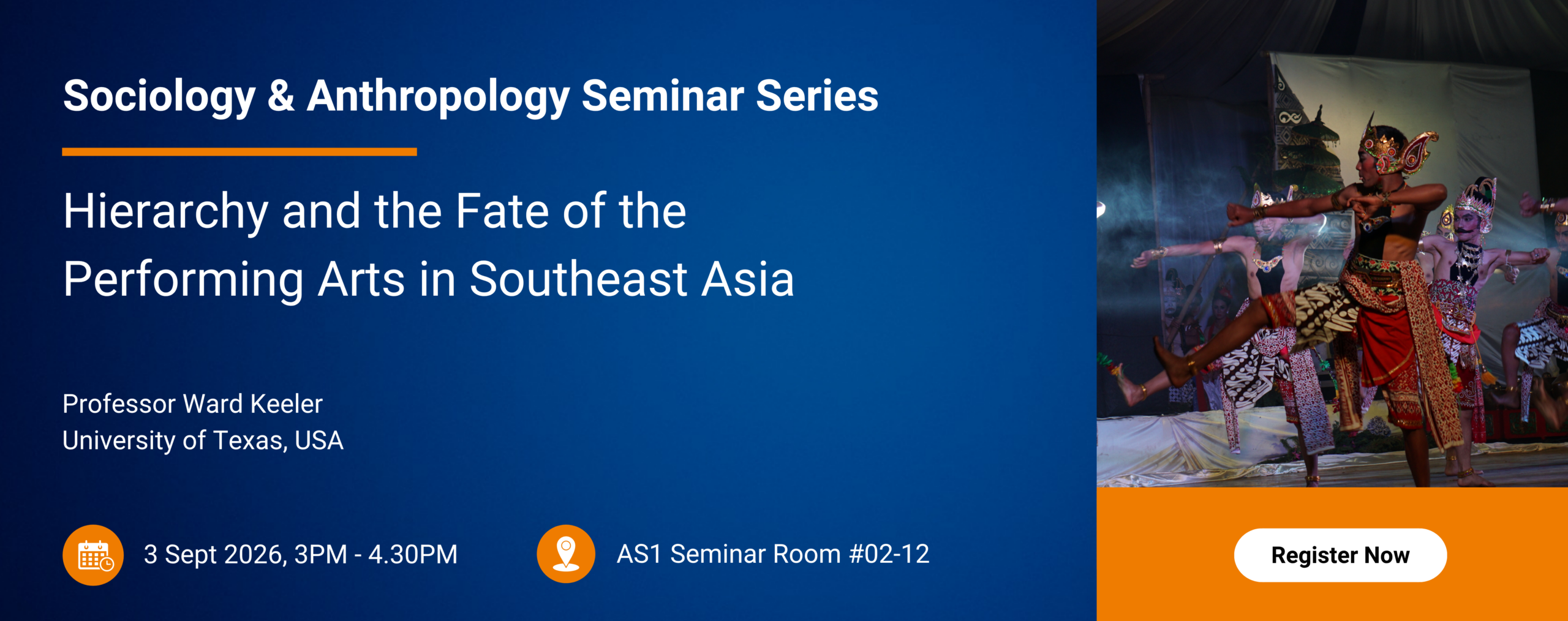
Puppetry, dance, and drama in Indonesia and Burma used to include a meditative dramatic aesthetic rooted in physical control and attention to social hierarchy. These performances have now become raucous, featuring broad humor and kinetic dancing and music, resembling television variety shows, with little narrative coherence and little trace of the aesthetic of restraint. I link this change to the rise of a neoliberal market ideology. In the past, hierarchical arrangements presumed long-term relationships of exchange. People willingly subordinated themselves, offering up labor and deference, to those more powerful than themselves. They expected to receive in return material and affective support. The newly pervasive ideology of the free market, however, releases the powerful from their obligations to the structurally weak, undermining hierarchy’s persuasiveness. This shift in the logic of hierarchical arrangements is reflected in changes in the performing arts.
By Professor Ward Keeler
University of Texas at Austin
About the Speaker
Ward Keeler is Professor of Anthropology at the University of Texas at Austin. He has conducted extensive fieldwork in Java and Bali (Indonesia), and in Burma (Myanmar) since the 1970s. His work has focused on performance, gender, language, Buddhism, and hierarchy in all three societies. His current research focuses on the late Indonesian priest-cum-activist Rama Mangunwijaya. A collection of essays on the fate of the performing arts in Indonesia and Burma over the last fifty years, The Aesthetic of Restraint in Tumultuous Times, will be published by Cornell University Press in 2027.