

Theater as Data: Computational Journeys into Theatre Research
January 2, 2022
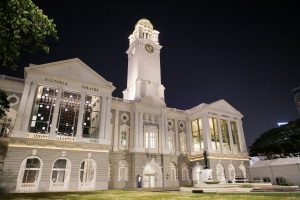
The Flying Inkpot was a volunteer-run website which published theatre reviews from 1996 to 2015 in Singapore. Since 1st January 2016, the website’s maintenance has been taken over by Centre 42. All reviews in the site were submitted on a voluntary basis by a core group of reviewers. In a country like Singapore where an active theatre review culture did not exist, the website proved greatly relevant. Although the project is no longer active, an online archive is still maintained and provides access to the reviews for historical research.
In the chapter ‘Words as Data’ from Theater as Data: Computational Journeys into Theatre Research (University of Michigan Press, 2021), Assistant Professor Miguel Escobar Varela (NUS Department of English Language and Literature) explores the use of digital analysis of word patterns in solving theatrical problems.
Digital analysis of word patterns can be applied to a variety of texts related to theatre practice: advertisements, playbills, reviews, casting calls, production notes, academic articles, and more. Asst Prof Varela describes how four common methods – dimensionality reduction, time series analysis, measurement of linguistic differences, and topic modelling – can be used with data-driven methodologies. There are many possible techniques within these approaches, and different combinations of them can be applied to a wide range of projects. For instance, measures for comparing texts and tracking change over time can be used to study how portions of a text have been copied, paraphrased, or cited in other texts.
Theatrical problems come in many forms. The same data and methods can be used to answer different kinds of questions, but the crucial difference lies in how the question is framed, and how the answers are treated.
Data-driven analysis of text is usually linked to distant reading, which is data-driven in the sense that it is premised on systematically gathering data, but mostly relies on systematic reading by human annotators. There is also macroanalysis, which is done solely by computers, and can be used to explore a variety of questions, such as the ways literary themes change over time. Both macroanalysis and distant reading advocate for looking at literature from afar and consider a larger volume of texts than what is commonly used for conventional literary analysis.
On the other hand, algorithmic criticism aims to reproduce on a computer the operations a literary critic would carry out in their analysis. Unlike data-driven analysis, algorithmic criticism does not aim to settle questions, but to ensure that discussion of relevant literary works continues into greater depths.
Through digital analysis of The Flying Inkpot, Asst Prof Varela made several observations, including that theatre performance was increasingly referred to as a “work”, as opposed to a “show” or “performance”. The verb “feel” also became a more common way for reviewers to express their views. While Asst Prof Varela emphasises that his findings cannot be taken as representative of Singapore-based theatre as a whole, they offer a glimpse into the changes in vocabulary of an influential group of critics. While limited, his observations can serve as a stepping stone for more comprehensive analysis of a key resource for the history of Singapore-based theatre.
Read the chapter here.