
One ocean, one temple: Alternative Chinese temple networks in Southeast Asia
September 3, 2025
China’s ever-expanding Belt and Road Initiative, characterised by substantial investment in countries and international organisations along the former Silk Road, has generated extensive literature on its large-scale infrastructure projects. However, Professor Kenneth Dean (NUS Chinese Studies) argues that alternative networks in Southeast Asia, such as Chinese temples, regional, clan, and trade associations that connect Southeast Asian communities to their ancestral roots in China, have received insufficient attention. Prof. Dean contends that these complex and recursive networks significantly contribute to the socio-cultural landscape of the region. In ‘One Ocean, One Temple: Alternative Chinese Temple Networks in Southeast Asia’ (Beyond Migration? Alternative Articulations of Transnational Religious Networks, 2023), he examines the formation and expansion of Chinese temples dedicated to tutelary gods (Earth Gods) in Southeast Asian port cities.
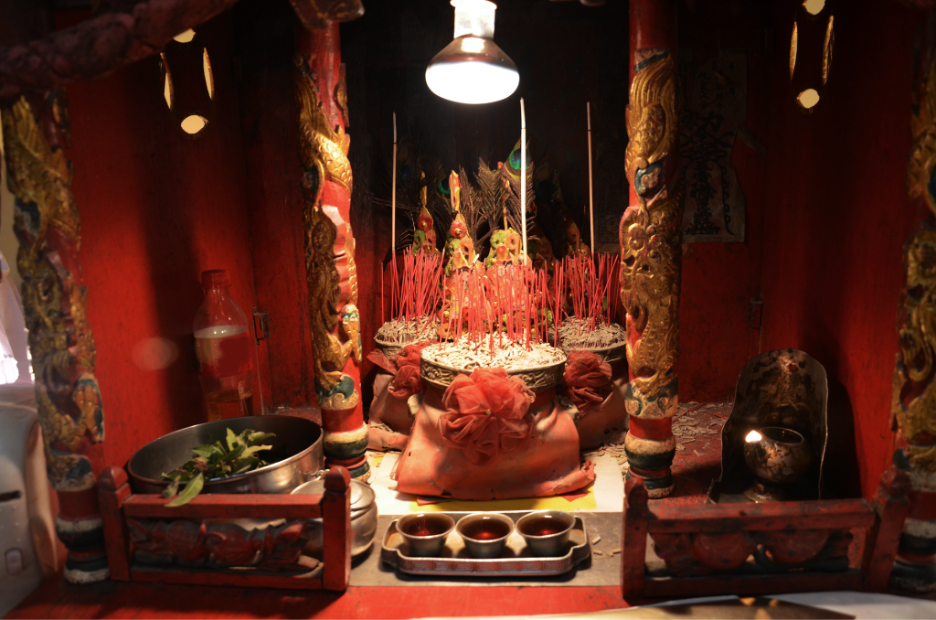
The Earth God, known as Tudigong in China, is fundamental to Chinese culture and has achieved cult status within the Chinese diaspora. This deity takes various forms across different religions and dialect groups, such as Tua Peh Kong in Malaysia and Indonesia, and is one of many deities worshipped in thousands of temples and associations worldwide. This widespread veneration necessitates a transnational network of these establishments, facilitating commercial and relational trust among leaders of local regional associations.
Prof. Dean’s research centres on the World Dabogong Federation, established in 2017, which includes over 160 temples from more than 100 port cities, culminating centuries of evolving temple and trust networks in Southeast Asia. The Federation’s inclusive “One Sea, One Temple” motto signifies a non-hierarchical, horizontal network among member temples. This network fosters connections between local Chinese temples and foreign local Earth God temples along the South China Sea. Annual “Dabagong Festivals” are held across these cities to renew religious ties and honour the Earth God. These 21st-century initiatives represent an innovative approach to gathering like-minded individuals for networking using modern transport and social media technologies, transcending transnational differences even in the religious sphere.
To fully understand and appreciate the contemporary transformations of these networks, Prof. Dean employed an interdisciplinary methodological approach to analyse widely scattered sources. These sources include commemorative publications, oral accounts, and inscriptions found in Chinese temples and associations, which provide key historical and developmental data. His team has integrated over a thousand of these establishments into a Historical Geographic Information System (GIS), linking sites to images, videos, models, and databases of their fieldwork data. This GIS highlights the dense network connections between discrete dialect groups and their ancestral centres in China, with some networks, such as the Nine Emperor God temples, originating and developing in Southeast Asia.
As the region emerges from the COVID-19 pandemic, the rise of the internet, social media, and advanced socialisation methods is expected to facilitate commercial and relational trust. These networks are resilient to nationalistic or capitalistic manipulation and must continue to strengthen, ensuring that religious ties remain dense and robust amidst global modernisation.
Read the article here.