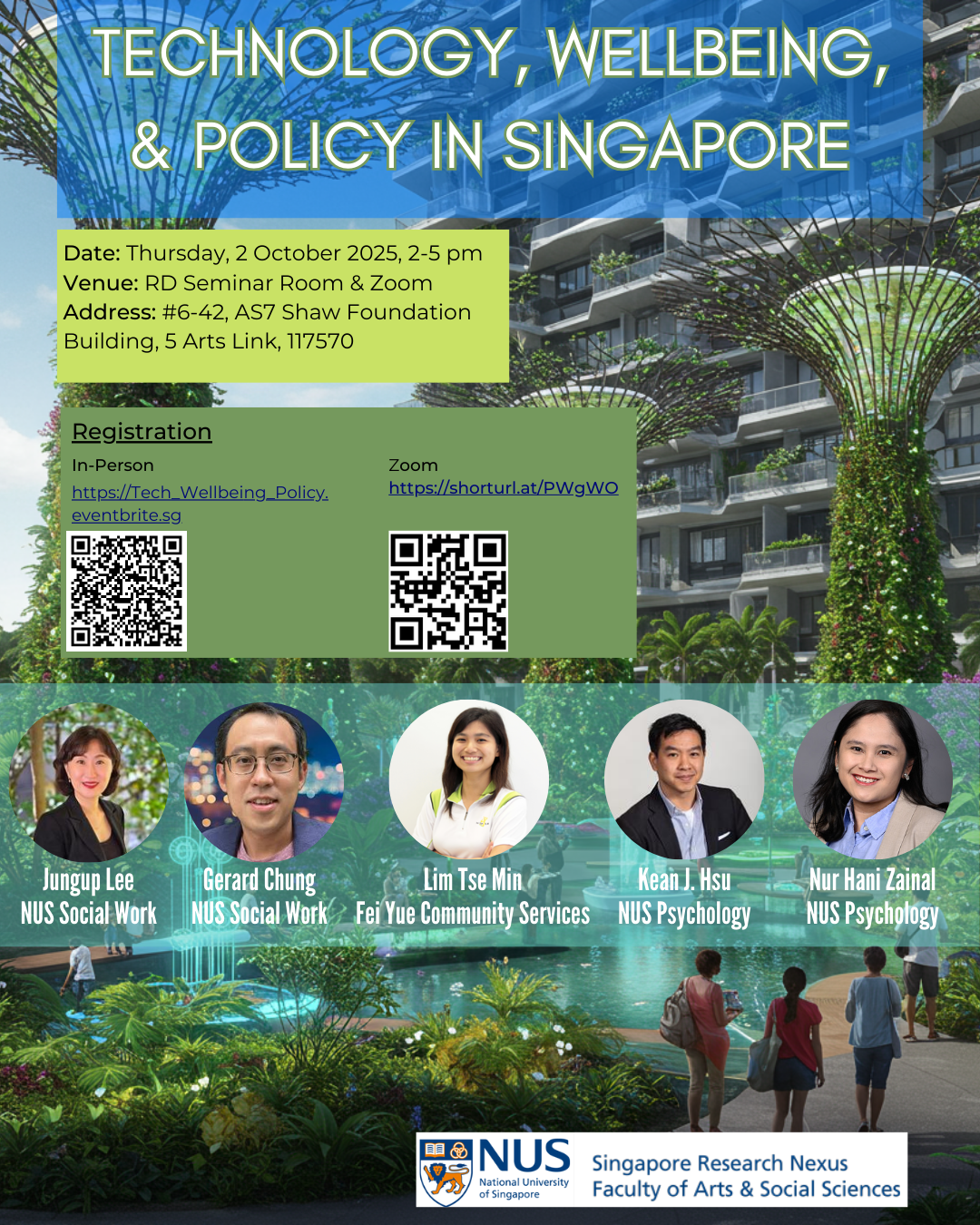

Watch the Recording: Technology, Wellbeing, and Policy in Singapore (2 Oct 2025)
November 7, 2025
Missed the live event? You can now watch the recording of our outreach event on Technology, Wellbeing, and Policy in Singapore, which brought together researchers from NUS Psychology and NUS Social Work to explore how technology shapes mental health and wellbeing in Singapore today. The four presentations discuss digital harms, AI, and the promise and challenges of digital mental health innovations.
Watch the recording here: https://tinyurl.com/4t4sbbtf
Download the programme here: https://tinyurl.com/4n4n7ufj
Presentations:
- ‘Technology-Related Harms and Youth Mental Health’ by Assoc Prof Jungup Lee (NUS Social Work):Explores how problematic smartphone use and cyberbullying intersect with mental health outcomes among Singaporean youths. The findings highlight the need for digital literacy, peer support, and cross-sectoral collaboration to foster safe digital engagement.
- ‘Core Components of Effective Text-based Conversations: Evidence from a Local Social Service Agency’ by Asst Prof Gerard Chung (NUS Social Work): Analyses online chat data with youths to identify what makes digital conversations effective. The study offers insights for training counsellors, improving practice, and designing AI-assisted digital mental health services.
- ‘Mental Health in the Age of AI Technology’ by Asst Prof Kean J. Hsu (NUS Psychology): Examines how AI reshapes our understanding of mental health—from research tools like machine learning to the social impact of algorithms and generative AI on wellbeing.
- ‘Promises and Pitfalls of Digital Mental Health Interventions (DMHIs): Implications for Policy, Equity, and Personalized Care in Singapore’ by Asst Prof Nur Hani Zainal (NUS Psychology): Discusses the potential and challenges of digital interventions such as mindfulness apps and CBT platforms. The talk addresses algorithmic bias, digital literacy, and equitable access in Singapore’s National Mental Health Strategy.
Discover how NUS FASS researchers are advancing conversations on technology, wellbeing, and policy in a rapidly digitalising society!