

Remembering the Samsui Women: Migration and Social Memory in Singapore and China
May 5, 2019
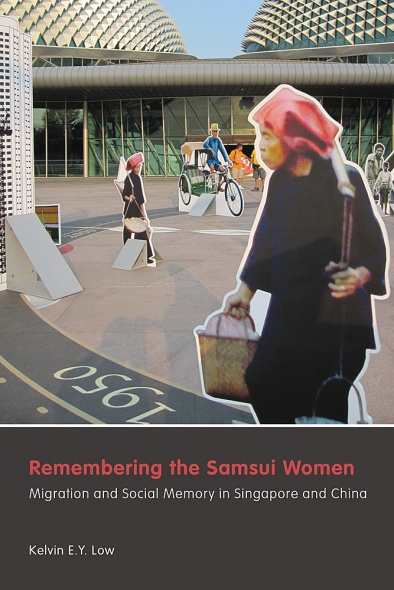
On 5 May 1986, the 24-episode historical drama Samsui Women aired on television. Produced by the Singapore Broadcasting Corporation (now Mediacorp), the television show highlights the travails of the Samsui women, who left their families in the Samsui area of Guangdong, China in the 1930s to migrate to Singapore in search of a livelihood.
Today these women are celebrated in Singapore as pioneering figures for their thrift and resilience, and in China for the sacrifices they made for their families. However, social memory and historiographical texts on them are selective and limited, and generally neglect their everyday life experiences, including their decision to seek a livelihood in Singapore, and their varied roles as adoptive mothers and daughters-in-law.
Remembering the Samsui Women: Migration and Social Memory in Singapore and China (UBC Press, 2015) by Associate Professor Kelvin E. Y. Low from the NUS Department of Sociology explores how Samsui women are remembered and instrumentalised as pioneering figures in both Singapore and China. By examining the Samsui women’s migration journey, lives, and legacy through media and state representations, as well as the oral histories of the women themselves, he sheds light on not only issues concerning their identity, both publicly constructed and self-defined, but also the politics of memory-making in local and transnational contexts.
Get the book here.