
Half of land use carbon emissions in Southeast Asia can be mitigated through peat swamp forest and mangrove conservation and restoration
March 3, 2025
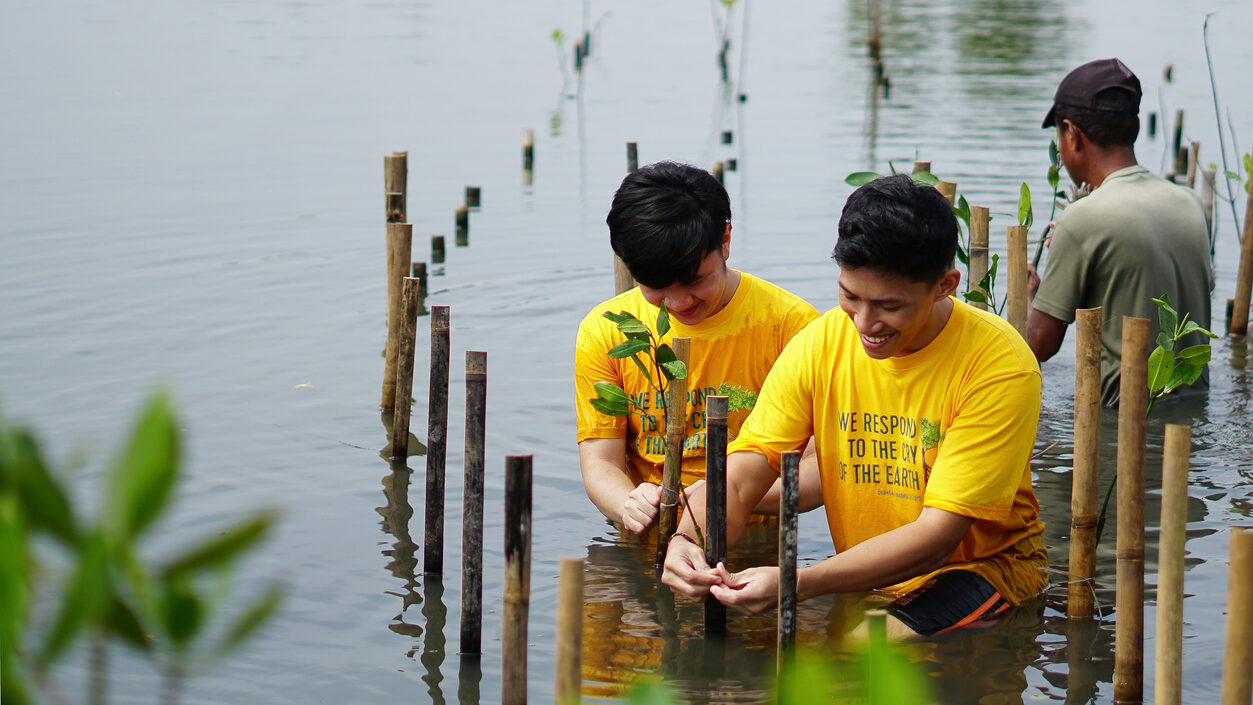
Southeast Asia (SEA) is home to approximately 34% of the world’s mangrove forests, representing a crucial component of coastal ecosystems. From Singapore’s Sungei Buloh Wetland Reserve to Thailand’s Tarutao National Park, these peatlands and mangrove act as natural carbon sinks by absorbing more carbon than they release, with the excess accumulating as partially decomposed organic matter in oxygen-poor conditions. Despite their ecological significance, these mangroves face threats from urban development, agriculture, and climate change, necessitating urgent conservation and restoration efforts.
In ‘Half of land use carbon emissions in Southeast Asia can be mitigated through peat swamp forest and mangrove conservation and restoration’ (Nature Communications, 2025), Sasmito et al. explore the role that peat swamp forests (PSFs) and mangroves play in mitigating carbon emissions in Southeast Asia through a comprehensive analysis of land-use changes from 2001 to 2022. Using a combination of data collection, emissions estimation, and spatial analysis, the study quantifies the impact of deforestation, tree cover loss, and human activities such as agriculture and development on these ecosystems.
The SEA region contributes approximately one-third of global land-use change carbon emissions, with a substantial portion stemming from human activities in PSFs and mangroves. Between 2001 and 2022, changes in these ecosystems released nearly half of the region’s total land-use emissions, mainly due to deforestation and land conversion. While degraded PSFs and mangroves continue to release significant carbon emissions, they also have the potential to absorb and store carbon through natural regrowth and restoration efforts. Associate Professor Massimo Lupascu (NUS Geography), the study’s PI and senior author, highlighted in NUS News the immense climate mitigation potential of protecting peatlands and mangroves, stating, “If we conserved and restored the carbon-dense peatlands and mangroves in Southeast Asia, we could mitigate approximately 770 megatonnes of carbon dioxide equivalent (MtCO2e) annually, or nearly double Malaysia’s national greenhouse gas emissions in 2023.” In this regard, the authors not only emphasise the severity of carbon emissions from land-use changes but also present conservation and restoration as viable solutions to mitigate these impacts.
As Dr Sigit Sasmito (NUS Geography, NUS Environmental Studies Institute, and James Cook University) remarked, “These ecosystems pack a climate mitigation punch far beyond their size, offering one of the most scalable and impactful natural solutions to combat the planet’s climate crisis.” His statement reinforces the researchers’ call for ASEAN governments to integrate peatland and mangrove conservation into their national climate strategies, highlighting the dual benefits of reducing emissions and strengthening climate resilience. By investing in the protection and restoration of these vital ecosystems, SEA nations can take meaningful steps toward meeting their climate commitments while safeguarding the livelihoods of communities that depend on wetlands. Ultimately, as Assistant Professor Pierre Taillardat (Asian School of the Environment, NTU) highlights, the economic and environmental potential of wetland conservation is a “win-win scenario where livelihoods and sustainable ecosystems thrive together”.
Read the article here.
For more insights, check out the study’s coverage in NUS News.