
Future and Imaginary Geographies of ‘Africa’s Singapore’: Planning the Emergent National-Urban Nexus of Rwanda-Kigali
September 23, 2026
What does it mean for a country to imagine its future through the model of another city-state?
In “Future and Imaginary Geographies of ‘Africa’s Singapore’: Planning the Emergent National-Urban Nexus of Rwanda-Kigali” (International Journal of Urban and Regional Research, 2026), Assistant Professors Allen Hai Xiao, Dylan Brady (both NUS Geography), and Gatoni Alexis Sebarenzi (University of Geneva), examine how Rwanda’s aspiration to become “Africa’s Singapore” is translated into urban planning and smart-city development in Kigali.
The article begins by discussing Rwandan President Paul Kagame’s ambition to transform Rwanda into “Africa’s Singapore”. This phrase is not only a slogan. For Rwanda, Singapore represents a model of postcolonial transformation: a small state that turned itself into a global hub through long-term planning, strong state coordination, and urban development. Yet it asks a more specific question: how does such an aspiration become a plan, and how is that plan put to work?
Drawing on a close reading of the Kigali Master Plan 2050 and interviews with public and private stakeholders in Rwanda, the article shows that the Singapore model does not simply travel unchanged from Singapore to Kigali. Instead, it is adapted through what the authors call a “national-urban scalar nexus”, where Rwanda’s national future is closely tied to Kigali’s urban transformation.
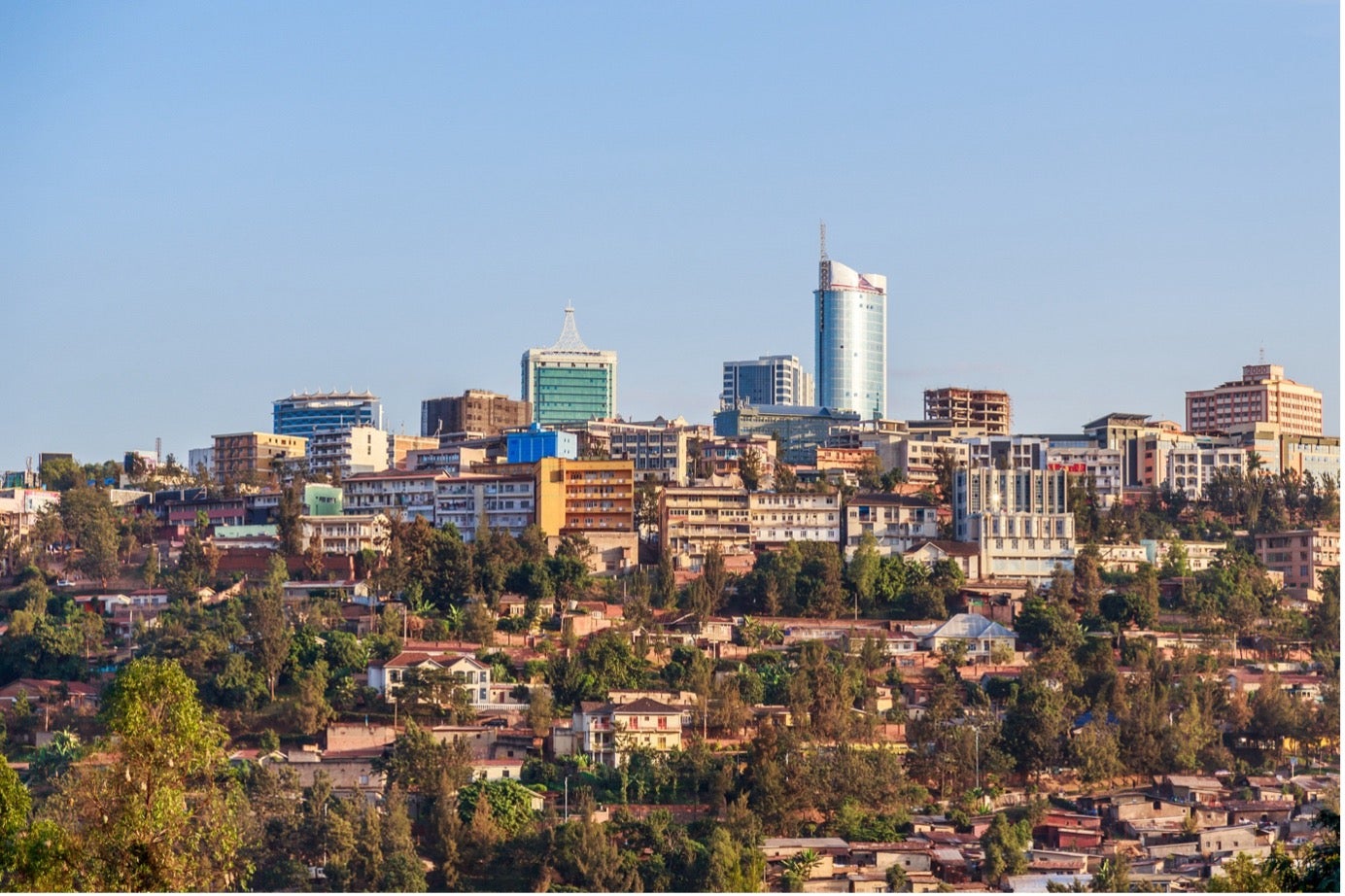
This matters because Singapore is both a city and a state, while Rwanda is a larger, landlocked country with a rural majority. To imagine Rwanda as “Africa’s Singapore”, Kigali becomes central. The capital city is positioned as the place where Rwanda’s national ambitions can be made visible, from smart-city infrastructure and digital services to financial, logistical, and entrepreneurial hub-building.
The Kigali Master Plan 2050 was produced by Surbana Jurong, a Singaporean urban planning firm. Although the plan does not constantly name Singapore, the authors show how it reflects planning ideas associated with Singapore: order, efficiency, green growth, infrastructure coordination, and urban excellence. The plan imagines Kigali as a future-oriented city that can become a model for Rwanda, Africa, and the wider global South.
The article distinguishes between “future-looking” and “future-making”. Future-looking refers to the production of visions, such as the Kigali Master Plan 2050. Future-making refers to the practical work of implementing those visions through smart-city projects, housing upgrades, transport reforms, digital platforms, and institutional coordination.
By studying Kigali’s master planning and smart-city development, the article contributes to wider debates about urban futures, policy models, and the movement of planning ideas across the global South. It shows that urban planning is not only about designing cities; it is also about imagining what nations can become.
Read the article here.