

Article contributed by Ms Aayushi Das, Alumna of the Master of Arts (Arts and Cultural Entrepreneurship) programme.
Singapore does not do ambiguity well. It is a city of declared intentions, and you can sense this as you frolic through it.
Since the 1989 Ong Teng Cheong Report laid the blueprint for state-sponsored cultural development, and the National Arts Council came into being shortly after, Singapore has conscripted the question of culture into a machinery of governance (Kong, 2000). The Renaissance City Plans followed, then its sequel, each iteration more deliberate than the last, each one repositioning the city as what its own policy documents call a “New Asia Creative Hub” (Yue, 2006). Reclaimed, in parts, by the Urban Redevelopment Authority, the Esplanade area, Bras Basah.Bugis precinct, hawker centres gazetted into heritage, all point towards a version of cultural life that is prosperous, plural, and perfectly managed. There is nowhere in the world that has thought harder about culture, and perhaps nowhere that has made that thinking more visible. It is also, if you think about it, a little airless.
I arrived knowing some version of this, and chose it precisely for that reason. Coming from a context where the state and the arts have somewhat of an estranged relationship, where creative industries are being taxonomised into growth indices and the discourse of creative economies has matured considerably faster than creative infrastructure, Singapore felt like it had figured it out. And the programme at the National University of Singapore (NUS) seemed like the right place to reverse-engineer the how. What I did not know was that the year would complicate the question even more and would ask us to interrogate the said apparatus while being situated within one of the most efficient creative economies ever constructed. It was an education that rewarded you for asking the right questions, so as long as you were comfortable with the answers remaining open.
What I did not expect were the people.
This is a love letter. To Singapore, which settled into me slowly and then all at once. To the programme, which gave me vernacular I’m still learning to use. To the people, and what they gave me. To what, if I’m honest, I’m not sure how to return or whether a love letter can placate.
And each person, over time, began to remind me of a module. Because the modules, at their best, were trying to describe a particular way of being in the world.
The one who comes to mind first is Anna.
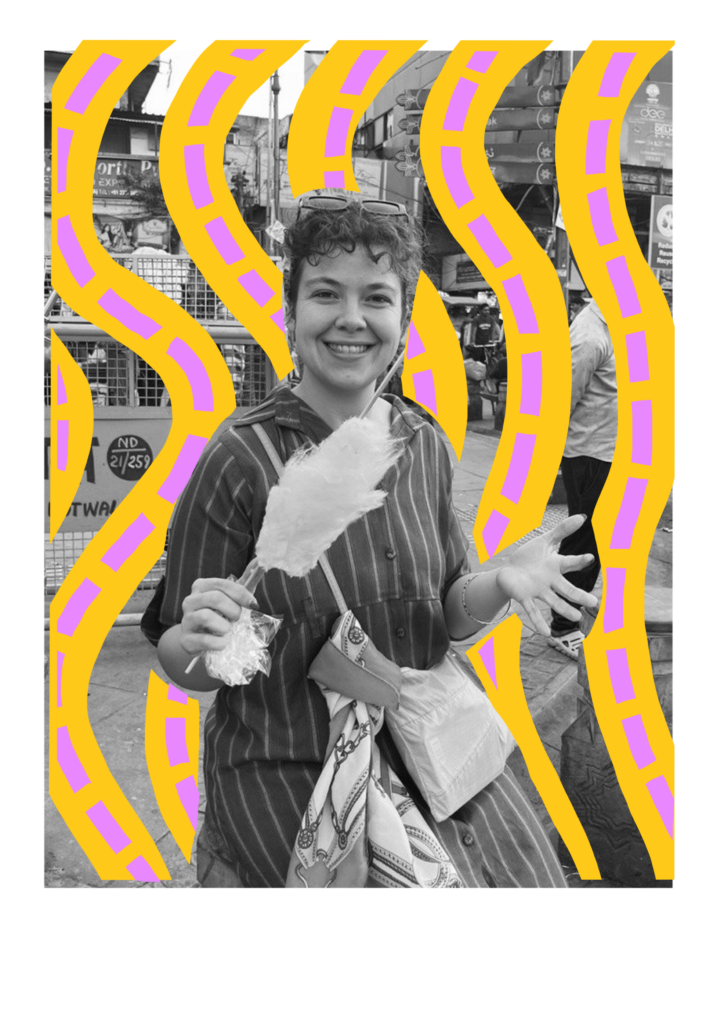
She made you feel like the most interesting version of yourself, because she was genuinely, ardently, inconveniently curious about everything. Which meant that any conversation with Anna would exceed itself, but mind you, she would only put in her two-pennies worth and then wait, leaving you to make sense of them. And she also made you laugh as often as she made you think.
Arts Research and Social Practice argued that knowledge did not have to look like knowledge to count, and research could be reflexive, collaborative, made and locally enacted upon, and a whole lot of meaning could happen inside the making. For her final-year thesis, she anarchived* our programme, Master of Arts (Arts and Cultural Entrepreneurship) which we also called ACE, unpacking it through zine-making, conversation, and play, and rendering her Master’s experience as a site of knowledge production that was practised, reactivatable, iterative, and porous enough for people to be honest inside of. With her I was able to read the politics of HDB’s void decks (arguably Singapore’s most legible unit of social architecture) and hold two distinct interpretations and still do. Lefebvre (1991) would say the space was being produced in real time with the uncles cracking open a cold one with the boys, the teenagers lazing around, and little kids playing their games, effectively co-writing their own rules of social conduct through temporal social practice. For Foucault (1977) the open sightlines and long corridor of vision, the absence of corners and the sense of being seen before seeing were perhaps how conduct and order became internalised in such spaces. Anna would say both, then ask what you wanted to eat at the neighbouring hawker centre. To let knowledge pendulate in the white space so as to metaphorise and repurpose it, is what she did and who she is. It is also the most honest read on the course.
If Anna made space for honest things to surface, Vanessa already knew what to do with them once they did.

She read fantasy novels about otherworldly kingdoms, impulse-collected charms and stickers, very soft-girl-fairycore coded, if you ask me. And then she would open her mouth and say something so snippy and unsentimental that you would have to recalibrate everything you had just assumed about her. Vanessa did not editorialise. Ask her what it was like working in a “cool” industry (fashion, if you will) and she would tell you, what it cost. Unpaid styling trials and gig work repackaged as freedom, production labour that rarely gets budgeted, and the way cool industries obscure it all (McRobbie, 2002; McGuigan, 2009). But she was not bitter about any of it. She chose to keep doing it, clear-eyed and undeceived, which possibly is the most insurgent thing a person can do inside a system they have largely seen through.
Approaches to Arts and Cultural Entrepreneurship taught you that building something in the creative industries means getting the moving parts right. It’s a bit unforgiving, and not in the hackneyed art versus commerce type of way but the more interesting question of how you make something scalable and sustainable without losing sight of what made it worth building. Watching Vanessa ask questions that were one step more grounded than anyone else's, I kept thinking that this was what the module was trying to produce. Someone who dreams with both eyes open.
Where Vanessa knew what she wanted and had made peace with the cost of it, Ayushi (yes, we had the same name) had not yet decided if there was enough value in making peace.
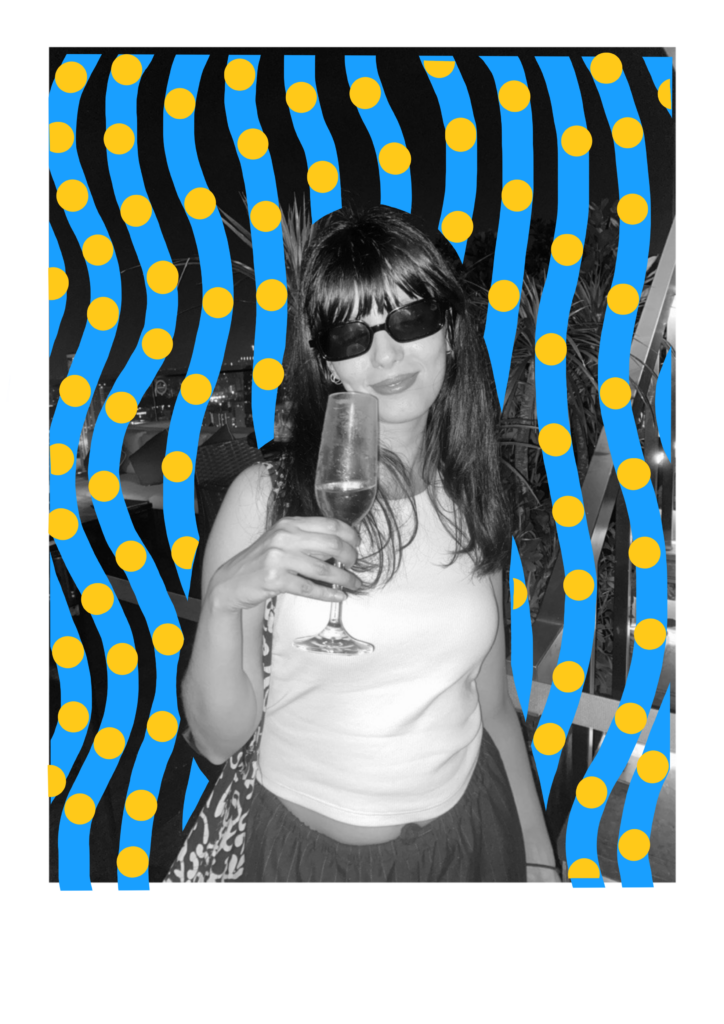
She had big ideas and would deconstruct them until she had a plan. Which sounds sensible until you realise she did this for everything, at all times, with pedantic conviction. She was incredibly resourceful, noticed what you missed and was not particularly subtle about it.
Museums, Exhibitions and the Curatorial asked, as all good curatorial theory does, whose story is being told and at whose expense. The risk of borrowing without acknowledgement, of uncontextualising objects and histories to make them palatable to a particular audience was something the course returned to repeatedly. Occasionally the seminar’s discourse would also give way to the idea that anything could be art as long as it could be appreciated and that tasteful curation is the scaffolding of a good exhibition and could hold even if the narratorial theme was complacent or uninspiring. I'll be honest, there were seminars where the epistemological-intersectional-metaphysical-phenomenological-juxtaposition sent me somewhere far, far away. But Ayushi was rather comfortable with the inaccessibility of these questions/answers, and possibly even agreed that the gap between critical theory and the person standing in front of an exhibit is wider than anyone in the industry likes to admit, but she refused to be humbled by it. She was like that about most things actually, that if you could not see the value in something, it was a perception problem rather than an inherent problem of the thing. Layered, aspirational, occasionally exhausting, always worth it.
Mich, on the other hand, did not care so much about arriving at her own reckoning as she did about scheduling them.

She planned everything, and she was disarmingly bullish on how it was the only way to be. She made you realise, sometime around the third week of knowing her, that you have been operating at about sixty per cent of your potential this entire time and she had known it all along. Even the parts of her that looked frivolous, frivolous by my reading at least, were not exempt. She collected Pop Mart toys with an absurd degree of rigour and you did not make plans with Mich so much as receive them, fully formed, already optimised, with contingencies built in for the version of you that would inevitably be running late. You were basically incidental to the system. You were a variable that she cared about, noise if you will, signal by the time she was done with you, but a variable nonetheless.
Managing Cultural Events operated perhaps more incisively than any other module, on the fact that an idea without infrastructure is only wishful thinking. It asked you to read a balance sheet alongside a creative brief, to think about risk assessment, stakeholder management, audience development and community engagement as the architecture on which everything else rests, each decision recursive, looping back to shape the next. And Mich was, at her core, a systems person. For her, knowledge was embodied and was useful only once it had been processed, categorised, and made actionable. The systematising was the thinking and everything that went through the framework first, went through it last as well.
Zach also planned, but only so he could fit more of the world inside him, and he was better for it.
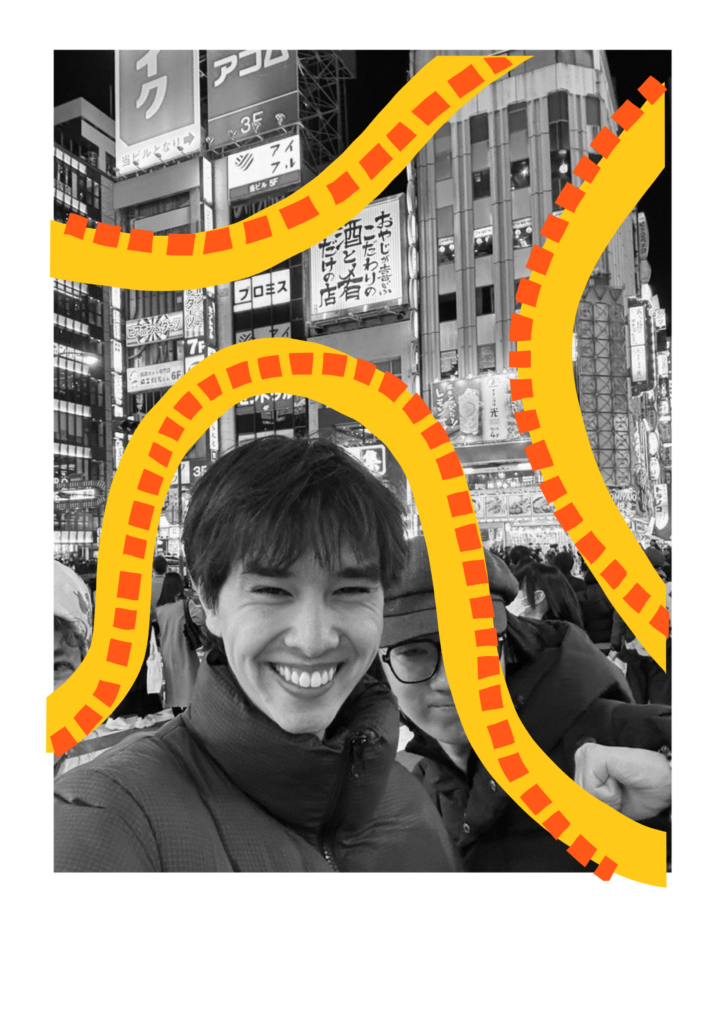
Zach was extraordinarily well-travelled and collected little objects he thought were quirky and subversive, but were practically available at every gift shop within a five-kilometre radius of the attraction. But he believed in them anyway. He picked up languages because he wanted to, copped stories and retold them enthusiastically to whoever was nearby, including people who had already heard them, maybe even people who were there when it happened, which you just had to accept as part of knowing him. He would derail an entire study session and be completely unbothered by the disruption he left behind. But he could not be distracted himself. And somehow this made him the most present person in any room, because wherever he was, that was the only place to be.
Cultural Diplomacy and Intelligence taught you that culture is not a text you read. It is a room you walk into, and what you make of it depends entirely on how willing you are to actually be there. The module cast this as soft power, as strategy, as the studied art of how nations and institutions pull favours, how cultural goods travel and accrue value, and how cultural intelligence is as applicable to a trade negotiation as it is to a conversation with a stranger in a city you have never been to before. Zach was 23, excited about life, and notoriously unguarded about it, and so wherever he went, something happened between him and whoever was there. Which is either the best possible outcome of a cultural diplomacy education or the thing it cannot teach you at all.
There were others. Yihan, Lisa, Ananda, Pinchen, Ferdinan. They reminded me of our courses too, but I couldn't pin them down to one. I found fragments of them in all ten courses, they were all quite dynamic like that.
For what it’s worth, I think (hope) I know which course I am. It was everyone's favourite, which should probably worry me more than it does. Cultural Policy. The one that already holds a position, extrapolates as analysis, and then has the audacity to publish that analysis on the very institution's website I spent a year interrogating. What it also taught me was to turn the instrument on myself, and that is a disorienting thing to learn but it is also the most useful thing I’m left with.
Singapore, as it turns out, is easier to fall for once you stop auditing it. You'll be surprised at how soon you find yourself hankering for a bowl of beef noodle soup, or how quickly the brazen humidity stops feeling like an infliction and starts feeling like weather you have earned the right to complain about. The way the city straddles its contradictions, the kampung and the built-for-convenience smart nation is where Singapore finally becomes discernible. And once it is discernible, its material reality and how thoroughly Singapore has constructed its own cultural identity, becomes easier to sit with, especially once you have people to sit alongside. Oldenburg (1989) wrote that the most important sites of community are neither home nor work but the informal, unplanned spaces in between. I seemingly found them in seminars, group chats and conversations that had no business becoming the ones I still think about.
There is a great deal more to learn in the world than I understood arriving in Singapore, and there is, potentially, a great deal that people have to learn from me too. Show up, understand, and travel somewhere new and let it vindicate the version of yourself you were not sure existed or only perceived as possible. What it means to return is still unclear to me. Not to the city exactly, though I would go back tomorrow. But to the version of myself that exists inside that particular combination of people, modules, and humidity. You cannot possibly return to that. You can carry it forward, imperfectly, and hope that wherever you breathe next, something of it comes with you.
*Anarchiving is a research-creation practice that treats archival material as reactivatable traces, feeding insights forward through a continuing creative process rather than resolving them into singular, fixed narratives
Aayushi Das is an alum of Master's in Arts and Cultural Entrepreneurship (ACE) and works across growth and brand strategy in media, platforms, and entertainment. Her broader engagements span cultural economics, cultural policy, and urban culture.
References:
Foucault, M. (1977). Discipline and punish: The birth of the prison (A. Sheridan, Trans.). Pantheon Books.
Kong, L. (2000). Cultural policy in Singapore: Negotiating economic and socio-cultural agendas. Geoforum, 31(4), 409-424.
Lefebvre, H. (1991). The production of space (D. Nicholson-Smith, Trans.). Blackwell.
McGuigan, J. (2009). Cool capitalism. Pluto Press.
McRobbie, A. (2002). Clubs to companies: Notes on the decline of political culture in speeded up creative worlds. Cultural Studies, 16(4), 516-531.
Oldenburg, R. (1989). The great good place: Cafés, coffee shops, bookstores, bars, hair salons, and other hangouts at the heart of a community. Paragon House.
Yue, A. (2006). Cultural governance and creative industries in Singapore. International Journal of Cultural Policy, 12(1), 17-33.
Programme at a Glance
Contact Us
We will guide you through the next steps of your transformative journey.
For enquiries, contact cnm.graduate@nus.edu.sg