

Student Testimonials

|
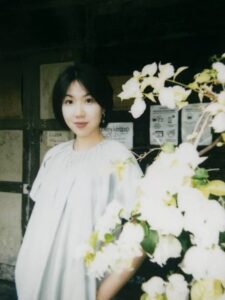
Ms Xie Mulan “What I loved most about the programme was the interaction with people – whether it was the professors’ insightful responses during seminars or the discussions with classmates from multicultural backgrounds. These intellectual collisions not only deepened my understanding of the region’s complexities but also challenged me to think critically in both my studies and life. The programme also offered unforgettable hands-on learning experiences. From the Gamelan masterclass, where I experienced Javanese culture through music, to the Johor field trip, where I immersed myself in the local communities’ cultural and social nuances, these activities brought Southeast Asia’s vibrancy to life.” |
|
Ms Song Yang “This programme has truly opened the door to my interest and enthusiasm in understanding the politics and culture of Southeast Asia. What surprised me most was the entire department's support network to help students inspire their academic potential. Professors' unrestrained support and their patient, hands-on guidance were of the greatest help to me. Their guidance taught me how to transform disorganised ideas into concrete and meaningful research topics and how to then conduct solid empirical research.”
|
|
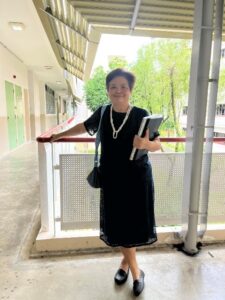
Ms Frances Ong Hock Lin “One of the most enriching experiences of the programme was taking SEA5238 Country Studies: Singapore. Some of my friends questioned why I chose to study my own country, but this module provided a new lens through which to examine Singapore’s historical development, governance, and cultural and social evolution. It challenged many of the assumptions I had taken for granted and allowed me to explore lesser-known aspects of Singaporean society. The diversity of perspectives in the class, with students from different academic and professional backgrounds and from various countries in Southeast Asia, made for stimulating debates and deepened our collective understanding of contemporary issues in Singapore. What truly made the experience exceptional was the engaging teaching approach. Our lecturer infused lessons with real-life stories that brought abstract concepts to life, allowing us to appreciate how historical events and policies continue to shape Singapore today. This storytelling approach added a human dimension to our studies and reinforced the relevance of academic knowledge in real-world contexts.” |
|
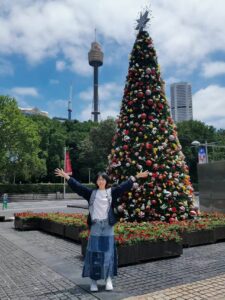
Ms Yuan Hanchen “SEA5213 Food History of Southeast Asia is a module that left an extremely deep impression on me, not only because it has a somewhat “delicious” title, but also because it is an extremely rich module, both in terms of content and form. On the one hand, this module has a serious academic nature: Dr. Lin selected topics related to 13 kinds of food to tell stories about foods, technologies, and cuisines, and provided a multidisciplinary research perspective in both teaching and the choice of reading materials. The module is undoubtedly extremely suitable for history lovers; in the stories of food, we learn the interconnection and interaction of human history from a global historical perspective through the flow, influence, and change of food, and we can also see the interaction of these foods with gender, class, and even individual identity in more specific and microscopic society perspective. On the other hand, the module also has a side that is close to life. In class, I really like Dr. Lin's way of asking questions. In addition to setting discussion questions related to lectures and reading materials, he also raises some questions that are close to daily life; at such times, students from different countries and regions, with different life experiences, can always provide more, and even some obscure information, which seems to prove that the global story of food is still being written today.” |

|
"Studying MA by Research with the department was truly an intellectually stimulating exercise in a nurturing environment. The interdisciplinary focus of research and courses by faculty members invites me to rethink assumptions carried from my undergraduate and working years. My thesis advisor encouraged me to think out of the box and be bold in experimenting with conceptual frameworks and ideas. Courses at the start of the stint offered by other departments also broadened my views and challenged me to reconsider several conventional wisdom. There is no lack of inspiring researchers, educators and post-graduates who are deeply passionate about their areas of expertise here. While intellectual diversity is dizzying in the department, they are all united by their love and dedication to the study of the Southeast Asian region. While having a blast with thinking and tinkering, the nurturing environment in the department spurred me to reach out to faculty members for conversations and collaborate with fellow students in course assignments. Here is a safe environment to speak one’s mind and take charge of your ideas while being ready to revise it anytime. At the end of this two-year programme, I am well-equipped and confident to either return to my former industry or continuing to explore further studies." |
|
"What drew me to the programme was the department's appreciation for the arts as a medium for studying Southeast Asia. Naturally, I enjoyed the many performances and exhibitions that were part of department life. SEA5212 Arts in Southeast Asia was also an excellent orientation through its kaleidoscopic overview of practices in textile, dance, storytelling, music, and museum practices around the region. As I spent more time in the programme, I was quickly exposed to research topics and approaches far beyond my original interests in art. Through various courses and events I met people with exciting research topics in tourism, biodiversity, human rights and more, contributing to a more holistic appreciation of the region. I felt valued as an arts researcher, yet challenged to consider more perspectives." |
|
Ms Esti Asmira "The Masters by Research programme broadened my academic horizons beyond my undergraduate training as a historian. It served as a crucial stepping stone into interdisciplinary research, allowing me to draw from diverse disciplinary approaches as I continue to deepen my understanding of the region’s contextual specificities. Although research-focused in nature, it offered coursework opportunities where I could learn alongside peers from diverse academic and professional backgrounds. The department’s supportive environment – especially their understanding of the unique challenges I faced as a part-time student – ensured that I had the necessary flexibility and guidance to thrive. As I look ahead to future academic pursuits, I am thankful that the programme laid a strong foundation by equipping me with the perspectives and confidence to navigate interdisciplinary research at the next stage of my academic journey." |
 Mr Saraln Ng Udomkichdecha
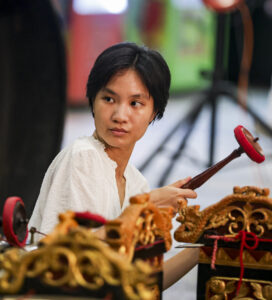 Ms Wong Yong En
|
"My time in the Department of Southeast Asian Studies at NUS was incredibly formative and truly set the stage for my academic career. The coursework was rigorous yet engaging, providing a comprehensive foundation in the field while allowing the flexibility to delve into niche areas that sparked my curiosity. I particularly appreciated how the diverse range of seminars exposed me to different theoretical approaches and research methodologies, which proved invaluable as I began to conceptualize my own research during my first year. The process of finalizing my dissertation topic felt less like a daunting task and more like a guided exploration, thanks to the insightful discussions and resources available. What truly distinguished my experience was the exceptional supervision I received and the FASS graduate student community. My supervisor not only provided expert guidance and unwavering support throughout my research journey but also encouraged intellectual independence, fostering my growth as a young scholar. The peer network within the department and the faculty was equally crucial as we shared ideas and offered mutual encouragement, creating an environment that was both stimulating and supportive. These connections and the rigorous training I received were instrumental in preparing me for the demands of an academic career." |
|
Dr Vilashini Somiah "My time at the Department of Southeast Asian Studies at NUS was nothing short of transformative. As a feminist anthropologist of mixed indigenous heritage, navigating both personal and academic borders, the Department became my intellectual anchor and my testing ground. It was there, under the mentorship of Assoc. Prof. Dr. Oona Paredes (now of UCLA), I learned how to ask difficult questions and hold space for difficult answers, particularly in relation to East Malaysia, a region that had long been peripheral in many mainstream academic discourses. Through rigorous training, dynamic conversations, and generous support, the Department nurtured in me both academic discipline and radical curiosity. It helped sharpen the tools I now use to think critically about gender, indigeneity, migration, and power. Simply put, the Department of Southeast Asian Studies at NUS helped shape my career and taught me what it means to be an academic in and of Asia." |
|
"During my doctoral study from 2013 to 2018, I truly enjoyed my time in this department. The curriculum enriched me with advanced knowledge and diverse perspectives on Southeast Asia through original texts and discussion-based teaching methods. This approach helped me strengthen my analytical, critical thinking, and writing skills. The study plan included courses like country studies, individual research, and research methods, which were all highly relevant to my potential thesis topics and helped me develop and clarify my ideas. My advisor provided outstanding supervision and was always supportive, both academically and personally. The research seminar sessions, attended by lecturers and fellow graduate students, were another valuable platform where I received constructive feedback that helped shape my thesis proposal. We also had a graduate common room where we shared learning experiences, research tips, and even some fun and crazy moments. The support staff were always there to assist with administrative issues, making everything smoother. Lastly, the university offered excellent facilities, including a comfortable dormitory complex in UTown, a sports center, healthcare services, and great restaurants – all of which helped me maintain my physical and mental well-being throughout my studies." |
 Dr Mu’izz Abdul Khalid
 Dr Sorasich Swansilp