

Fluid Jurisdictions
November 11, 2021
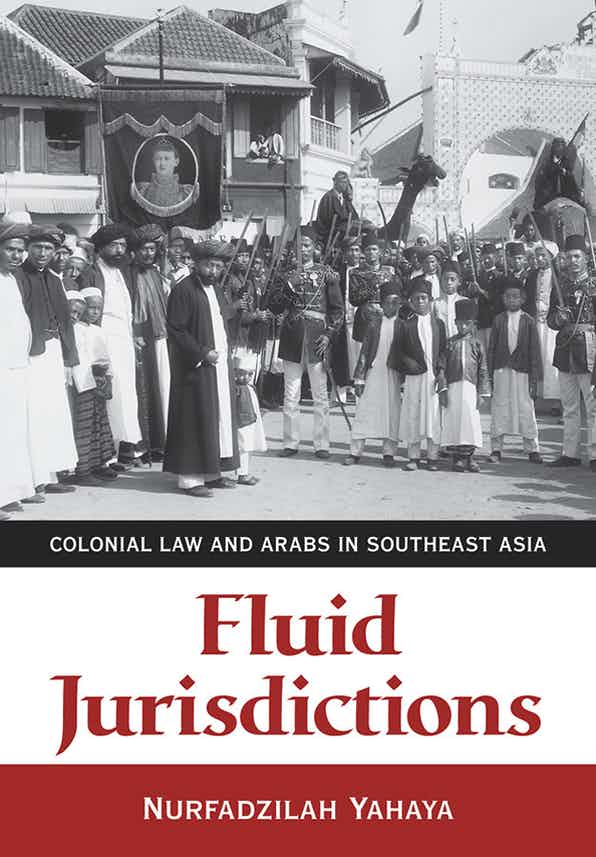
Arab immigrants, with their wealth of trading experience and networks, established businesses and trading posts in Singapore, contributing to Singapore’s development as a bustling hub for trade and enterprise. On 11th November 1946, the Arab Association was officially set up. The Arab Association hopes to promote Islamic virtues and the use of the Arabic language and provide a common platform for Singapore Arabs to share.
The Arab community was a minority population in Southeast Asia when the British and Dutch colonized the region. Despite their status as a minority group, the Arab diaspora wielded a disproportionate amount of influence in the region. This was the result of the community’s embrace of colonial authority and legal structures to advance their community’s own interests. In Fluid Jurisdictions (Cornell University Press, 2020), Assistant Professor Nurfadzilah Yahaya (NUS History) investigates the Arab community’s acceptance of European colonial power in Southeast Asia, and how this was instrumental in promoting their own interests.
Asst Prof Nurfadzilah points out that the Arab elites influenced the development of Islamic law in the British Straits Settlements which Singapore was a part of. At the time, Arab elites pressured colonial jurisdictions to expand into more areas of life, allowing colonial authorities to consolidate their power within the settlement. When colonial governments assumed greater power and authority in Muslim lives within the settlement, this meant the displacement of native forms of authority and systems that were already in place. By accepting and supporting colonial jurisdictions, the Arab community was eventually granted the role of religious arbitrators within the settlement and provided some sense of legitimacy as citizens of the British Straits Settlements.
As noted by Asst Prof Nurfadzilah, Singapore found itself embedded in a larger and more complex bureaucratic system after the Straits Settlements became a Crown Colony. Arab elites responded swiftly and took advantage of the changes by siding with colonial state structures and worked towards centralizing legal administrative structures, and the colonial administration of Islamic Law. Asst Prof Nurfadzilah argues that the Arab elites eventually found themselves advancing their own interests and disregarding the needs and interests of both their ethnic community and the broader Muslim community present within the Crown Colony.
Fluid Jurisdictions investigates the complex relationships between the Arab community and colonial jurisdictions at the time, how the Arab community negotiated legal pluralism in Southeast Asia and the surrounding region, and the resultant struggle that emerged from the tension between different legal orders.
Access the book here.