

Singapore’s Collegiate Model: Combining Teaching, Research and Residency
January 1, 2023
The University of Singapore was formally established on 1 January 1962, following its split with the University of Malaya. At the time, the Singapore and Malayan governments wanted separate universities, and thus decided to have its Singapore and Kuala Lumpur divisions become autonomous national universities in their respective countries. Since then, the University of Singapore has expanded to become the National University of Singapore (NUS) that we know today.
Moreover, with the support of the Ministry of Education and the Cabinet of Singapore, NUS has been spearheading the concept of college-building. In ‘Singapore’s Collegiate Model: Combining Teaching, Research and Residency’, a chapter from The Collegiate Way (Sense Publishers, 2016), Associate Professor Gregory Clancey (NUS History) reviews the establishment of NUS’s four residential colleges, with a particular focus on Tembusu College, where he became the founding Master in 2010.
NUS residential colleges have successfully integrated teaching, research, and residency. For teaching, residential colleges formed their own unique curricula which could be counted towards the students’ university degree. These courses were held in small seminar sessions with a low staff to student ratio and had to be interdisciplinary in nature. They did not have quizzes or exams, but were aimed at developing the students’ critical thinking, speaking, and writing skills. Additionally, Tembusu College held a near-weekly Master’s Tea series which invited prominent members of society into the college to discuss relevant topics with undergraduates.
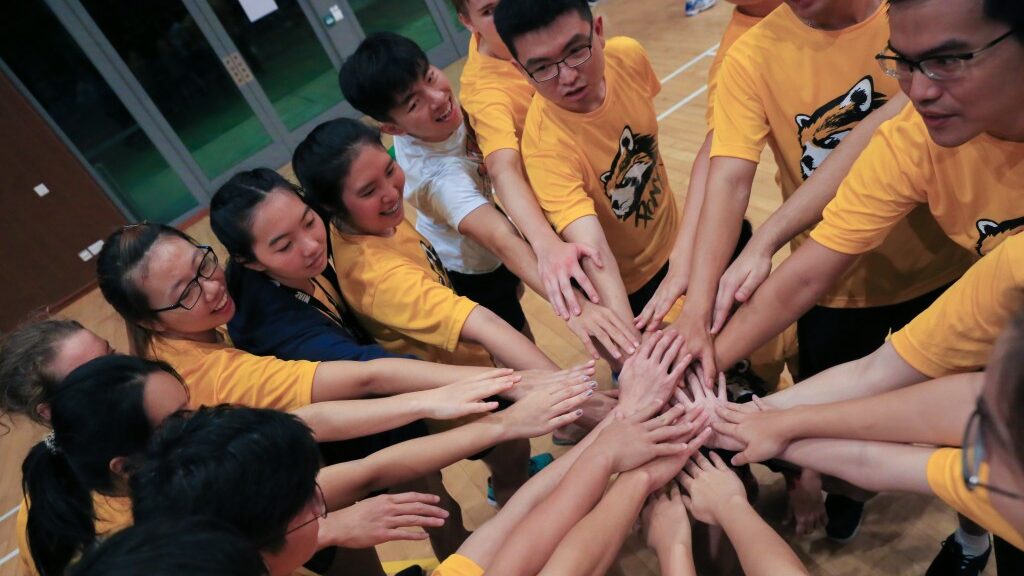
To foster diversity and facilitate interaction among the student residents, residential colleges encourage the mixing and intermingling of different personalities. When selecting overseas exchange students, Tembusu College attempted to choose students from nationalities that they had not admitted before. Regular activities, interest groups, and shared dining halls promote more interaction, contributing to a vibrant student life.
A/P Clancey points out how a research element is crucial to the success of the NUS collegiate model. Tembusu College’s partnership with the Asia Research Institute (ARI) allows staff to hold joint appointments in both the college and ARI. The partnership helps to associate the college with a leading research institute and also eases the recruitment of research fellows from ARI, who teach in the college.
A/P Clancey concludes that despite the success of the NUS residential colleges, the collegiate model must continue growing to overcome any future challenges. It should continue to excel in teaching and contribute further to the university’s research profile to maintain its importance in Singapore’s pragmatic society.
Read the chapter here.