
NUS study confirms that guessing before learning improves memory in language learning
April 18, 2026
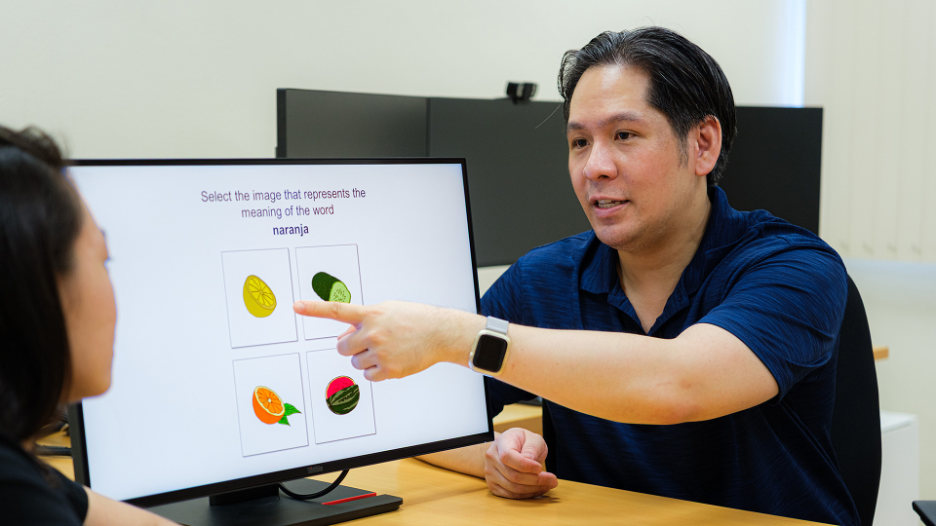
A simple habit many learners try to avoid, guessing, may actually be the key to learning languages more effectively. In ‘Duolingo-inspired pretesting with words and pictures improves vocabulary learning’ (Cognitive Research: Principles and Implications, 2026), Assistant Professor Steven Pan and Ms Tabitha Chua (both NUS Psychology) have found that attempting an answer before knowing it, a technique widely used in language-learning apps, can significantly boost memory and vocabulary retention.
The research provides some of the first experimental evidence in the world behind “pretesting”, where learners guess first and receive immediate feedback. Across four controlled experiments involving 341 adults with no prior knowledge of Spanish, participants who used this guessing-with-feedback approach consistently outperformed those who simply studied word-picture pairs. The study replicated common app-based formats, such as word-to-image and image-to-word matching, and found that learners who guessed first showed stronger recall and recognition regardless of how the material was presented. Even incorrect guesses proved valuable, since they prompted deeper cognitive engagement and made the correct answers more memorable when revealed.
For Singapore, where bilingualism is a cornerstone of the education system and lifelong learning is actively promoted, the findings carry practical relevance. From students grappling with Mother Tongue languages to working adults picking up new languages through digital platforms, the research suggests that embracing mistakes, rather than avoiding them, can accelerate learning and retention.
As language apps and self-directed learning continue to grow in popularity, the study points to a simple but powerful takeaway: trying, failing and learning from feedback may be more effective than passively waiting to get it right!
Read the NUS News article on the study here.
Read the journal article here.