
Songbirds in a Garden City
May 21, 2026
Singapore’s transformation into the metropolis it is today has drastically reduced its forest cover. Despite this, migrant and indigenous songbirds have adapted to Singapore’s environment since the 1950s, cementing their ecological role as a lasting feature of the island. In ‘Songbirds in a Garden City’, the sixth chapter of Singaporean Creatures: Histories of Humans and Other Animals in the Garden City (NUS Press, 2024), edited by Associate Professor Timothy Barnard (NUS History), Assistant Professor Faizah Zakaria (NUS Southeast Asian Studies and NUS Malay Studies) examines historical efforts to monitor and protect these unique birds amidst rapid modernisation.
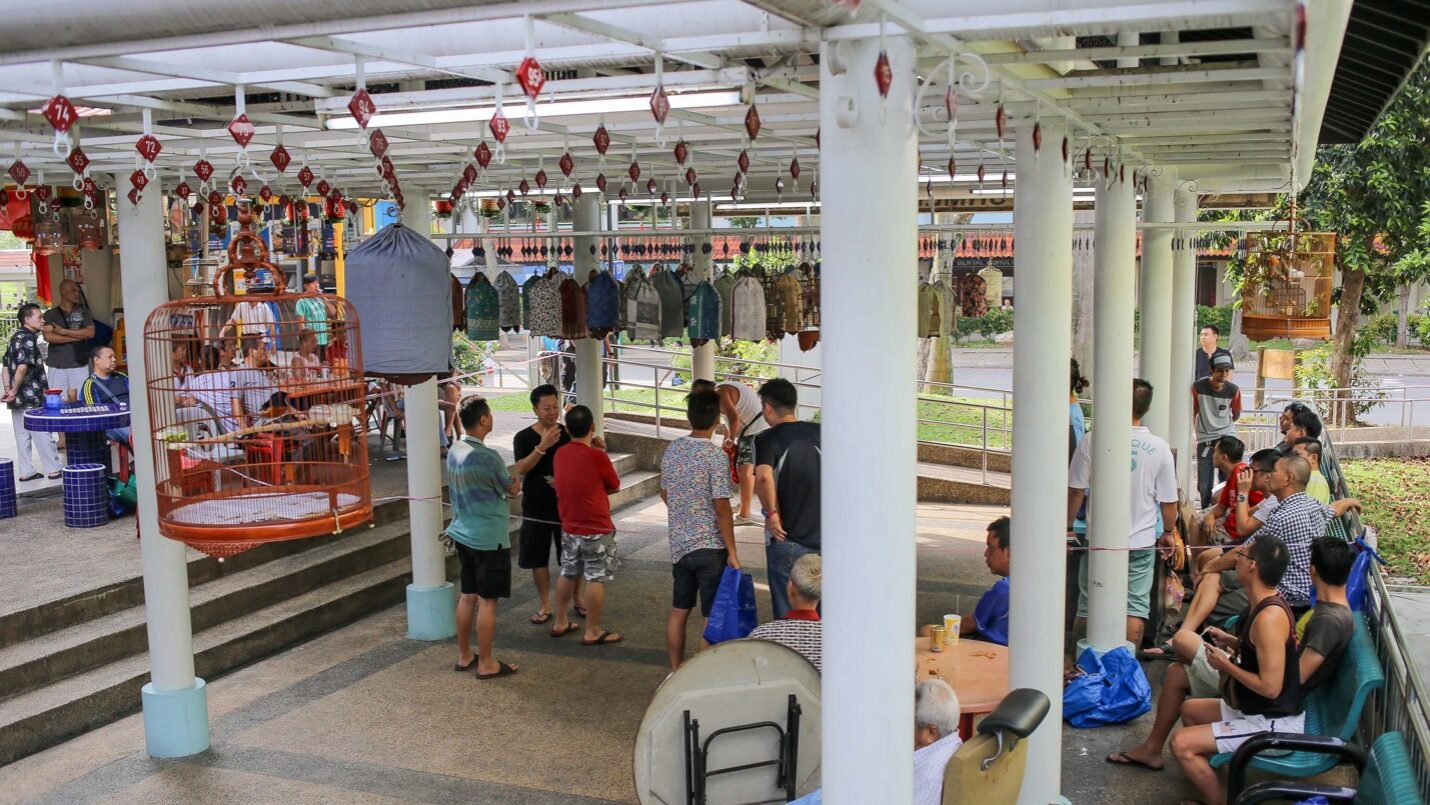
Songbirds, renowned for their melodic notes produced by uniquely developed voice box muscles, have been both socially and scientifically cherished. In the 19th century, songbird trading emerged as a pastime for the wealthy, later expanding to bird shows and singing competitions. Asst Prof. Zakaria explains that the growth of a domestic songbird-keeping community aligned with Singapore’s urban development in the 1960s, as the government promoted small pets like songbirds over farm animals to suit the compact living of public housing. This trend also aligned with the government’s vision of a Garden City – a meticulously crafted landscape that integrated flora, fauna, and pet birds. To support this, Kelab Burung Singapura, a national bird club, was established in 1963 and the Jurong Bird Park hosted annual bird-singing competitions, while new housing estates featured key infrastructure like bird stands and singing corners to foster intercultural neighbourly interactions. Songbirds became emblematic of Singapore’s cultural identity, appearing on the S$50 note in the 1970s and evolving into prized economic assets.
However, tensions arose as the welfare of pet songbirds came under closer scrutiny by bird conservation organisations. Pet owners, devoted to the care of their caged birds, often clashed with wildlife advocates, including the Singapore Nature Society and the Animal Concerns Research and Education Society (ACRES), which prioritised habitat preservation and preventing bird extinction through initiatives like bird guides and avifauna research. These differing approaches created a divide, particularly as the cage-bird trade faced criticism for its role in depleting wild bird populations and employing inhumane trapping and transport methods. Efforts to address avian welfare have since grown, focusing on two fronts: 1) fostering sustainable practices in the songbird trade and encouraging pet owners to provide better care, and 2) rethinking the Garden City ideal, since critics argue that this vision emphasises artificial landscapes over the preservation of natural wilderness and bird habitats.
The chapter concludes noting that the heyday of songbird keeping had largely faded by the turn of the century, becoming a niche pastime among older Singaporeans with only a small number of dedicated enthusiasts remaining. While promoting bird keeping as part of the Garden City initiative brought notable environmental and socio-political benefits, it also faced significant challenges, such as the proliferation of rejected species like the Javan Myna. The chapter questions the continued relevance of the Garden City concept in the face of growing climate change concerns and the need for clearer boundaries between humans and vulnerable non-human species. It highlights the city’s role within a global ecosystem where different species coexist and ponders how such entanglements can be sustained in the future.
Read the chapter here.