

Beyond the Algorithm: Why the Humanities Matter More Than Ever in an AI-Driven Future
April 24, 2026
As artificial intelligence (AI) reshapes industries and classrooms in Singapore, the skills needed to navigate an increasingly automated world are rapidly evolving. Are the humanities and social sciences, long hallmarked by critical inquiry and ethical reflection, losing their relevance?
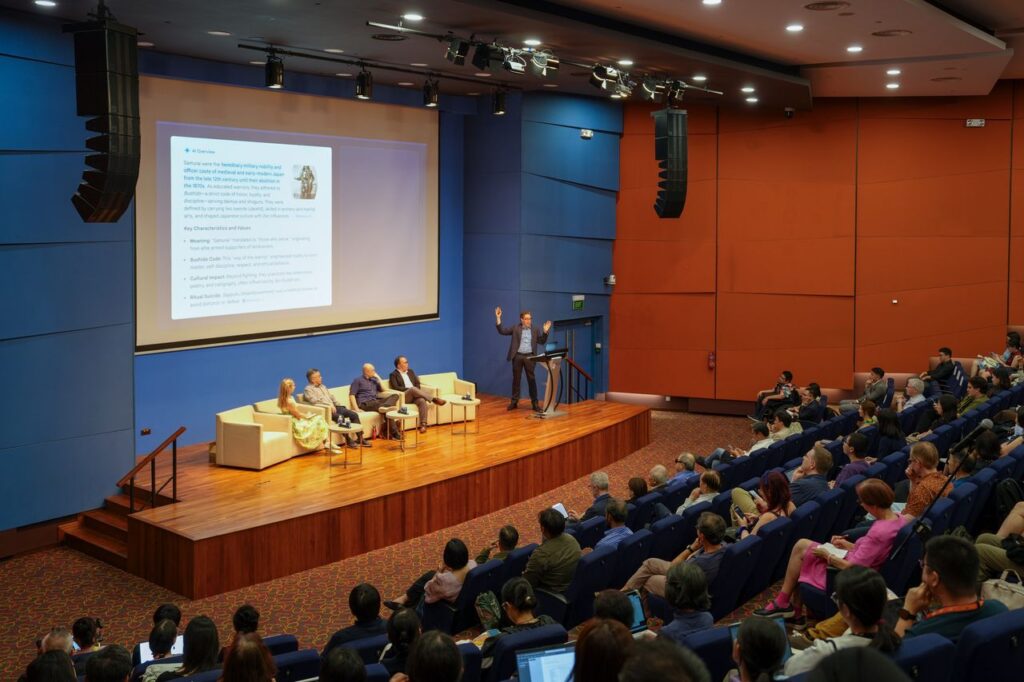
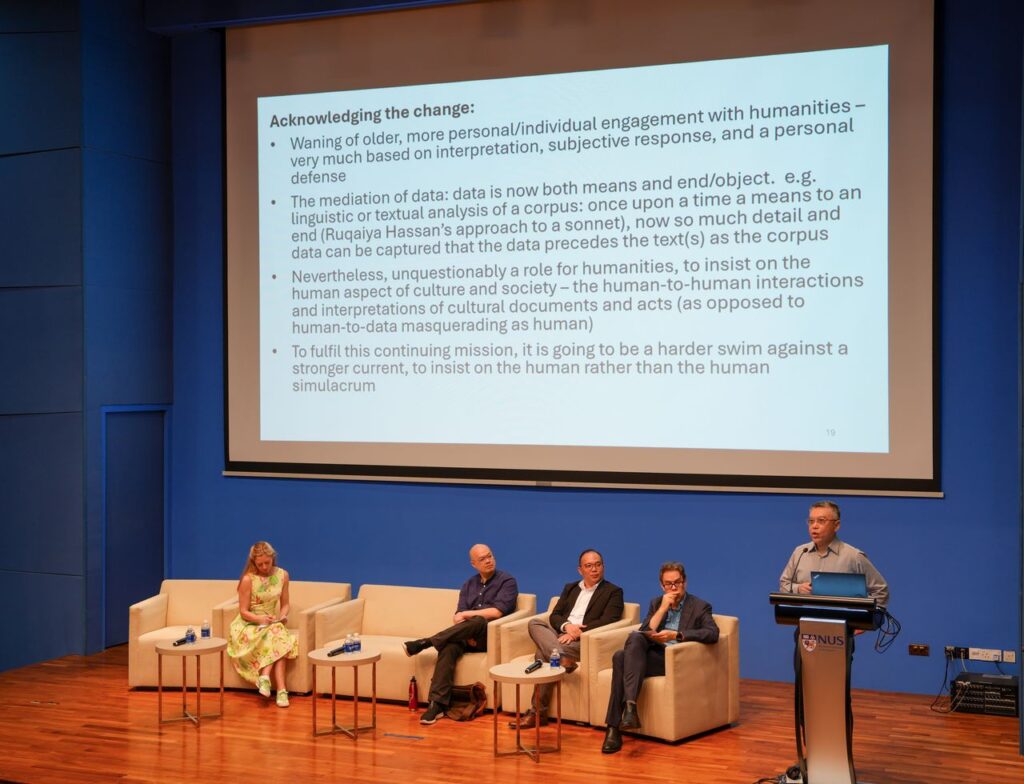
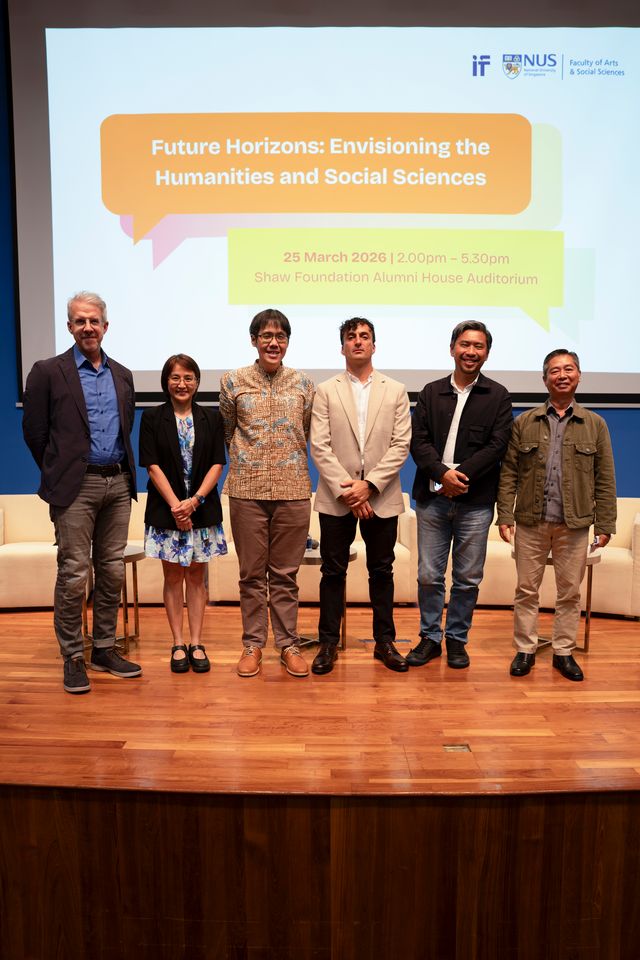
To conclude the Ideas Festival Singapore 2026, NUS FASS hosted ‘Future Horizons: Envisioning the Humanities and Social Sciences’ on 25 March 2026, where speakers from diverse academic and professional backgrounds converged on a shared conviction – that in spite of rapid technological and change and intensification of global crises, the humanities and social sciences will and must continue to shape the future, but cannot do so by maintaining the status quo.
While AI expands what machines can do, societies will need the humanities and social sciences more than ever to interpret fast-changing realities, interrogate ethics and power, and preserve human agency. In an age of abundant information, the ability to think critically and recognise bias becomes indispensable. These are precisely the capacities that the humanities and social sciences cultivate, enabling individuals to navigate uncertainty and question assumptions embedded within seemingly neutral technologies. The event’s discussions also reiterated that writing and artistic interpretation remain central to how people think and make meaning. These are not outputs that can simply be outsourced to AI, since these processes depend upon human reasoning and agency, which are context specific. At the same time, the real-world impact of AI will depend upon human behaviour and social contexts.
As Singapore prepares its students for an AI-driven future, there is a growing need to integrate humanities and social sciences perspectives into curricula, including building AI literacy from an early stage. Beyond technical proficiency, students must learn to engage critically with technology and understand its broader societal consequences. Equipping the next generation with these capabilities will ensure that technological progress remains grounded in human values, enabling Singapore not only to adapt to change, but to shape it responsibly.
Access the event programme here.
Read the NUS News article on the event here.
Photos: Rini Jumari