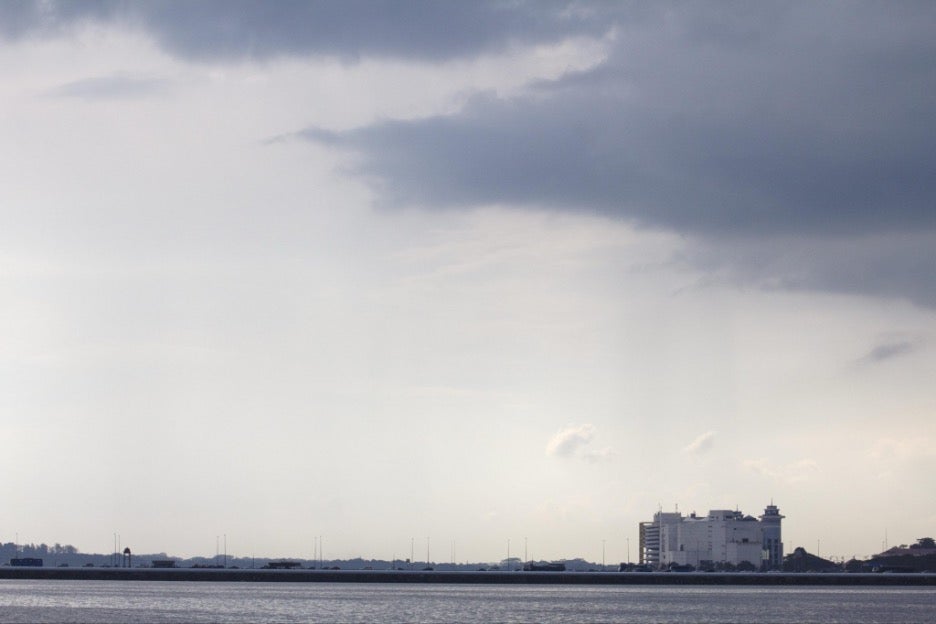

The Johor–Singapore Causeway: Celebrating and conceptualising its centenary
June 28, 2026
The Johor-Singapore Causeway celebrated its 100th birthday on 28 June 2024. Since its inauguration day, it has served as a crucial piece of infrastructure, facilitating the constant flow of people, commodities, and goods between Singapore and Malaysia, thereby contributing to their statuses as each other’s second most important trading partners. To commemorate its centenary, Dr. Francis Hutchinson (Institute of Southeast Asian Studies-Yusof Ishak Institute), Dr. Shaun Lin (NUS College), and Professor Tim Bunnell (NUS Geography) published ‘The Johor-Singapore Causeway: Celebrating and Conceptualising its Centenary’ (Journal of Southeast Asian Studies, 2023). They outline the historical context of the Causeway’s conception, its symbolism reflecting the changing political relationship between the two independent nation-states, and its dual role as infrastructure of both connection and division.
The construction of the Causeway was driven by the development of railway connections across Malaya and worldwide. The increasing volume of trade between the Federated Malay States, Johor Bahru, and Singapore necessitated a direct rail network, which ultimately led to the idea of integrating rail, water transportation, and road connections. Built long before either country attained independence, the Causeway’s status as either a domestic or international infrastructure was contentious. The debate extended to whether the Causeway should be inaugurated by the Sultan of Johor or Governor Guillemard, a representative of the British Monarch. This duality became further complicated during and after the Second World War, amid frequent changes in governance across both states, culminating in Singapore’s separation from Malaysia. Today, immigration complexes on both sides mandate passport checks, yet road signs in both territories continue to reference destinations in the other with domestic place names.
The researchers also explore the duality of the Causeway, emphasising how it not only connects but also separates the two countries. Historically, this duality was evident during the Second World War when the Causeway was bombed to deter the Japanese advance into Singapore, and during the Malayan Emergency when it was a target for insurgent attacks and close surveillance. More recently, the COVID-19 pandemic led to the prohibition of transportation and human movement through the Causeway from March 2020 to April 2022, severing key human connections and highlighting its role as a barrier during crises.
The popularity of different uses of the Causeway has shifted over time. Despite its initial importance, there is currently no rail connection for freight between Malaysia and Singapore, with only the Intercity passenger service operating between Johor and Woodlands. Consequently, vehicular transport has assumed greater importance, leading to the Causeway being widened three times between 1964 and 1988.
The article concludes by pondering the future of the Causeway, whose centurion status has prompted symbolic historical consideration. The linkway has emerged as a key nexus of infrastructure and (in)security, with contentious issues such as water and food security, as well as concerns about narcotics and pandemics, threatening to strain geopolitical relationships between both countries. There also remains much potential for urban and regional development on and around the Causeway. Lastly, the researchers call for further studies on the Causeway concerning human experience and identity, particularly focusing on the people making these crossings and the formation of cross-border communities and identities as they navigate ‘next-door transnational living.’ They emphasise that the Causeway is more than a mere transit place and look forward to a wider range of new research on it as it continues to play a crucial role beyond its 100th year.
Read the article here.