
Social Infrastructures and Older Adults’ Webs of Care: COVID-19 as Spatial Breach
August 2, 2026
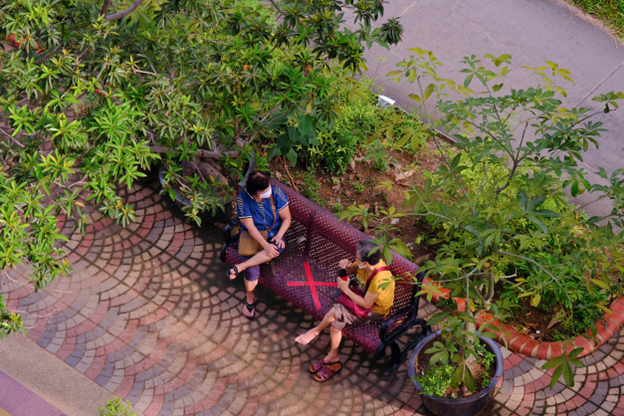
During the COVID-19 pandemic, spatial restrictions and social distancing significantly impacted older adults in Singapore, particularly those that were previously socially isolated. In ‘Social Infrastructures and Older Adults’ Webs of Care: COVID-19 as Spatial Breach’ (Transactions of the Institute of British Geographers, 2023), Professor Elaine Lynn-Ee Ho, Gao Siyao, and Samantha Lim (all NUS Geography) argue that these state measures disrupted older adults’ formal and informal social infrastructures, creating a spatial breach in their webs of care when they could no longer access a range of social services and facilities. This disruption hindered older adults’ ability to maintain social connections, amplifying not only their vulnerabilities and harms but also those of their families and, by extension, society as a whole.
The researchers conducted a qualitative study with 50 older adults in Singapore, using interviews and GPS tracking to understand the biographical context of their social networks and daily geographies during the pandemic. They found that reduced access to formal social infrastructures during the pandemic, such as community programs and services, had increased reliance on informal networks like peer connections and neighbourly ties. Hence, the study critiques ‘vulnerability tropes’ — narratives emphasising older adults’ perceived susceptibility to risks – for generalising their experiences and ignoring diversity within this group. Such portrayals exacerbate social isolation by framing older adults as passive recipients of care rather than individuals with agency and unique needs. While the authors acknowledge older adults’ capacity for agency in navigating challenges, they note that this agency is often constrained by external factors.
The findings call for policymakers and program designers to actively involve older adults in reimagining social spaces and activities post-pandemic, so that these engagements can reflect the genuine interests of these individuals to encourage active participation. The researchers also postulate how outreach ambassadors may also play a vital role in reconnecting socially isolated older adults with their communities. Finally, they highlight the importance of fostering diverse social infrastructures to support older adults, such as through virtual video calls with different groups of people, particularly during crises.
Read the article here.