
Singapore-India Links through Hinduism
October 21, 2026
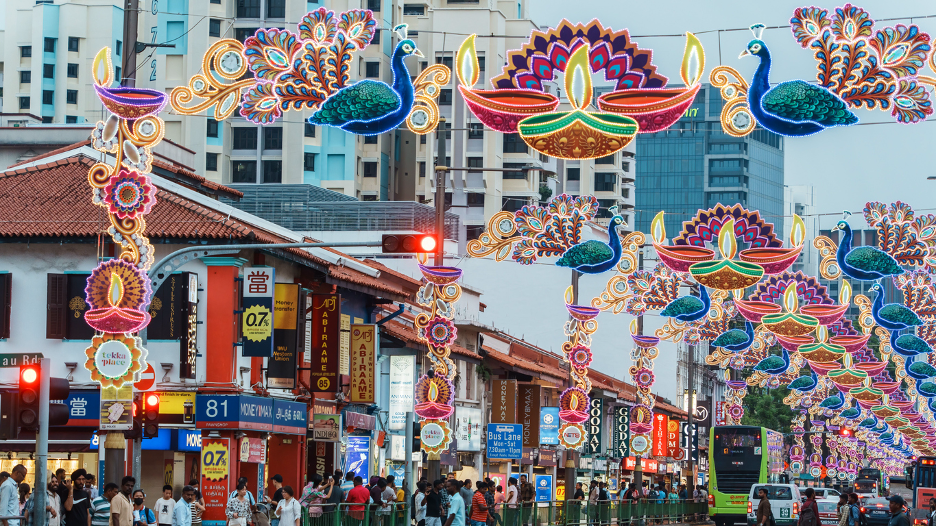
Singapore prides itself on its multiracial demographic, a characteristic rooted in historical resettlement to cater to the regional maritime and commercial needs of the British Malayan region. As Hindus worldwide prepare to celebrate Diwali, the festival of lights, this year on 8 November, we look at ‘Singapore-India Links through Hinduism’ (India on Our Minds, 2020) by Professor Vineeta Sinha (NUS Sociology and Anthropology), which examines the sociocultural impact Hindus have had on Singapore.
Prof Sinha explains that the mass migration of Indians in the 19th century was driven by the needs of European colonial economies. Many of these migrants, who arrived in Singapore, were of Hindu background. This migration led to the early establishment of places of worship dedicated to deities from the South Indian Bhakti tradition, along with various rituals and festivals. These deities were believed to offer protection and blessings for pragmatic matters such as health and fertility, leading to the construction of numerous Agamic temples. The building of Hindu temples in Singapore can be traced back to the 1820s, with an emphasis on these temples’ architecture conforming to Hindu and Indian precepts, underscoring India as the locus and authority of Hindu affairs. This connection explains why Singaporean Hindus regularly return to India to maintain religious ties, including visits to their ancestral villages, family temples, and key Hindu sacred sites.
In the 20th century, social reform groups and new Hindu movements, such as the Sri Aurobindo Society, were brought over from India and continue to be popular, even beyond the Indian-Hindu community. Today, Tamil Hindus in Singapore adhere to complex village-based Hindu rituals and enthusiastically participate in mother-goddess worship during festivities. They have also innovated by incorporating local customs and practices into traditional festivals like Tai Pucam and Timiti, creating a unique Singaporean version of Hinduism that demonstrates the future sustainability of these cultural connections.
Read the chapter here.