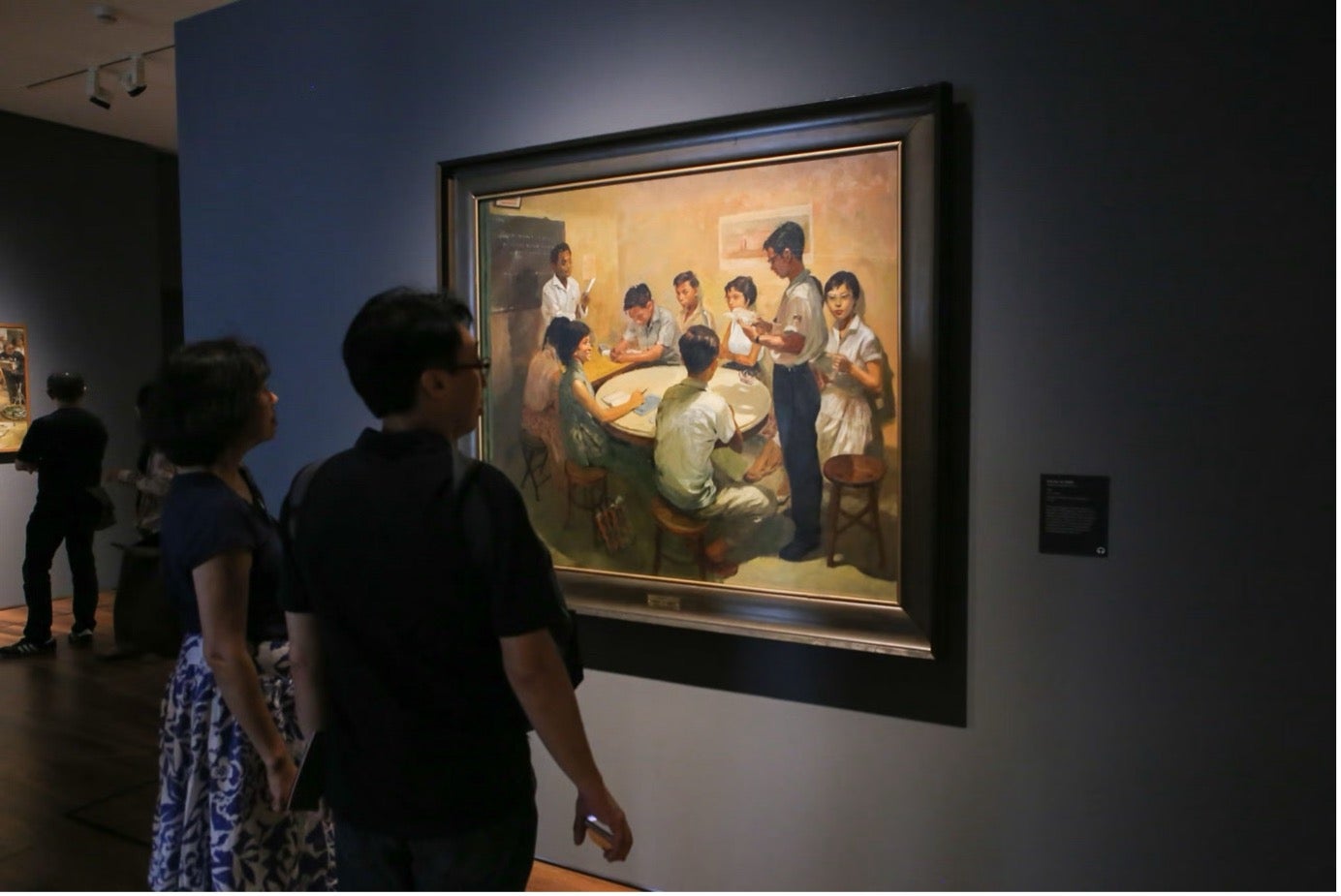

Looking beyond Raffles: New NUS course uncovers Singapore’s deeper history and heritage through art
August 18, 2026
How can objects change the way we understand Singapore’s past? In “Looking beyond Raffles: New NUS course uncovers Singapore’s deeper history and heritage through art” (NUS News, 14 August 2026), Dr Priya Jaradi and Dylan Chng introduce “700 Years of Visual Arts: Singapore in the World”, a new General Education course developed by the Art History Minor Programme at NUS FASS’ Department of History. The course invites students to look beyond the familiar story of Singapore’s colonial founding in 1819. Instead, it presents Singapore as an island shaped by centuries of movement, trade, cultural exchange, and artistic production across Southeast Asia and the wider world.
Drawing on more than 700 objects and images, the course uses visual and material culture to uncover Singapore’s deeper history. These include ceramics, textiles, paintings, manuscripts, natural history illustrations, and other artefacts from collections such as the Asian Civilisations Museum, NUS Museum, NUS Libraries, and overseas institutions.
Rather than treating objects as decorative or secondary to written history, the course asks students to see them as historical evidence. A Chinese ceramic, a Gujarat textile made for Southeast Asian clients, or a portrait produced in Bombay, Singapore, or Canton can reveal how people, ideas, tastes, and materials moved across regions long before modern Singapore emerged. For Dr Jaradi, the course fills an important gap in art history education. While students have long been able to take broad introductory courses on the arts of places such as India, China, and Italy, Singapore has lacked a comparable course that situates its own visual and cultural history within a longer regional and global story.
The course is also designed to encourage close looking and active questioning. As Chng explains, students learn to ask where an object came from, why it was made, and what stories it can tell. In doing so, they develop new ways of understanding not only Singapore’s past, but also the wider networks of connection that shaped the island.
With its blended learning format, “700 Years” combines online lectures, in-person tutorials, and independent museum research. From January 2027, the course will also be made available to the public through FASS’ Continuing Education and Training offerings, allowing learners in Singapore and beyond to access its materials online or through blended learning.
Ultimately, the course offers a different way of encountering Singapore’s history. It shows that the island’s past did not begin with Raffles, nor can it be understood only through political milestones. By turning to objects, images, and material traces, students and public learners can see Singapore as part of a much older world of exchange, creativity, and connection.
Read the news article here.