
The carbon case for going green is only half the story
October 8, 2026
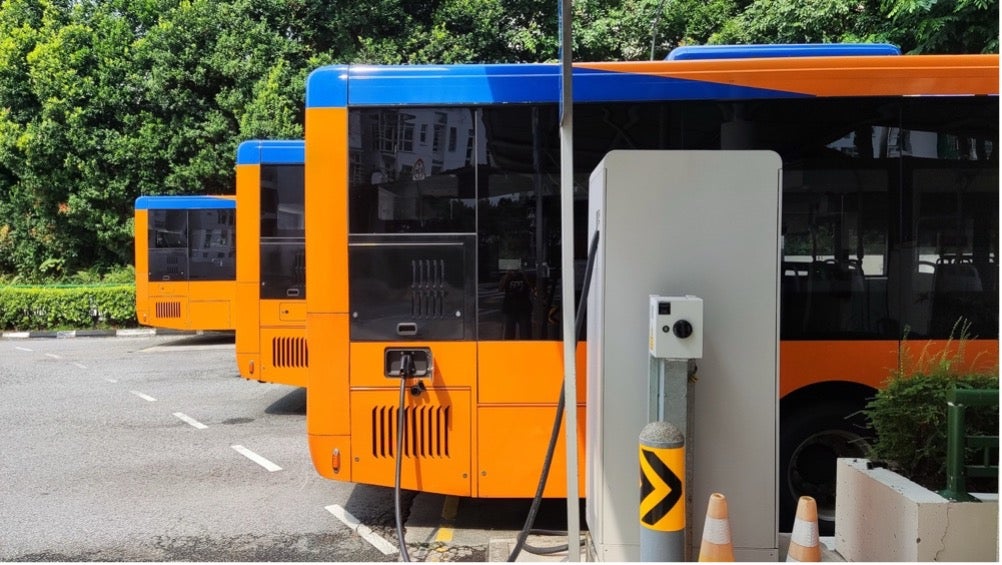
As Singapore electrifies its public bus fleet, the benefits of this transition are often framed in terms of reducing carbon emissions. In ‘The Carbon Case for Going Green Is Only Half the Story’ (The Straits Times, July 29 2026), Associate Professor Alberto Salvo, Associate Professor Timothy Wong (both NUS Economics), and Dr Zhihao Han (NUS Asia Competitiveness Institute) argue that this framing overlooks what commuters experience in their everyday lives: quieter journeys, cleaner air, and more comfortable public transport.
They report that Singaporeans value each electric bus ride at around 11 Singapore cents more than an equivalent diesel bus ride. Across the journeys that a bus provides during its lifespan, this amounts to an estimated S$340,000 in ‘citizen value’ for every electric bus procured. Applied to Singapore’s eventual fleet of approximately 6,000 public buses, the total value could reach S$2 billion. Notably, the estimated citizen value of each electric bus exceeds its approximately S$270,000 in life-cycle carbon savings. The authors therefore assert that assessments of green investments should account not only for avoided emissions, but also for improvements that citizens directly experience.
These figures draw on ‘Satisfaction, Willingness to Pay, and Ridership When Buses Are Electrified’ (Journal of the Association of Environmental and Resource Economists, 2026), in which Salvo and Wong examine whether electrification changes commuters’ satisfaction, willingness to pay, and travel behaviour. The study addresses a gap in existing evaluations of bus electrification, which commonly calculate vehicle, infrastructure, emissions, and public health costs but assume that passenger demand remains unchanged.
The researchers combined evidence from three field studies. First, they surveyed 1,292 commuters immediately after they alighted from diesel and electric buses at 22 bus stops served by 31 bus lines. Respondents were asked about noise, fumes and smell, smoothness, and speed before being asked whether they believed the bus was electric or diesel. Second, they conducted choice experiments with 1,200 residents in Bukit Batok, where one bus line had been operating with an electrification rate of up to 80 per cent for more than a year. Residents chose between journeys that varied in bus type, walking time, journey time, and fare. Third, they analysed 104 million anonymised rides across 15 bus lines over two years, comparing ridership patterns as different lines were electrified to varying degrees.
Across these methods, the study finds consistent evidence that commuters value electric buses. Riders reported significantly greater satisfaction with noise conditions after travelling on an electric rather than a diesel bus, even after accounting for differences in vehicle age, route, location, and time. Among respondents who correctly identified the engine type of their bus, electric bus users also reported greater satisfaction with fumes and smell. When a previously electrified bus line temporarily returned to diesel operation, its commuters were also more likely than those using consistently diesel-powered lines to report that their buses had become noisier.
The choice experiments further show that residents were willing to pay a median of 11.4 Singapore cents, or 8.5 US cents, for an electric rather than a diesel bus ride. This preference was equivalent to reducing the time spent sitting on a bus by approximately three to four minutes. When journey times were held constant, residents were estimated to choose the electric bus around 69 per cent of the time. Extrapolated across Singapore’s bus journeys, the study estimates annual consumer welfare gains of US$122 million, or approximately US$20 per resident.
Commuters’ stated preferences were also reflected in their actual behaviour. Bus ridership increased with the intensity and duration of a line’s electrification, despite fares remaining the same for electric and diesel buses. Depending on the model used, full electrification was associated with an estimated ridership increase of around 8 to 15 per cent. The effect also became stronger over time, suggesting that commuters may gradually learn about electric bus services and adjust their travel choices accordingly.
The researchers caution, however, that this increase should not be interpreted as the expected system-wide rise in ridership if Singapore’s entire fleet becomes electric. Some passengers may have switched from other bus or train lines rather than from cars or other forms of transport. Singapore’s unusually dense transport network also means that the findings on ridership may not apply directly to cities where commuters have fewer alternative routes.
They therefore recommend that policymakers report citizen value alongside carbon reductions when evaluating and communicating investments in low-carbon infrastructure. Doing so would provide a fuller account of the benefits received by taxpayers and recognise that the transition to a green economy can improve people’s daily lives even before its global climate benefits are realised.
Read ‘The Carbon Case for Going Green is Only Half the Story’ here.
Read ‘Satisfaction, Willingness to Pay, and Ridership When Buses Are Electrified’ here.