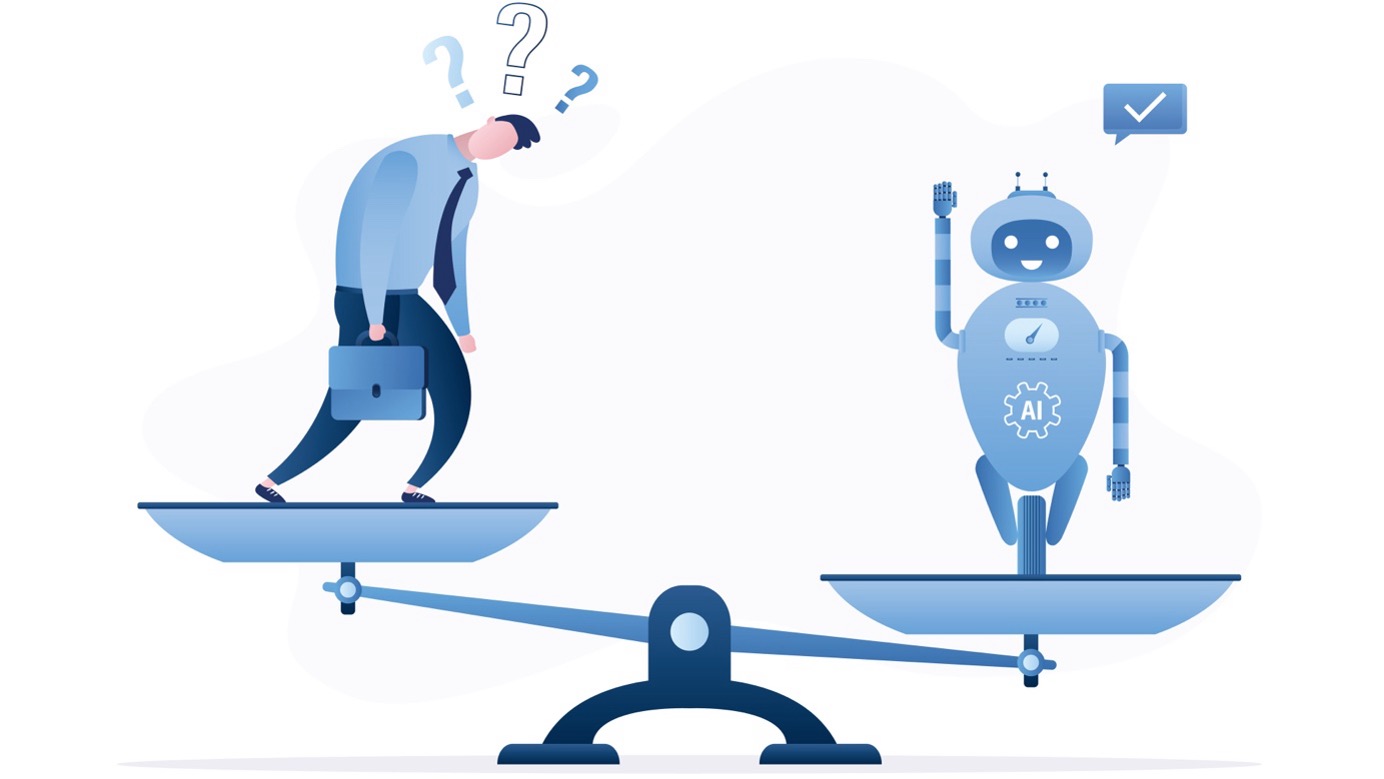

A new divide at work: The AI fluent and the AI fearful
November 27, 2025
In his commentary “A new divide at work: The AI fluent and the AI fearful” (The Straits Times, October 2025), Daniel Chan (NUS Centre for Language Studies and Assistant Dean (Undergraduate Studies), Office of Programmes, NUS Faculty of Arts and Social Sciences) argues that Singapore is confronting a new socioeconomic fault line: a growing divide between workers who rapidly gain fluency with AI tools and those who remain cautious or intimidated by them. Rather than a traditional digital divide, Chan frames this as a form of “AI bilingualism”—the ability to think in both one’s professional domain and the “new language” of AI-assisted reasoning.
Chan observes that younger professionals often adopt AI through experimentation and immersion, quickly integrating it into everyday workflows. Older workers, in contrast, are held back not by technical incapacity but by social anxieties—fear of being judged, appearing obsolete, or making visible mistakes. Yet these workers possess the deep institutional experience that organisations depend upon. Corporate initiatives such as reverse mentoring, where junior staff guide senior leaders on digital tools, illustrate attempts to bridge these asymmetries in confidence and learning pace.
A similar pattern shapes the broader economy. Large firms such as DBS, OCBC, Microsoft, and HP Singapore have advanced rapidly in AI deployment, while small and medium-sized enterprises (SMEs) remain stuck in pilot phases due to limited expertise and concerns about sunk costs. Despite national gains—IMDA estimates significant AI-driven contribution to digital GDP—Chan warns that adoption remains uneven, and not all firms are rising with the tide.
Beyond this economic gap, Chan highlights a subtler cognitive divide. Drawing on psycholinguistic distinctions between functional and cognitive fluency, he warns that the ability to use AI (through effective prompting) is not the same as the ability to reason with it. Without sustained critical evaluation, workers risk over-reliance, diminished interpretive capacity, and “cognitive inequality” between those who think with AI, those who think through AI, and those who disengage from it entirely.
Chan calls for a national approach that prioritises inclusion over speed. Workplaces must normalise visible learning, given that many employees secretly experiment with AI out of sight of managers. SMEs need interpreters—specialists who can “translate” AI into sector-specific use cases—along with shared infrastructure to lower risk. Schools must cultivate not only digital literacy but moral and critical reasoning, equipping students to question automated outputs rather than absorb them unquestioningly.
Ultimately, Chan positions AI fluency as both a skill and an ethical capacity. As Singapore navigates this transition, the challenge is not simply teaching people to use AI, but ensuring that fluency does not erode independent judgement. The next phase of digital transformation, he argues, will require balancing efficiency with critical thought so that society does not surrender its interpretive agency to algorithmic systems.
Read the article here.