

News
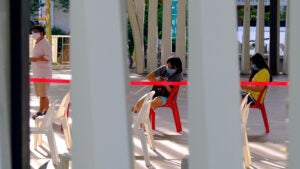
From the implementation of contact tracing technologies to media campaigns, such as comedic musical skits to address concerns about vaccine safety for older individuals, the Singapore government undertook extensive measures to control the spread of COVID-19. Despite these initiatives, online concerns about vaccine safety and efficacy found an audience, leading to the rise of an […]

With the social work profession expanding into diverse areas such as medical care, community engagement, and government organisations, the demand for effective supervision has grown significantly. Despite this, research on supervisory practices remains limited. Existing literature emphasises the need for a holistic supervisory approach that goes beyond technical and clinical competencies, incorporating emotional support and […]
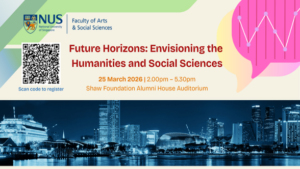
The Ideas Festival, co-organised by seven partner universities in Singapore, is a month-long showcase of insights and contributions from humanities and social sciences (HSS) researchers. The theme of the festival’s second edition, ‘Reimagining Resilience: Flourishing in a Changing World’, explores how people, communities, and systems can adapt and thrive amidst rapid technological, cultural, and societal […]

In an era where innovation drives economic growth, the startup ecosystem has emerged as a beacon of entrepreneurial spirit and technological advancement. As cities like Singapore position themselves as global hubs for fintech and tech startups, understanding the financial dynamics within this sector becomes crucial. Previous research has often focused on the economic viability of […]

In the NUS research feature “Where Does Corruption Bite Hardest? These Public Services Suffer The Biggest Slowdowns,” Martin Mattsson (NUS Economics) looks at a deceivingly simple but important question: why does corruption often lead to slow and frustrating public services? Some economic models treat corruption as little more than money changing hands. In this view, a bribe is simply a payment from a […]
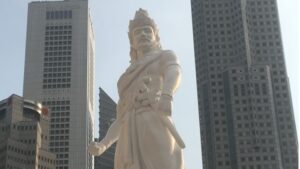
Sang Nila Utama is widely remembered in Singapore as the legendary founder of a pre-colonial kingdom, yet the origins of his name — and what it reveals about early ideas of kingship — are far less commonly understood. In his article “Sang Nila Utama and the Court of Indra,” Assistant Professor Sureshkumar Muthukumaran (NUS History) […]
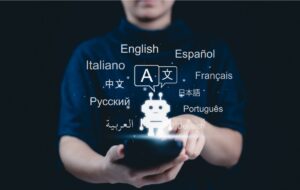
In February 2026, in conjunction with International Mother Language Day (21 February), two opinion pieces published in The Straits Times and Lianhe Zaobao by Daniel Chan (NUS Centre for Language Studies) examined a shared concern: how language learning and cultural vitality should evolve in an era shaped by artificial intelligence and digital transformation. International Mother Language Day, established by UNESCO to promote linguistic […]

The Crazy Rich Asians film, which premiered in August 2018, was a watershed moment for the representation of Asian stories in Hollywood. Based on the bestselling 2013 novel by Singaporean author Kevin Kwan, the film adaptation quickly became a global phenomenon, marking a shift in the landscape of mainstream cinema, where Asian stories and voices […]
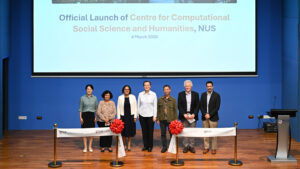
By combining technological innovation with human insight, the Centre for Computational Social Science and Humanities (CSSH) aims to generate research that improves lives, strengthens institutions, preserves cultural knowledge, and shapes more inclusive and resilient societies in Singapore and beyond.
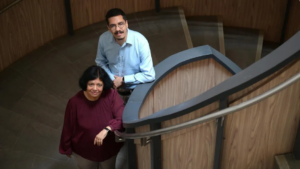
What if policymakers could test how society might react to new policies before they are implemented? Researchers are developing an AI-driven platform to simulate how different segments of society might respond to policy proposals, helping to stress-test ideas before they are rolled out in public. This initiative is one of the flagship projects of the […]