

News
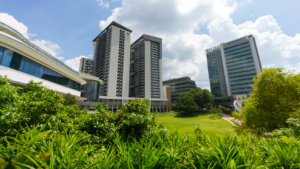
Singapore’s tropical climate, exacerbated by the growing effects of climate change, has seen its annual mean temperature rise by 0.24°C per decade between 1984 and 2022. With existing research highlighting the substantial impacts of ambient heat on public health and individual productivity, Dr Li Hongyan (NUS Energy Studies Institute), Associate Professor Liu Haoming, Associate Professor […]
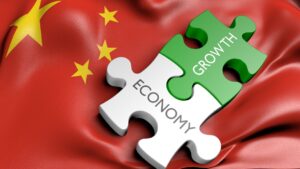
Was China’s economic rise the result of homegrown reform and or learning from the West —or was it, in large part, deeply shaped by exchanges with its Asian neighbours—Japan, Singapore, South Korea, Taiwan, and Hong Kong? While many accounts emphasise China’s shift toward market liberalisation in the 1980s and 1990s, Assistant Professor Yanjie Huang’s (NUS […]

Bereavement, defined as the experience of losing a loved one to death and the subsequent process of adaptation, is a universal yet deeply personal experience. While many individuals successfully employ internal resources to cope with their loss, others may face a heightened risk of developing complicated grief reactions, such as major depression or suicidal ideation, […]

What happens at work may not begin at work. For some young employees, struggles with job security, confidence, and optimism may be shaped by experiences from much earlier in life. In ‘Young people who faced childhood adversities like abuse more likely to struggle at work: Study’ (The Straits Times, 14 June 2026), the findings of […]

Driven by rapid technological advancements and a strong national push for digitalization, Singapore’s workforce landscape is undergoing a significant transformation. As artificial intelligence (AI) becomes deeply embedded across industries, it introduces distinct challenges for workforce equity. Unlike entry-level white-collar roles where AI adoption is swift, many frontline and service sectors remain largely untouched by these […]

How can objects change the way we understand Singapore’s past? In “Looking beyond Raffles: New NUS course uncovers Singapore’s deeper history and heritage through art” (NUS News, 14 August 2026), Dr Priya Jaradi and Dylan Chng introduce “700 Years of Visual Arts: Singapore in the World”, a new General Education course developed by the Art […]
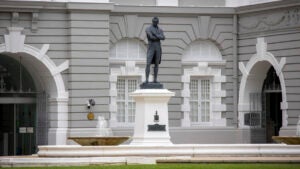
In recent years, the decolonisation of knowledge has gained prominence in academic discourse, drawing attention to the silencing of diverse voices and the dominance of Eurocentric narratives. At its core, decolonisation challenges the historical marginalisation of non-Western knowledge systems, advocating for a more inclusive and holistic intellectual landscape. The relegation of non-Western perspectives reflects broader […]
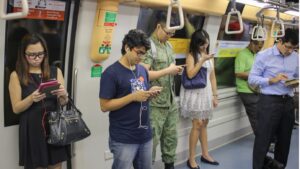
What should a telecoms company be when phone calls and SMS are no longer where the real value lies? In “The old model is broken. Telcos need to reinvent themselves” (The Straits Times, 24 June 2026), Assistant Professor Tiffany Tsai (NUS Economics) examines the pressures facing Singapore’s telecommunications sector and argues that the debate should […]

According to a survey in 2012, nearly 4 in 5 Singapore children aged 8 to 17 were bullied online and/or offline (Microsoft Corporation, 2012). Unsurprisingly, school bullying is a pervasive social issue where children and adolescents are subjected to harmful behaviour by their peers. In the digital age, this extends to cyberbullying, which involves hurtful […]

The Art History Minor Programme and the Department of History at the National University of Singapore will launch 700 Years of Visual Arts: Singapore in the World, a new blended teaching and learning initiative for NUS, local, and global learners. Developed by the NUS Art History Minor Programme, Department of History, the course offers a […]