
Muslim cosmopolitanism in Southeast Asia: Marketplaces as sites of interaction and integration
April 2, 2026
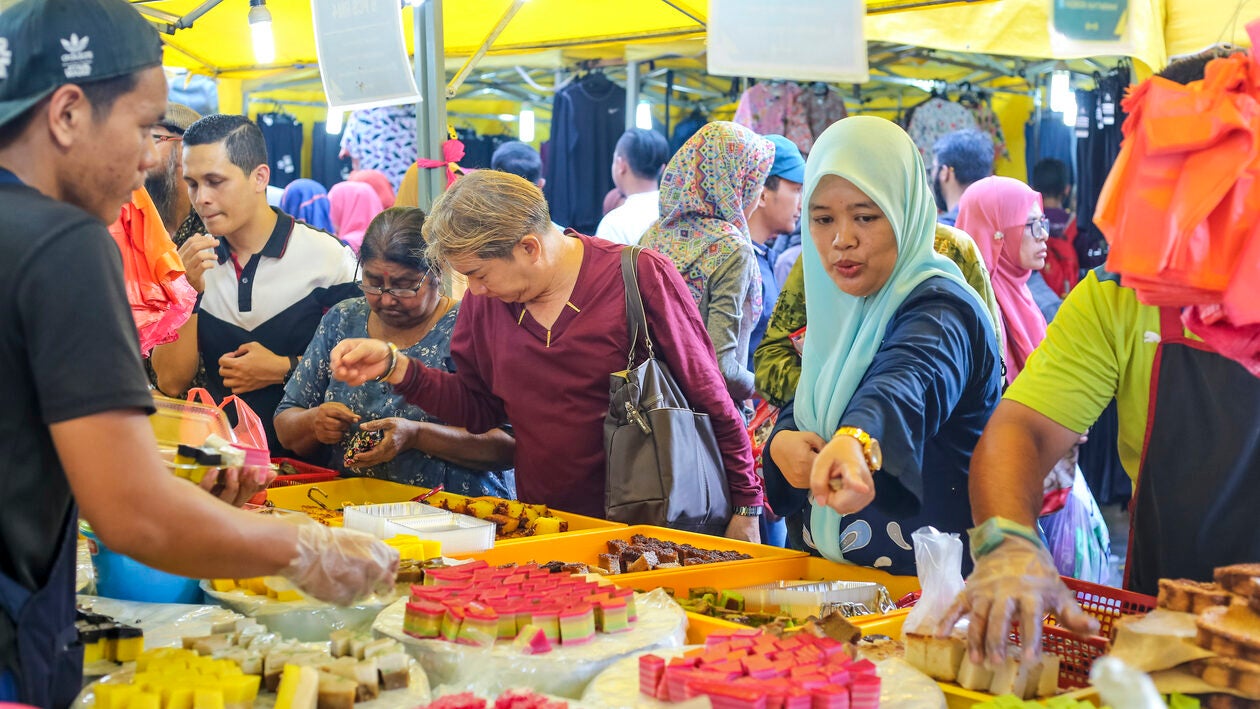
From Tanah Abang, Southeast Asia’s largest textile market in Jakarta, Indonesia, to the Geylang Serai market in Singapore, markets have always been more than just centres of trade. People of all backgrounds come together at marketplaces and learn the subtleties of their respective cultures through cross-cultural interactions while appreciating each other’s differences and commonalities. For Muslims in Southeast Asia, such marketplaces also serve as ‘contact zones’ where people of all religious faiths and persuasions mix and engage with each other.
In ‘Muslim Cosmopolitanism in Southeast Asia: Marketplaces as Sites of Interaction and Integration’ (Southeast Asian Islam, 2024), Associate Professor Khairudin Aljunied (NUS Malay Studies) explores how marketplaces in Singapore, Malaysia, and Indonesia serve as hubs for ‘Muslim cosmopolitanism’. He defines Muslim cosmopolitanism as, a way of life rooted in Islam’s central tenet that all humanity is accountable to God and people are morally responsible for one another. Muslim cosmopolitanism is expressed through practices rooted in compassion (raḥma), justice (ʿadil), and consensus (mushāwara) to serve the public good (maṣlaḥa), and most vividly exemplified in marketplaces.
A/P Khairudin Aljunied contends that the region’s Islamic identity remains fundamentally inclusive and cosmopolitan, challenging the dominant scholarly focus on political and radical Islam in Southeast Asia. Drawing on historical accounts, ethnographic vignettes, and case studies, he traces the historical roots of this inclusivity to pre-colonial trading hubs like Melaka, Aceh, and Makassar, where Muslims engaged with diverse communities through trade, inter-marriage, and mutual adaptation of customs and ideas. In this regard, he illustrates how marketplaces serve as ‘“contact zones’ for Muslims and non-Muslims alike, enabling Muslims to integrate with other communities through trade, shared cultural practices, and mutual respect.
Interestingly, the cosmopolitan nature of Southeast Asian marketplaces endures in face of political and cultural shifts over the centuries. For example, in Kelantan’s Siti Khadijah Market, where Muslim and non-Muslim vendors interact seamlessly, Chinese and Siamese traders adopt aspects of Malay culture, such as wearing traditional attire. Similarly, in Jakarta’s Tanah Abang Market and Singapore’s Geylang Serai, diverse linguistic and cultural practices create an atmosphere of inclusivity where sellers and buyers from various backgrounds exchange not only goods but also ideas and traditions.
By examining the continued vibrancy of Muslim cosmopolitanism in marketplaces like Geylang Serai, A/P Khairudin Aljunied’s research sheds light on how shared spaces can foster mutual respect and coexistence among diverse communities, contributing to Singapore’s broader narrative of interethnic harmony and cultural fusion.
Read the article here.