

News
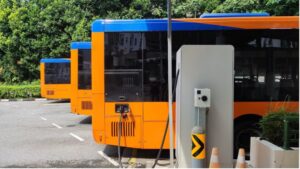
As Singapore electrifies its public bus fleet, the benefits of this transition are often framed in terms of reducing carbon emissions. In ‘The Carbon Case for Going Green Is Only Half the Story’ (The Straits Times, July 29 2026), Associate Professor Alberto Salvo, Associate Professor Timothy Wong (both NUS Economics), and Dr Zhihao Han (NUS […]
At the crossroads of East and West, Singapore has long been a focal point for cultural and geopolitical interactions. Its strategic location, historical ties, and diverse demographics have established it as a hub for commerce, diplomacy, and education. In recent years, as global tensions between the United States and China intensify, Singapore has cemented its […]

Every January, thousands of seven-year-olds across Singapore begin their formal education. Yet, for many families, the competition starts years earlier, as parents volunteer, tap alumni ties or even move homes to improve their child’s chances of entering a preferred school. In a meritocratic society where education is closely tied to future opportunities, such efforts are […]
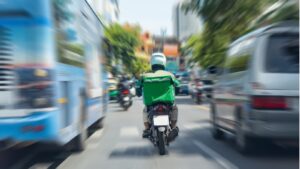
In ‘Producing Value from Injury: Dashcam Platforms, Accidents, and Gig Work’ (Social Media + Society, 2025), Assistant Professor Renyi Hong (NUS Communications and New Media) and Assistant Professor Kuansong Victor Zhuang (Nanyang Technological University) examine how dashcam technologies in Singapore have become entangled with the political economy of platform labour. Focusing on food delivery riders, […]

How did the COVID-19 pandemic reshape everyday life, labour, and emotional well-being within Singaporean households? In their recent article ‘Gendered Dynamics and Emotional Well-Being in the ‘Aftermath’ of the Pandemic’ (Asian Journal of Social Science, 2025), Professor Vineeta Sinha, Associate Professor Narayanan Ganapathy, Associate Professor Daniel P. S. Goh, and Pooja Nair (all NUS Sociology […]
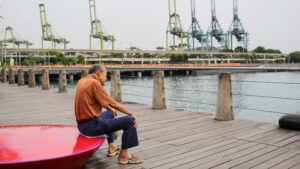
Ahead of the International Day of Older Persons, celebrated on October 1, it is crucial to recognize the various challenges that the elderly face. Among the critical factors impacting their wellbeing, widowhood stands as one of life’s most challenging and inevitable transitions, which many will eventually face. The loss of a spouse often leads to […]
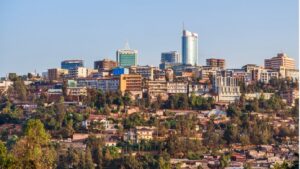
What does it mean for a country to imagine its future through the model of another city-state? In “Future and Imaginary Geographies of ‘Africa’s Singapore’: Planning the Emergent National-Urban Nexus of Rwanda-Kigali” (International Journal of Urban and Regional Research, 2026), Assistant Professors Allen Hai Xiao, Dylan Brady (both NUS Geography), and Gatoni Alexis Sebarenzi (University […]

Automation and digitalisation are transforming how people learn, work, make decisions, and participate in economic and social life. As artificial intelligence and other digital technologies become increasingly embedded in everyday institutions, they also raise important questions about human agency, assessment, trust, and governance. The Singapore Research Nexus (SRN) presents ‘Automation, Digitalisation, and Policy’, an outreach […]

As Singapore’s population ages, enabling older people to remain meaningfully employed has become increasingly important for sustaining economic growth and improving retirement adequacy. In the 2024 report ‘Tripartism in Action – Strategic Policies in an Ageing Workforce’, Associate Professor Chia Ngee Choon (NUS Economics) and the Tripartite Collective examine how cooperation among the government, employers, […]
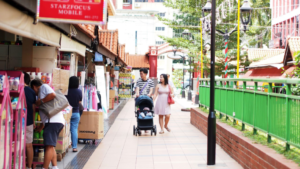
Singapore’s family landscape presents an interesting paradox. At first glance, rising singlehood and falling birth rates among young adults suggest a declining interest in family life. However, by their late 40s, the vast majority of Singaporeans are married. Decoding these seemingly contradictory trends requires looking beyond the surface numbers, which Associate Professor Zheng Mu (NUS […]