

News
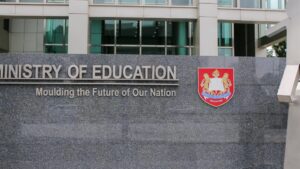
Associate Professor Irene Ng and Associate Professor Hyekyung Choo (both NUS Department of Social Work) consider the range of factors that can affect educational attainment in ‘Parental education and youth educational aspiration in Singapore: a path analysis in institutional and psychological context’ (Asia Pacific Journal of Education, 2020). A/P Ng and A/P Choo identify the […]
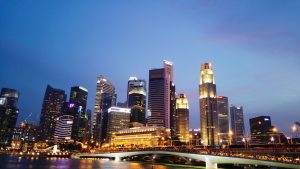
Singapore first hosted the Association for Southeast Asian Nations (ASEAN) Summit from 27th January to 29th January 1992. ASEAN is an economic union that comprises ten member states in Southeast Asia. The union aims to promote intergovernmental cooperation, facilitate socio-cultural exchanges, and enhance economic integration. During the 1992 summit, ASEAN leaders agreed on a framework […]
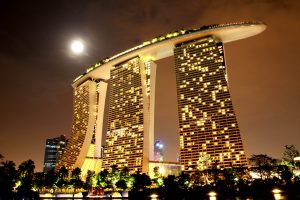
On January 26, 2022, Singapore struck the Pacific Alliance-Singapore Free Trade Agreement, Singapore’s first direct FTA with the Pacific Alliance, a bloc of countries comprising Chile, Colombia, Mexico, and Peru. In ‘Building administrative capacity under developmental states in Chile and Singapore: a comparative perspective’ (International Review of Administrative Sciences, 2021), Professor M. Shamsul Haque […]
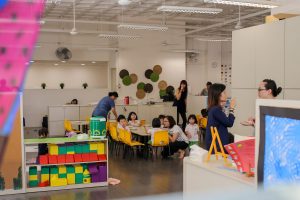
Photo: ‘Kindergarden’, from SRN’s SG Photobank “Education is a human right, a public good and a public responsibility” – United Nations Educational, Scientific and Cultural Organisation (UNESCO) In 2018, a resolution passed by the The United Nations General Assembly (UNGA) proclaimed 24th January as the International Day of Education. Education, in the words of Director […]

The first COVID-19 case in Singapore was reported on 23 January, 2020. In order to contain the spread of the virus, prompt hotspot identification and transmission risk assessment are critical for public health. In ‘Impact of urbanisation and environmental factors on spatial distribution of COVID‑19 cases during the early phase of epidemic in Singapore’ (Scientific […]

Chinese New Year begins on January 22 in 2023. As Southeast Asia has a large population of Chinese immigrants and their descendants, Chinese culture has played a large part in shaping Southeast Asians’ history and identity. In ‘Chinese Temple Networks in Southeast Asia: A WebGIS Digital Humanities Platform for the Collaborative Study of the Chinese […]

In 1967, the British government first forewarned the Singapore government of its intention to pull out its military presence from the former Crown colony. Though initially met with acceptance by Singapore, pressing financial restraints forced the British to push forward the military pull-out to early 1971, which posed serious security threats to Singapore as its […]
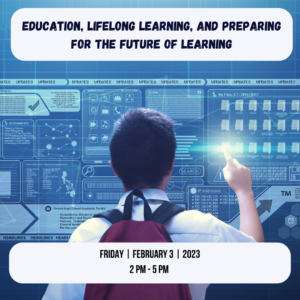
This event spotlights NUS Faculty of Arts and Social Sciences (FASS) academics’ research and insights on education, lifelong learning, and the future of learning in the Singapore context. The panelists will speak about projects related to teaching and learning, youth and adult education in Singapore, discuss how what we learn and the way we learn […]
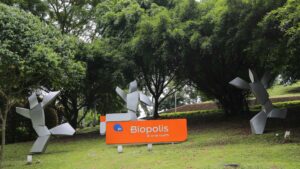
The Population White Paper, released on 9 January 2013, proposed a projected population of 6.5 to 6.9 million residents in Singapore by 2030. In order to support this population, it is necessary to promote better livability, alongside reclaiming additional land and intensifying new developments. Land use optimization is defined as the process of allocating […]

ChatGPT is a chatbot launched by OpenAI in November 2022. It quickly gained global attention due to its detailed and articulate answers to human questions. In ‘The Impact of ChatGPT on Education’ (Channel NewsAsia, December 2022), Mr. Jonathan Y. H. Sim (Instructor with NUS Philosophy) joined CNA 93.8FM for a live radio interview to discuss […]