

From Duty to Autonomy: Exploring the Evolution of Divorce Motives in China through A Large Language Model Analysis of Court Judgments from 1985-2024
Project's Details
Title: From Duty to Autonomy: Exploring the Evolution of Divorce Motives in China through A Large Language Model Analysis of Court Judgments from 1985-2024
Funded by: NUS Centre for Computational Social Science and Humanities (CSSH)
Amount: S$77, 500
PI: Assistant Professor Wang Senhu
Project duration: 1 November 2025 to 30 April 2027
Abstract
In the context of rising marital instability globally, divorce has become a significant social phenomenon with far-reaching implications for individuals, families, and society (Amato, 2000; Raley & Sweeney, 2020). In China, the divorce rate has surged dramatically over the past two decades, reflecting rapid transformations in gender roles, economic pressures, migration patterns, and shifting cultural norms surrounding marriage and family. Studying the reasons behind divorce is therefore essential not only for understanding individual relationship dynamics, but also for capturing broader structural and cultural changes (Lesthaeghe, 2014). In the Chinese context, where family is traditionally seen as a core unit of social organization and moral order, understanding why marriages end can offer important insights into changing social values, generational conflicts, and the negotiation of autonomy within intimate life. Furthermore, with China’s unique legal and institutional structures—such as the introduction of the "cooling-off period" policy—investigating divorce motives can shed light on how law, gender, and agency interact under shifting state-society dynamics.
Existing research on divorce motives in China has largely relied on survey data, which, while valuable, faces notable limitations (Li et al., 2022; Zhang et al., 2021). Surveys often constrain respondents to predefined categories, failing to capture the nuanced, emotionally complex, and culturally embedded narratives surrounding marital dissolution. Additionally, due to the sensitivity of divorce, survey respondents may underreport certain reasons, such as infidelity, domestic violence, or dissatisfaction with in-laws, due to stigma or social desirability bias (Güler et al., 2023; Heron et al., 2022; Munsch, 2015). These limitations hinder a full understanding of how and why people decide to leave a marriage. In contrast, court-issued divorce judgments provide rich, real-world textual data in which individuals or judges articulate the reasons for marital breakdown in their own words. However, analyzing such large-scale unstructured legal documents has traditionally been a labor-intensive task. The recent advancement in large language models (LLMs) and computational social science provides an unprecedented opportunity to systematically extract, classify, and interpret the motives embedded in millions of Chinese divorce documents. Importantly, this project will also build an annotation framework that goes beyond divorce motives to capture case demographics, procedural characteristics, judicial reasoning, and outcomes, creating the foundation for supervised text classification. This approach not only overcomes the rigidity of surveys but also enables a more dynamic and scalable understanding of marital change in China. Importantly, divorce procedures and regulations such as mandatory waiting or “cooling-off” periods exist in many countries, suggesting that insights from China’s experience can inform a broader, cross-national understanding of how legal structures and procedural frameworks shape patterns of marital dissolution.
Project's Team

Principal Investigator
Assistant Professor Senhu Wang
Department of Sociology & Anthropology
Faculty of Arts and Social Sciences
National University of Singapore
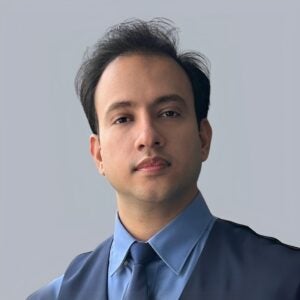
Co-Principal Investigator
Senior Lecturer Prakash Chandra Sukhwal
Department of Information Systems & Analytics
School of Computing
National University of Singapore
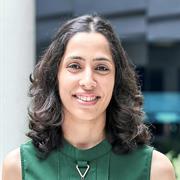
Co-Principal Investigator
Associate Professor Kokil Jaidka
Department of Communications & New Media
Faculty of Arts and Social Sciences
National University of Singapore
Contact Us
Principal Investigator: Assistant Professor Senhu Wang
Email: socsw@nus.edu.sg
Address:
Centre for Family and Population Research
Faculty of Arts and Social Sciences
National University of Singapore
The Shaw Foundation Building
Block AS7, Level 3, 5 Arts Link
Singapore 117570