

programme offers an education in
linguistics, covering the study of language from structural, social and cognitive perspectives. Some courses focus on the unique properties of English, while others are interested in general patterns that shape each and every language. Our programme is consistently ranked among the top linguistics programmes globally.


Featured News (opens in new tab)
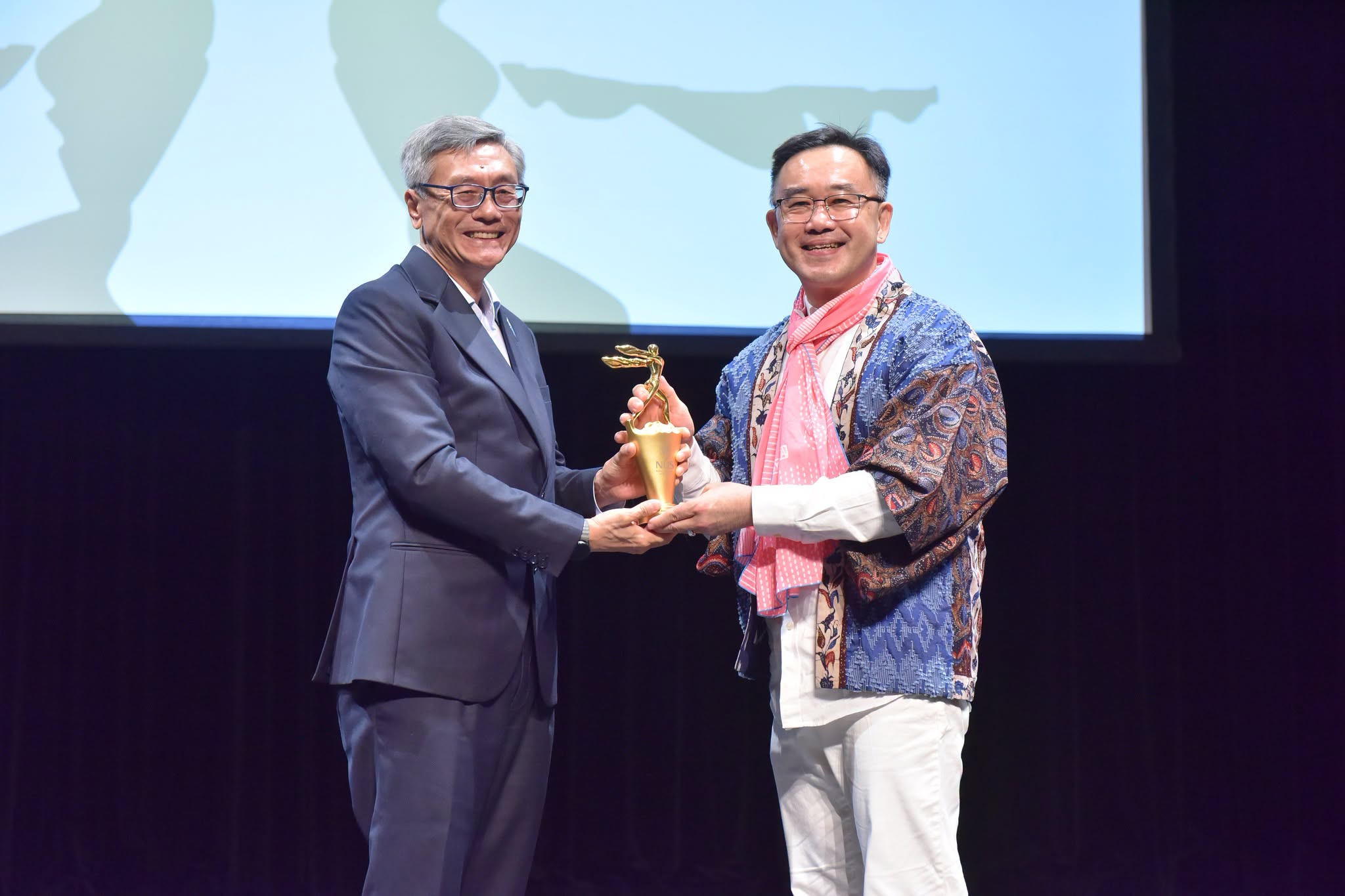
Outstanding Educator Award
Congratulations to Associate Professor Robin Loon on receiving the Outstanding Educator Award at the NUS University Awards 2026!
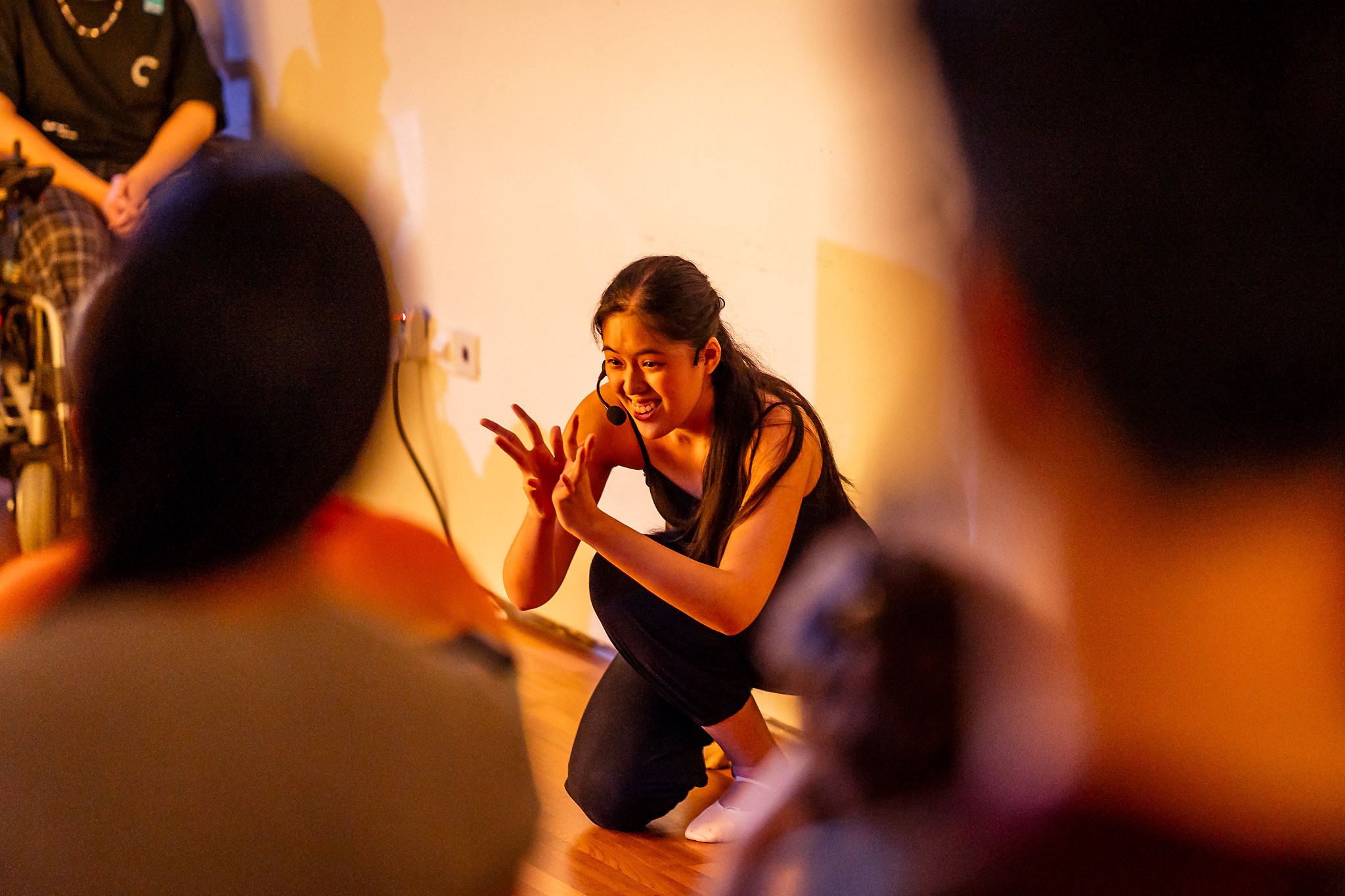
Arts leader and disability advocate elected as Singapore's 31st Rhodes Scholar
Heartiest congratulations to Ms Jade Ow Yanhui, our Theatre Studies alumna, for winning the Singapore Rhodes Scholarship!
Featured Research (opens in new tab)
Conserving her heritage language
Dr Nala Lee shares about her work in preserving the language of Baba Malay, how language relates to community and culture, and what the layperson can do to help preserve other heritage languages.
Embrace Healthy Ageing
The research identifies the early signs of ageing and studies ways to reduce adverse health conditions stemming from ageing diseases.
Featuring Associate Professor Victor Yu, Faculty of Science and Professor Bao Zhiming, Faculty of Arts and Social Sciences, both from NUS’ College of Humanities and Sciences.
ELTS Events (opens in new tab)
Why English Language and Linguistics? (opens in new tab)
The systematic study of human language from different perspectives: English Language and Linguistics gives students the opportunity to investigate linguistic phenomena in multicultural and international contexts.
The Department offers a wide array of modules for students to enhance their analytical skills: linguistic patterning, the contextual-based development of language in different cultures and institutions, and even how this field interacts with others such as semiotics, literature and popular culture. Our students are critical and creative thinkers who are able to express themselves in speech and writing with clarity, precision and elegance.
Why English Literature? (opens in new tab)
The study of English Literature is the study of life’s possibilities. Through the alluring, imaginative worlds of writers like Shakespeare, the Brontë sisters, Toni Morrison and J. M. Coetzee, learn to see the world with a broad, flexible, critical and creative mind.
We embrace the diversity of literature here at NUS. Our students have the opportunity to study the main periods of British and American literature as well as world literature such as South Asian and Southeast Asian literature. There is flexibility in adopting generic or topic approaches with subjects such as film, visual media, critical theory, gender and sexuality, and contemporary issues like literature and ecology. Students are trained to read literature using aesthetic, historical, political or theoretical approaches.
Why Theatre and Performance Studies? (opens in new tab)
The study of theatre and performance will engage your creative and critical mind. At NUS Theatre and Performance Studies, we believe that the study of theatre: its practices, its operations and its impact on society can equip you with transferrable critical thinking, resource organisation and public call-and-response skills.
Courses offered by the Department share a common commitment to understanding how theatre is made and the contexts in which it has significance for its communities. Students have the opportunity to study a wide range of cultures, histories, movements and ideas: everything from pre-modern Asian theatres to current cinematic and digital practices.
News
NUS honours nine trailblazers who are redefining education, research and service
The NUS University Awards 2026 recipients were honoured for their outstanding contributions in education, research, mentorship and service, recognising nine trailblazers, including FASS’ Assoc Prof Robin Loon, whose work has made an impact on the University, Singapore and the global community.
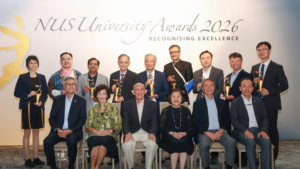
NUS University Awards 2026: A tribute to excellence in education, research, mentorship and service
From the classroom to the laboratory and beyond, nine outstanding individuals were recognised at the NUS University Awards 2026 for their significant impact in teaching, research, mentorship and service. Among them, Outstanding Educator Award conferee Associate Professor Robin Loon (NUS English, Linguistics and Theatre Studies).

Morphosyntactic Choice in Singapore English: Grammar, Psycholinguistics, and Variation
What shapes a speaker’s choice to say, ‘Put where?’ instead of ‘Where do I put it?’ This is the central question behind ‘Morphosyntactic Choice in Singapore […]