

English Literature Courses
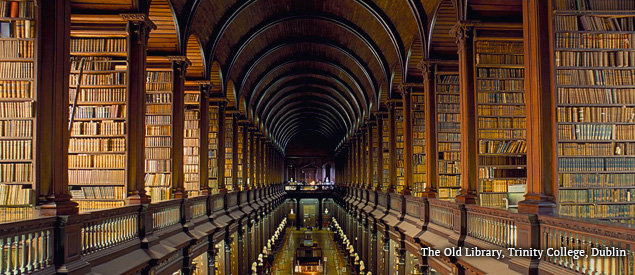
The programmes in English Literature include a wide diversity of courses. The foundational course offers a general introduction and the courses at level 2000 focus on reading. Some higher level courses cover historical periods of British literature and others look at American literature and literature from regions like South Asia and Southeast Asia. Others still take a generic or topic approach, with subjects such as film, visual media, critical theory, gender and psychoanalysis.
The range of approaches within courses is also wide. Different courses might emphasise aesthetic, historical, political or theoretical readings.
Unless otherwise stated, all level 1000–6000 courses carry 4 units.
For more information on the courses below, please consult Canvas and NUSmods.
Courses offered in AY2026/2027 Semester 1
Tania ROY
Human beings are ‘tale-telling animals’. We all tell stories, and we all listen to them, read them and watch them. This course looks at the ways in which people tell stories, the kinds of stories they tell, and the meanings those stories generate. It focuses, in particular, upon the telling, and gives special attention to questions concerned with that. Texts include a novel, a play, films, short stories, poems and oral tales.
Pre-requisite: Exempted from NUS Qualifying English Test, or passed NUS Qualifying English Test, or exempted from further CELC Remedial English courses.
Susan ANG
Critical reading is the essential skill of literary studies. It involves close attention to individual words and phrases, to figures of speech, to the structures of sentences and texts, to literary form and genre, and to historical context. It gives attention to the implicit connotations of language, as well as to its explicit denotations. This course sets out to inculcate in students the skills of critical reading and help them pay attention to and evaluate textual detail. It will be organised as a series of seminars in which students develop and practice skills by reading short texts and extracts.
John WHALEN-BRIDGE
This course introduces students to the world of poetry, which includes both composition (inspiration, methods, forms) and reception (reviewing poetry, statements of poetics, writing for poetry outlets, and public readings). We will study shifting conventions, evaluation, and how poets write about poetry.
Pre-requisite: EN1101E
Advisory pre-requisite: For students who have not read EN1101E – if you have sufficient background knowledge for the course, you may consult the lecturer for permission to take it.
ER Yanbing
What is theory? As literary scholars, how do we think, read, and write, with theory? This course examines the ways in which theory can be used as an interpretive practice in literary criticism. It focuses on how to generate and sustain a dialogue between literary and theoretical texts, and trains the ability to identify the resonances and tensions that exist between these distinct registers of writing. Through the overlapping exigences of race, gender, and ecology, the course explores how theory—as critically engaged with literature—might clarify and fundamentally transform how we make sense of the world.
Advisory pre-requisite: Students wishing to read this course should preferably have a basic grounding in literary studies through the course EN1101E.
Andrew HUI
A deep dive into the celebrated Chinese novel Journey to the West - A story about the dispossessed, marginalized, and demonized, Journey to the West exemplifies a sort of plurilingual, multicultural cosmopolitanism that is deeply resonate with our world today. Drawing on recent movements in literary studies - ecocritism, gender and sexuality, food studies, animal-human interspecies interaction, the bureaucratic turn—we will explore in the text English translation. We will also look at its global reception and why the novel continues to attract readers of all ages.
Preclusion: YHU3400
Andrew HUI
How is knowledge created and destroyed? How did people cope with information overload in the past? This course is a history of the personal and institution library. Our period is Renaissance Europe, a pivotal period of enormous cultural, religious, and technological changes. We will examine some masterworks —Petrarch, Machiavelli, Montaigne, Cervantes, Marlowe, and the visual arts. We will consider other sites of knowledge such as the cabinet of curiosities, museums, anatomy galleries and gardens.
Pre-requisite: (i) EN1101E and (ii) at least one EN level 2000 course
Preclusion: YHU3384
Gilbert YEOH
Drawing from all three genres of fiction, drama and poetry, this course presents a survey of Anglophone literature in the 20th-century. We explore the writing of this century through two of its most important literary paradigms, namely the literary modernism of the early decades and the postmodern era following WWII. Students will encounter a century characterised by extensive aesthetic innovation, active political engagement and the acute registering of social change. Subjects covered include modernism, postmodernism and issues of art, language and representation. Writers we study may include T. S. Eliot, James Joyce, Harold Pinter, Jeanette Winterson and Virginia Woolf.
Pre-requisite: (i) EN1101E and (ii) at least one EN level 2000 course
Valerie WEE
This course aims to reclaim the horror genre from commonly held perceptions that dismiss it as exploitative, “shlocky,” and low-brow, by tracing the wider social, cultural, and political concerns represented and expressed in these films. Students will engage with a range of academic debates around the production, meaning, experience, and consumption of horror texts. This course will explore theories related to the nature of horror and consider how cinematic horror comments powerfully on issues including identity, ideology, gender, and sexuality.
Pre-requisite: EN2203
Preclusion: EN2204
Tania Roy
This course provides an intensive introduction to key topics in post-colonial theory through an overview of representative literary and theoretical texts. The syllabus demonstrates the vexed significance of the “post” in post-colonial cultural traditions. In tracing how decolonization remains bound up with older, colonial forms of knowledge/power, we approach post-coloniality as an aftermath. Through a range of writerly forms and cultural media, we identify the post-colonial in the question of “tradition” and its centrality to “non-Western” modernity; in inscriptions of race/ethnicity/sexuality into Third World humanism; as the mourning for a vanishing past; as aesthetic resistance to homogenizing processes of modernization.
Pre-requisite: (i) EN1101E and (ii) at least one EN level 2000 course
Valerie WEE
This course surveys the history of non-Western cinema, exploring how these films have responded to the social, economic, political, and cultural transformations in these non-Western worlds. Focusing on three major Asian filmmakers: Akira Kurosawa (Japan), Zhang Yimou (China), and Bong Joon-ho (South Korea), students will have opportunities to understand key non-Western film movements and filmmakers, as well as concepts, issues, and approaches relevant to non-Western cinemas. This course will give students a clear sense of the historical significance of non-Western films often overlooked by Anglo-Eurocentric film historiography.
Pre-requisite: EN2203
A UROP involves the student working with a supervisor, and usually in a team, on an existing research project. It has relevance to the student’s Major, and involves the application of subject knowledge, methodology and theory in reflection upon the research project. UROPs usually take place within FASS, ARI, and partners within NUS, though a few involve international partners. All are vetted and approved by the Major department. All are assessed. UROPs can be proposed by supervisor or student, and require the approval of the Major department.
Prerequisite: Students must have declared a Major, completed a minimum of 24 units in that Major, and have a GPA of at least 3.20.
For updates on UROP, please refer to the FASS Student Portal.
David TEH
This course examines the poetics of information in post-industrial society. The novels of Thomas Pynchon will be read as a critical meta-narrative of the informational turn in Western societies since the 1960s. Besides its obvious technological and economic effects, how has the new informational paradigm affected our psychology, everyday life and work; our understandings of place and community, of history and culture? The seminars will explore key themes of Pynchon’s oeuvre – such as alienation, entropy and paranoia – drawing on a wide range of critical theory, cultural history, and critiques of globalisation and technology.
Pre-requisite: Cohort 2021 onwards: Completed 80 units including 20 units in EN.
Preclusion: EN4234HM
Anne THELL
This course focuses on the work of one of most celebrated Anglo-Irish writers of the eighteenth century: Jonathan Swift. By tracking Swift’s dazzling literary output from 1690 to 1740, we will bring into better focus both the eighteenth century as a historical period and the ideas of historicity and modernity themselves. We will investigate a variety of literary modes, from satire to pamphlet polemics to the early novel, while we will also learn about the development of our own discipline by tracing Swift criticism from its inception to the present day and by entertaining a variety of critical perspectives.
Pre-requisite: Cohort 2021 onwards: Completed 80 units including 20 units in EN.
Preclusion: EN4251HM
Susan ANG
This course focuses on the “nouveau roman”, a term applied to a sub-genre of twentieth-century fiction, which consciously and self-consciously interrogates, problematises and plays with traditional conventions and premises of the novel. These include characterisation, plot, chronology, narrative authority, author-reader reciprocity and language as agent of meaning and communication.
Pre-requisite: Cohort 2021 onwards: Completed 80 units including 20 units in EN.
Preclusion: EN4261HM
EN4401 (8 units)
The Honours Thesis is usually done in the final semester of a student’s pursuing an Honours degree.
Pre-requisite: Cohort 2021 onwards: Completed 110 units including 40 units of EN major requirements with a minimum SJAP of 4.00 and GPA of 3.50, or with recommendation by the programme committee.
Preclusion: EN4660, EN4401HM, EN4660HM
Note: Please register for the Honours Thesis manually with the Department.
Documents containing important information on EN4401 should be downloaded from “Documents and Forms.”
The Independent Study course is designed to enable the student to explore an approved topic within the discipline in depth. The student should approach a lecturer to work out an agreed topic, readings, and assignments for the course. A formal, written agreement is to be drawn up, giving a clear account of the topic, programme of study, assignments, evaluation, and other pertinent details. Head’s and/or Honours Coordinator’s approval of the written agreement is required. Regular meetings and reports are expected. Evaluation is based on 100% Continuous Assessment and must be worked out between the student and the lecturer prior to seeking departmental approval.
Pre-requisite: Cohort 2021 onwards: Completed 100 units, including 40 units in EN, with a minimum GPA of 3.20.
Preclusion: EN4401, EN4660HM, EN4401HM
Note: Please register for the Independent Study course manually with the Department.
Documents containing important information on the Independent Study course should be downloaded from “Documents and Forms.”
Walter LIM
This course, specifically designed for MA by Coursework students, prepares them for a Masters in Literary Studies through a two-pronged approach: First, to obtain a general overview of the discipline in order to approach the field with a better understanding of its academic demands. Through gradual but consistent exposure to articles on various critical approaches and research methods, students will gain an understanding of broad theoretical perspectives. Next, through extensive practice: working through several short writing assignments, revising and resubmitting these through the course of the semester, students' comprehension about disciplinary practices and about field-specific academic writing, will increase substantially.
Preclusion: EN5249
Gilbert YEOH
The course introduces issues, challenges and questions raised by advanced study in literature and culture. Students approach the study of texts by developing a working understanding of appropriate questions and methods. The course covers the nature of scholarship in literary studies and explores the importance of literary history when approaching a given author or text. It introduces the connections between formal study and historical approaches and the relations between textual and cultural experience. Students pursue their choice of approach from a broad base of critical theory. The course also addresses the role of literature within the intersectional and environmental humanities.
Gayatri PILLAI
The course introduces students to the emerging field of Global Anglophone Literature, which analyses texts associated with postcolonial and decolonised regions, including Asia, Australia, Canada, Ireland, Jamaica, Kenya, Trinidad, Nigeria, South Africa, as well as Great Britain and North America. The course introduces some foundational material on the history and cultures of Empire, and introduces texts from the greater Anglophone world, asking how these fictional works illuminate the forces that shape the globalized yet unequal world we currently inhabit. Critical contexts include those of race, aboriginality, gender, political economy, migration, cosmopolitanism, technology, and war.
Geoffrey BAKER
This course is a focused examination of the various senses of “political literature”. One may say “all literature is ideological”, but this course raises doubts that “everything is political” in a significant way. This course examines the differences between “ideology” and “politics” in relation to literature. The course considers works that challenge conventional distinctions such as that between “propaganda” and “literature”. Students will test definitions of “the political” on a variety of texts.
Preclusion: EN5235
Anne THELL
From early modern England up into the eighteenth century, English literature registers distinctively a deep fascination with worlds both old and new: Egypt, Africa, China, and India are some examples. In reading critically how different authors in this historical timeline represent old and new worlds in their literary production, this course seeks to analyse the formation of cultural perceptions relating to such topics as
- the emergence of a colonial and imperial consciousness;
- the apprehension of cultural difference;
- the crystallisation of national identity.
It offers opportunity for considering the engagements of literature with certain momentous social, historical, and political realities, such as the slave trade and the activities of the British East India Company.
Preclusion: EN5241
Heather BRINK-ROBY
The course will examine Victorian literature with an emphasis on its historical, political, and cultural context. Topics addressed may include significant literary genres and movements (e.g. The Industrial Novel, Aestheticism and Decadence) major authors (e.g. George Eliot, Oscar Wilde), or broader thematic explorations of the diverse literary productions of nineteenth-century Britain (e.g. Gender and Sexuality in the Nineteenth Century, Imperialism and Victorian Writing). This course will also familiarize students with contemporary critical approaches to the study of Victorian literature and culture.
Preclusion: EN5247
Steven GREEN
Virgil's epic, Aeneid (29–19 BCE), tells the story of Aeneas, who flees Troy and journeys to Italy to establish the first settlement of Rome. The poem quickly established itself as national literature, and was an inspiration for later European writers, including Dante, Shakespeare, and Milton. We will read the poem in depth, in English translation, focusing on topics such as: Virgil’s development of the ancient epic traditions; the poem as part of the cultural and political ideology of the Emperor Augustus; topics such as the nature of heroism, the role of the gods, and the depiction of human struggle.
Independent research plays an important role in graduate education. The Independent Study course is designed to enable the student to explore an approved topic in English Literature in depth. The student should approach a lecturer to work out an agreed topic, readings, and assignments for the course. A formal, written agreement is to be drawn up, giving a clear account of the topic, programme of study, assignments, evaluation, and other pertinent details. The Head’s and/or Graduate Coordinator’s approval of the written agreement is required. Regular meetings and reports are expected. Evaluation is based on 100% Continuous Assessment and must be worked out between the student and the lecturer prior to seeking departmental approval.
Note: (1) Word limit: 5,000 – 6,000 words. (2) Workload: Minimum 10 hours per week. The precise breakdown of contact hours, assignment and preparation is to be worked out between the lecturer and the student, subject to Departmental approval.
Tania ROY
This course is an advanced graduate class in critical reading. In it students develop three main areas of competence: (i) knowledge of different critical traditions; (ii) awareness of the various problems of reading and interpretation; and (iii) close reading of texts informed by the knowledge of (i) and the awareness of (ii). In keeping with the advanced nature of the course, much of the responsibility for the direction of the work falls upon the students. Students will explore the texts of a few key thinkers and learn to understand some of the basic principles of critical theory. They will learn to apply specific reading strategies to selected texts and to raise questions about the reading process and its contexts. The emphasis throughout is on the development of students’ critical awareness of positions, strategies and possibilities of interpretation. The course is a core course for research students.
Independent research plays an important role in graduate education. The Independent Study Course is designed to enable the student to explore an approved topic in English Literature in depth. The student should approach a lecturer to work out an agreed topic, readings, and assignments for the course. A formal, written agreement is to be drawn up, giving a clear account of the topic, programme of study, assignments, evaluation, and other pertinent details. The Head’s and/or Graduate Coordinator’s approval of the written agreement is required. Regular meetings and reports are expected. Evaluation is based on 100% Continuous Assessment and must be worked out between the student and the lecturer prior to seeking departmental approval.
Note: (1) Word limit: 7,000 – 8,000 words. (2) Workload: Minimum 10 hours per week. The precise breakdown of contact hours, assignment and preparation is to be worked out between the lecturer and the student, subject to Departmental approval.
Courses offered in AY2026/2027 Semester 2
Gilbert YEOH
Human beings are ‘tale-telling animals’. We all tell stories, and we all listen to them, read them and watch them. This course looks at the ways in which people tell stories, the kinds of stories they tell, and the meanings those stories generate. It focuses, in particular, upon the telling, and gives special attention to questions concerned with that. Texts include a novel, a play, films, short stories, poems and oral tales.
Pre-requisite: Exempted from NUS Qualifying English Test, or passed NUS Qualifying English Test, or exempted from further CELC Remedial English courses.
Valerie WEE
This course focuses on two fundamental questions: How do films work? And what is film’s socio-cultural impact? This course trains students to critically engage with and analyse popular film texts by examining how films utilize the different elements of cinema to create meaning, to tell stories, and to shape ideological perspectives. Students will also gain a better appreciation for how the business of entertainment has shaped the film product and better appreciate the role film plays in society.
Heather BRINK-ROBY
What is the role of the arts in the quest for a just society? How has this role been re-imagined in response to 1) radical transformations in ideas about what it means for a society to be just and 2) radical transformations in ideas about what the arts distinctively are? And how have artistic ideals and ideals of justice themselves influenced each other? Texts include plays, short stories, photographs, sculptures, and films by artists including Bong Joon-ho, Zadie Smith, Henrik Ibsen, Doris Salcedo, Bertolt Brecht, Steven Spielberg, and Claudia Rankine.
Geoffrey BAKER
As a certain idea of what is “natural”—or possible in the natural world as we generally know it—becomes increasingly codified and culturally widespread, the idea of a “supernatural” emerges. Authors addressing themselves to this problem will go on to use the tension between natural and supernatural, real and unreal, in a variety of ways: for the readerly pleasures of terror and suspense; as allegories of personal or political trauma; as articulations of religious belief, as a means of containing or marginalizing various “others”; and even as a site from which oppressed and marginalized communities can resist.
Preclusion: YHU3296
Beryl PONG
This course offers a survey of modern and contemporary literature and art concerned with the ethics and possibilities of artificial intelligence: the way that ideas of AI, machine vision, and technological autonomy are imagined, represented, and critiqued across different locations, contexts, and genres. In addition to studying key texts from the twentieth and twenty first centuries, students will be introduced to debates in the burgeoning field of AI ethics, and to the interventions that art, aesthetics, and the humanities make in this field.
Beryl PONG
This course scrutinizes contemporary British literature with all the issues and problems attending these three terms. What counts as “contemporary” and what defines it? What is considered to be “British”, and how might national literature be understood in terms of its transnational and cosmopolitan exchanges? What do we consider “literature” or “literary fiction” today, and what characterizes contemporary style and genre? Through a range of twenty-first century novels and themes, students will have a forum for discussing the most pressing questions occupying contemporary British culture and its political contexts.
Pre-requisite: (i) EN1101E and (ii) at least one EN level 2000 course
Heather BRINK-ROBY
Epic, romance, drama, novel, film, and TV: each symbolizes a specific era in Britain, an era said to be that art form’s own “golden age”. As we examine one major example of each art form, we’ll explore transformations in story from the Medieval period to the present, and we’ll consider the changing roles of genre and medium in the internet and Digital Humanities era.
ER Yanbing
What is “the contemporary”? How has contemporary literature since the turn of the twenty-first century engaged with some of the most pressing social, political, and cultural concerns of the current moment? This course takes the experience and representation of time as its central analytic for examining these questions. Through a range of novels written since the turn of the twenty-first century, the course aims to introduce students to the emergent social, political, and cultural concerns currently occupying the contemporary imagination.
Pre-requisite: (i) EN1101E and (ii) at least one EN level 2000 course
A UROP involves the student working with a supervisor, and usually in a team, on an existing research project. It has relevance to the student’s Major, and involves the application of subject knowledge, methodology and theory in reflection upon the research project. UROPs usually take place within FASS, ARI, and partners within NUS, though a few involve international partners. All are vetted and approved by the Major department. All are assessed. UROPs can be proposed by supervisor or student, and require the approval of the Major department.
Prerequisite: Students must have declared a Major, completed a minimum of 24 units in that Major, and have a GPA of at least 3.20.
For updates on UROP, please refer to the FASS Student Portal.
John WHALEN-BRIDGE
This course, which is aimed at upper level English Literature majors and cross-faculty students who have some experience with literary analysis, will focus on American literary orientalism in order to continue to examine questions of race, gender, ethnicity and literary form in the (mainly postwar) American imagination.
Pre-requisite: Cohort 2021 onwards: Completed 80 units including 20 units in EN.
Preclusion: EN4232HM
Geoffrey BAKER
This course, whose specific content may change from time to time within the following guidelines, presents an interdisciplinary approach, but one grounded in the literary, to a topic in European literature, especially but not exclusively from the Romantic, Modernist or Contemporary periods. Always comparative (across two nations at least), it considers aspects of a period, a movement, a thematic issue or a combination of all these. Texts are chosen not only for their intrinsic merits but for their complementarity to the English Literature curriculum in general.
Pre-requisite: Cohort 2021 onwards: Completed 80 units including 20 units in EN.
Preclusion: EN4263HM
Steven GREEN
This course offers an opportunity to appreciate the Roman poet Ovid (43 BC – AD 17) via a detailed study of four innovative works: Heroides (‘letters’ from mythical heroines to their absent lovers); Ars Amatoria (instruction on how to find a lover in Rome); Tristia (epistles from the poet in exile); and Fasti (a poetic treatise on the Roman religious calendar). These poems will be studied both in their own right and as a means of assessing Ovid’s skill at manipulating myth, his engagement with literary predecessors, his exilic persona, and his troubled relationship with the Emperor.
Pre-requisite: Cohort 2021 onwards: Completed 80 units including 20 units in EN.
Preclusion: EN4269HM
EN4401 (8 units)
The Honours Thesis is usually done in the final semester of a student’s pursuing an Honours degree.
Pre-requisite: Cohort 2021 onwards: Completed 110 units including 40 units of EN major requirements with a minimum SJAP of 4.00 and GPA of 3.50, or with recommendation by the programme committee.
Preclusion: EN4660, EN4401HM, EN4660HM
Note: Please register for the Honours Thesis manually with the Department.
Documents containing important information on EN4401 should be downloaded from “Documents and Forms.”
The Independent Study course is designed to enable the student to explore an approved topic within the discipline in depth. The student should approach a lecturer to work out an agreed topic, readings, and assignments for the course. A formal, written agreement is to be drawn up, giving a clear account of the topic, programme of study, assignments, evaluation, and other pertinent details. Head’s and/or Honours Coordinator’s approval of the written agreement is required. Regular meetings and reports are expected. Evaluation is based on 100% Continuous Assessment and must be worked out between the student and the lecturer prior to seeking departmental approval.
Pre-requisite: Cohort 2021 onwards: Completed 100 units, including 40 units in EN, with a minimum GPA of 3.20.
Preclusion: EN4401, EN4660HM, EN4401HM
Note: Please register for the Independent Study course manually with the Department.
Documents containing important information on the Independent Study course should be downloaded from “Documents and Forms.”
Gilbert YEOH
This course surveys some major twentieth-century writers. Beginning with selected landmark works of modernist literature in the early twentieth century, we go on to examine authors in the later twentieth century who may be considered postmodern. In the process, we explore a range of issues such as literary experimentation, the literary tradition, literature and gender, magic realism, and literature and historiography. Some attention will go towards understanding modernism and postmodernism, and their characteristics. Writers we will study include J. M. Coetzee, T. S. Eliot, F. Scott Fitzgerald, Toni Morrison, Wallace Stevens, William Carlos Williams and Virginia Woolf.
Preclusion: EN5238
Walter LIM
This course analyses literary works written in English by authors associated with the Chinese diaspora. It considers how this literature engages with concepts such as diaspora, exile, transnationalism, and globalization. It discusses the following themes central to this literature: home and identity; assimilation and alienation; representing China; nationalism and populism; the “Pacific Century”; and others. The course offers an opportunity for a comparative analysis of works written by authors from different countries. Examples of authors to be read include Maxine Hong Kingston, Ha Jin, and Tash Aw. Extracts and short stories may also be recommended for reading.
Preclusion: EN5239
Andrew HUI
We will explore European imaginations of China from the medieval to the modern era. Students will journey from Marco Polo’s medieval travelogue to Jesuit missionaries’ letters, diving into Athanasius Kircher's baroque Sinology and Leibniz's philosophical inquiries. Enlightenment ideas emerge in Voltaire’s works, while Borges, Kafka, and Calvino offer modern reflections on the “Oriental Other.” We’ll explore how European writers constructed and mythologized China, revealing patterns of cultural exchange and fantasy.
ER Yanbing
What is feminism? What makes a work feminist? Is ‘women’s writing’ necessarily ‘feminist’ in nature? How might feminist literary criticism be performed? In this course, we will read literary works by and about women to explore how such texts reflect on and represent gendered experience and its intersections with race, class, and sexuality.
Preclusion: EN5242
Beryl PONG
This course examines various philosophies, concepts, and politics of time as they are addressed and represented in modern and contemporary anglophone literature. Attending to narrative, form, and theory, we will scrutinize how writers have rendered different times and temporalities related to modernity, war, colonialism, disability, environmental consciousness, and algorithmic cultures, among other contexts.
Chitra SANKARAN
This course examines the shifting perceptions of the natural world found in a variety of English literary works. Through the study of key literary texts, the evolution of ideas about nature will be traced from the 17th century’s age of scientific discovery to the 21st century’s idea of environmental crisis. A key element of the model will be the use of ecocritical ideas and concepts as a way to approach and understand connections between literature and the environment.
Preclusion: EN5880A
David TEH
What’s distinctive about moving images in Southeast Asia? Are they vehicles of a convergent ‘global’ culture, or a medium for difference, resistance and critique? As video becomes integral to everyday social and economic life, and screen culture reaches beyond the bounds of national cinema, so should theory and criticism. This interdisciplinary course draws on cultural and media theory, art history and anthropology, as well as film studies, exploring a range of fiction and non-fiction material including indie and experimental film, documentaries, video art and installations. Students will engage critically with this region’s screen cultures, via both historical and contemporary perspectives.
Preclusion: EN5883
Independent research plays an important role in graduate education. The Independent Study course is designed to enable the student to explore an approved topic in English Literature in depth. The student should approach a lecturer to work out an agreed topic, readings, and assignments for the course. A formal, written agreement is to be drawn up, giving a clear account of the topic, programme of study, assignments, evaluation, and other pertinent details. The Head’s and/or Graduate Coordinator’s approval of the written agreement is required. Regular meetings and reports are expected. Evaluation is based on 100% Continuous Assessment and must be worked out between the student and the lecturer prior to seeking departmental approval.
Note: (1) Word limit: 5,000 – 6,000 words. (2) Workload: Minimum 10 hours per week. The precise breakdown of contact hours, assignment and preparation is to be worked out between the lecturer and the student, subject to Departmental approval.
Independent research plays an important role in graduate education. The Independent Study course is designed to enable the student to explore an approved topic in English Literature in depth. The student should approach a lecturer to work out an agreed topic, readings, and assignments for the course. A formal, written agreement is to be drawn up, giving a clear account of the topic, programme of study, assignments, evaluation, and other pertinent details. The Head’s and/or Graduate Coordinator’s approval of the written agreement is required. Regular meetings and reports are expected. Evaluation is based on 100% Continuous Assessment and must be worked out between the student and the lecturer prior to seeking departmental approval.
Note: (1) Word limit: 7,000 – 8,000 words. (2) Workload: Minimum 10 hours per week. The precise breakdown of contact hours, assignment and preparation is to be worked out between the lecturer and the student, subject to Departmental approval.