

News
NUS honours nine trailblazers who are redefining education, research and service
The NUS University Awards 2026 recipients were honoured for their outstanding contributions in education, research, mentorship and service, recognising nine trailblazers, including FASS’ Assoc Prof Robin Loon, whose work has made an impact on the University, Singapore and the global community.
Read More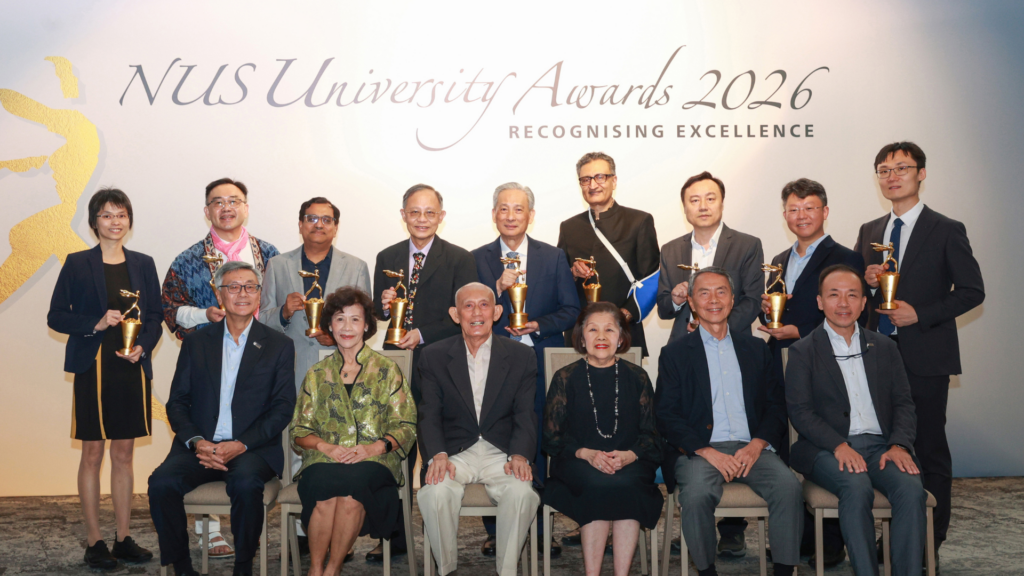
NUS University Awards 2026: A tribute to excellence in education, research, mentorship and service
From the classroom to the laboratory and beyond, nine outstanding individuals were recognised at the NUS University Awards 2026 for their significant impact in teaching, research, mentorship and service. Among them, Outstanding Educator Award conferee Associate Professor Robin Loon (NUS English, Linguistics and Theatre Studies).
Read More
Morphosyntactic Choice in Singapore English: Grammar, Psycholinguistics, and Variation
What shapes a speaker’s choice to say, ‘Put where?’ instead of ‘Where do I put it?’ This is the central question behind ‘Morphosyntactic Choice in Singapore English: Grammar, Psycholinguistics, and Variation’, a research project funded from 2026 to 2031 and led by Assistant Professor Nick Huang (NUS Department of English, Linguistics, and Theatre Studies). Supported by the Ministry of Education Social Science and Humanities Research Fellowship, the project investigates how speakers of Singapore English—particularly its colloquial form, Singlish—select between different grammatical constructions in daily conversation. A key concept in the project is morphosyntactic variation—the idea that speakers can express the same meaning using different grammatical forms. These choices are not arbitrary. Rather, they reflect a complex interplay of grammar, mental processing, and social context. For instance, when someone says, ‘Put where?’ instead of ‘Where do I put it?’, is that simply a casual way of speaking, or do deeper factors like information density, prosody, and syntactic structure influence the choice? To uncover these patterns, Huang and his team will combine behavioural experiments with large-scale corpus analysis, drawing on naturalistic data—from WhatsApp conversations to internet forums—enhanced through detailed linguistic annotation. The team will also conduct psycholinguistic experiments to test how speakers […]
Read More
Edwin Thumboo Prize 2026
The Department of English, Linguistics and Theatre Studies at the National University of Singapore (NUS) Faculty of Arts and Social Sciences has awarded the Edwin Thumboo Prize 2026 to two pre-university students for their excellent literary work. Named after one of Singapore’s most prominent poets and scholars, the Edwin Thumboo Prize aims to promote excellence in the study of Literature at the pre-university level by recognising outstanding literary works by A-level and International Baccalaureate Diploma (IBDP) students of English Literature in Singapore. It is administered by the Department with support from the Ministry of Education (MOE). The Prize, established in 2019, is funded by generous donors, including patrons of the arts and former winners of the Angus Ross Prize. Winner Ashmi Chatterjee Raffles Institution Ashmi Chatterjee “Literature has taught me empathy in its fullest sense-not just to see, but to feel deeply through another’s eyes. I find equal comfort in its refuge and its intellectual challenge, which shape how I approach the world with nuance and wonder. I am forever grateful to my teachers: Ms Rathiga Veerayan, Mr Samuel Chan, Ms Chuang Sulynn, Ms Lim Puay Miao and Ms Samantha Prakash, for nurturing this science student’s uncharacteristic love for language […]
Read More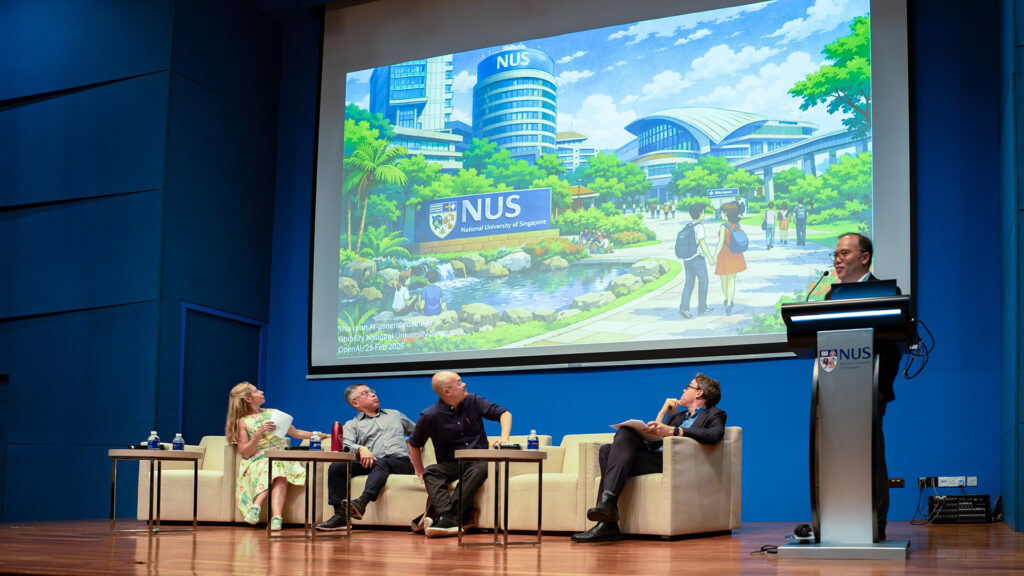
In the age of AI, the humanities and social sciences are becoming more, not less, essential
The rise of artificial intelligence has often been framed as a challenge to the humanities and social sciences. But speakers at “Future Horizons: Envisioning the Humanities and Social Sciences”, recently organised by the NUS Faculty of Arts and Social Sciences (FASS) as part of the Ideas Festival Singapore 2026, argued the opposite: That a world transformed by AI will need these disciplines even more urgently than before.
Read More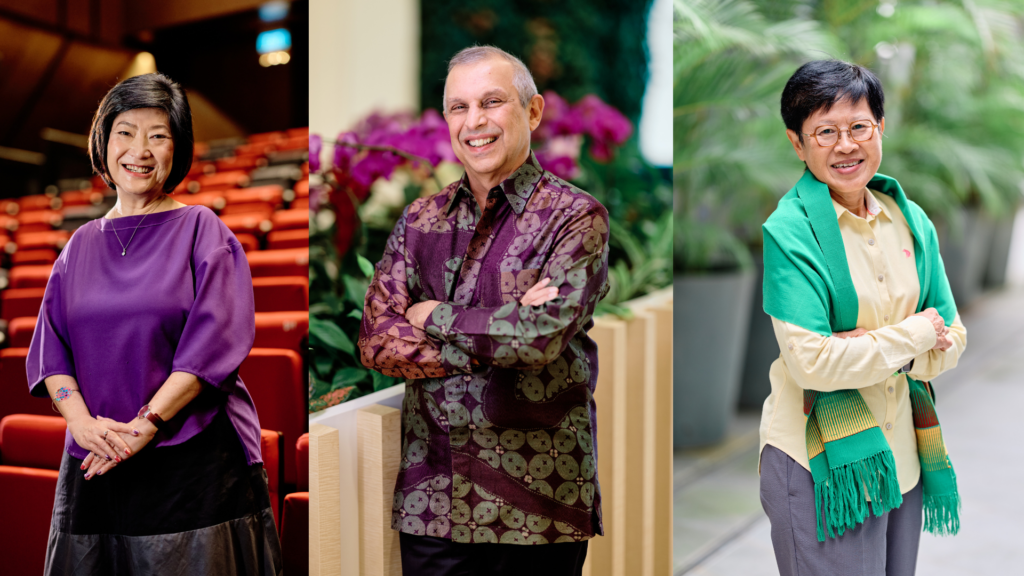
2026 Distinguished Arts and Social Sciences Alumni Awards Honouring graduates who have dedicated their lives to the arts, diplomacy and social services
The awards, held on 1 April, honoured three distinguished alumni whose careers have shaped the arts, diplomacy and communities: Ms Lim Hai Yen (English Language and Chinese Studies ’92), Mr Ashok Mirpuri (Political Science Hons ’84), and Ms Ang Bee Lian (Social Work ’77). Though their careers have unfolded in very different arenas, they share a common thread: a commitment to serving society and shaping the world around them.
Read More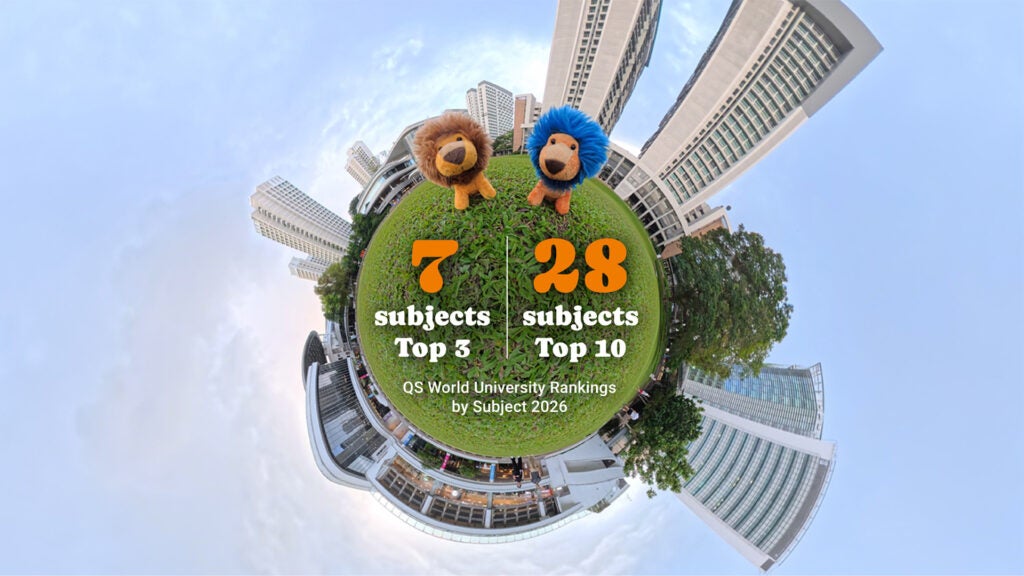
NUS leads Asia in the QS World University Rankings by Subject 2026
Achieves strongest performance to date, with all-time high of seven NUS subjects ranked among the global top three and a record 28 subjects in the global top 10.
Read More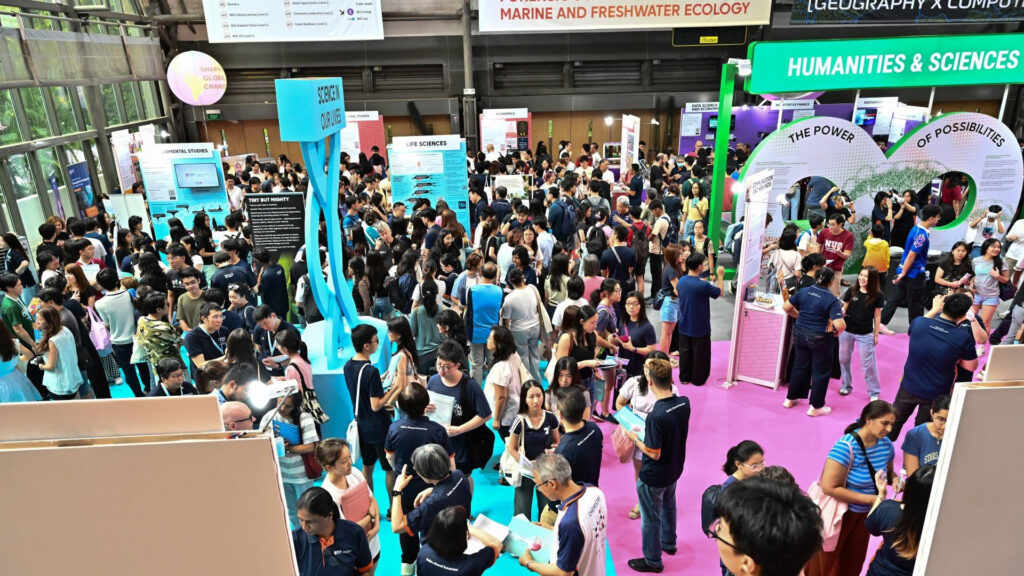
NUS Open House 2026: From the future of learning to the pulse of student life
Prospective students turned out in force for the NUS Open House 2026, one of the University’s largest events of the year, with some 21,500 visitors packing University Town on 7 March for a first-hand look at the University’s distinctive academic programmes and its vibrant campus community.
Read More
Colliding Asias (Crazy Rich Asians as Novel, Film, Adaptation, and Singapore)
The Crazy Rich Asians film, which premiered in August 2018, was a watershed moment for the representation of Asian stories in Hollywood. Based on the bestselling 2013 novel by Singaporean author Kevin Kwan, the film adaptation quickly became a global phenomenon, marking a shift in the landscape of mainstream cinema, where Asian stories and voices were traditionally underrepresented or relegated to harmful stereotypes. While the film garnered immense success and attention, it also faced scrutiny for its portrayal of Asian characters. In “Colliding Asias — Crazy Rich Asians as Novel, Film, Adaptation, and Singapore”, a chapter in The Routledge Companion to Global Literary Adaptation in the Twenty-First Century (Routledge, 2023), Dr Edna Lim (NUS English, Linguistics and Theatre Studies) examines Crazy Rich Asians as a film adaption in its own right, rather than its relationship with the novel. Through what she terms as the “collision of Asias”, Lim examines the intersection of different Asian identities and perspectives in the Crazy Rich Asians film, and how the film constitutes a wholly different performance of the Crazy Rich Asians story. Crazy Rich Asians has elicited a range of incongruous responses, with some lauding it as a breakthrough Hollywood production featuring an all-Asian […]
Read More