

Tradition and the Individual Talent in North Indian Classical Vocal Music
Rajeev S. PATKE
 I am currently on a joint appointment shared between ELL-FASS and Yale-NUS College. My current research, funded by a research grant from Yale-NUS College, comprises two separate projects. The first, which is likely to be the shorter in duration, is based on an article I published some years ago, on the topic of “The poetry of islands, and the islands of poetry”. The outcome from this project will be a monograph, to be written during 2015 and published, hopefully, by late 2015 or early 2016, by a publishing firm which is currently reviewing a book-proposal from me.
My second project is rather more ambitious and has been under way since 2013, and might take several more years to complete. It is titled “Tradition and the Individual Talent in North Indian Classical Vocal Music”.
The project is interdisciplinary in nature. The title alludes to a famous formulation by the poet T. S. Eliot, who proposed a specific kind of complex relation between the idea of a tradition and the relation that might be said to prevail between specific individuals and that tradition. Eliot envisaged an idea of tradition as affecting individual creativity, while also changing the nature of the tradition from which it grew and to which it contributes. I plan to extrapolate a related set of ideas to the relation between performance practice and creativity in the field of North Indian classical vocal music. This tradition is largely transmitted through memorial reconstruction, without primary reference to any form of music notation. That creates many results or effects for which the history of Western classical music, or Western literary traditions, have no counterpart. The project will examine the consequences for form of an oral tradition. It will also examine the impact of recording technologies on the transmission of form and tradition. The project needs a large data-base of recorded vocal music. I have been involved in compiling such a data-base over many years. The next step will be to map the evidence of recorded music, which has a history that starts around 1903, onto the much longer tradition of theorizing about musical form and tradition in India, and subsequent theorizations about Indian vocal music in the contexts of global or international music scholarship. Concurrently, I plan to conduct detailed case-studies of individual musical forms and their transmission, using the internet and various other media for the creation of my analysis and its results. I have already published two articles on the relation of technology to music. I expect the final outcome to be both a monograph and a more composite output that can be published on the web and in the form of a CD-ROM.Rajeev S. PATKE
I am currently on a joint appointment shared between ELL-FASS and Yale-NUS College. My current research, funded by a research grant from Yale-NUS College, comprises two separate projects. The first, which is likely to be the shorter in duration, is based on an article I published some years ago, on the topic of “The poetry of islands, and the islands of poetry”. The outcome from this project will be a monograph, to be written during 2015 and published, hopefully, by late 2015 or early 2016, by a publishing firm which is currently reviewing a book-proposal from me.
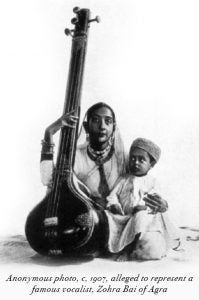
My second project is rather more ambitious and has been under way since 2013, and might take several more years to complete. It is titled “Tradition and the Individual Talent in North Indian Classical Vocal Music”.
The project is interdisciplinary in nature. The title alludes to a famous formulation by the poet T. S. Eliot, who proposed a specific kind of complex relation between the idea of a tradition and the relation that might be said to prevail between specific individuals and that tradition. Eliot envisaged an idea of tradition as affecting individual creativity, while also changing the nature of the tradition from which it grew and to which it contributes. I plan to extrapolate a related set of ideas to the relation between performance practice and creativity in the field of North Indian classical vocal music. This tradition is largely transmitted through memorial reconstruction, without primary reference to any form of music notation. That creates many results or effects for which the history of Western classical music, or Western literary traditions, have no counterpart. The project will examine the consequences for form of an oral tradition. It will also examine the impact of recording technologies on the transmission of form and tradition. The project needs a large data-base of recorded vocal music. I have been involved in compiling such a data-base over many years. The next step will be to map the evidence of recorded music, which has a history that starts around 1903, onto the much longer tradition of theorizing about musical form and tradition in India, and subsequent theorizations about Indian vocal music in the contexts of global or international music scholarship. Concurrently, I plan to conduct detailed case-studies of individual musical forms and their transmission, using the internet and various other media for the creation of my analysis and its results. I have already published two articles on the relation of technology to music. I expect the final outcome to be both a monograph and a more composite output that can be published on the web and in the form of a CD-ROM.