


Where Will You Make Your Impact?
Understand The World. Shape Your Future.
From climate resilience to global justice, NUS Geographers learn from today’s problems to design tomorrow’s solutions. Through an interdisciplinary curriculum that integrates physical and human geography, students examine real-world challenges across local, regional, and global contexts. Grounded in research and practice, NUS Geography equips learners with the critical and applied skills needed to shape more equitable and resilient futures.

Climate Change
How do we respond to a warming world?
Analyse climate impacts and adaptation strategies to drive solutions in policy, planning, and environmental consultancy.

Sustainable Development
How can we live well on a damaged planet?
Evaluate and design pathways for balancing growth, equity, and environment to shape sustainable futures across public and private sectors.

Globalisation & Inequality
Is there hope for the future?
Examine how global flows of power, trade, and culture create uneven geographies, opening pathways into public policy, urban and corporate consultancy.

Our Everyday Worlds
How do we create meaningful worlds for ourselves and others?
Explore how identities, practices, and cultures shape everyday spaces and places, building skills for careers in planning, community engagement, marketing and project management.

Geospatial Intelligence
Want to see the world in 4D?
Apply spatial analysis, mapping, and data visualisation to solve real-world challenges in industry, government, and academia.

The Geographical Sciences
Want to shape the world, literally?
Study Earth’s dynamic systems to build skills in analysis and field research, leading to careers in environmental consultancy, resource management and conservation, and sustainability planning.
Explore Our Programmes
News & Happenings
NUS Geography Now
Congratulations to Profs. Brenda Yeoh, Dariusz Wojcik, Elaine Ho, James Sidaway, Paul Kench and Asst. Prof Nathan Green who made it into Standford University's Top 2% Scientists list, which ranks the most cited researchers globally based on their research impact and academic contributions.
Congratulations to Prof Matthias Roth for being awarded a major grant under the Research, Innovation and Enterprise (RIE) 2025 plan to develop a next-generation urban-scale weather forecasting system to enable finer (neighbourhood) scales (100-300m) of weather prediction than currently possible. The enhanced system will provide more detailed forecasts for urban heat, wind flows, extreme rainfall, and air pollution dispersion. Beside leading this project, Matthias has been selected as node lead for NUS, which is one of the four collaborating centres for the project (the others are NEA/CCRS, A*STAR and NTU).
Singapore Journal of Tropical Geography's Virtual Special Issue on Reimagining climate change responses—insights from the Tropics is published and is free to read until end September 2025.
Upcoming Events
Seminar
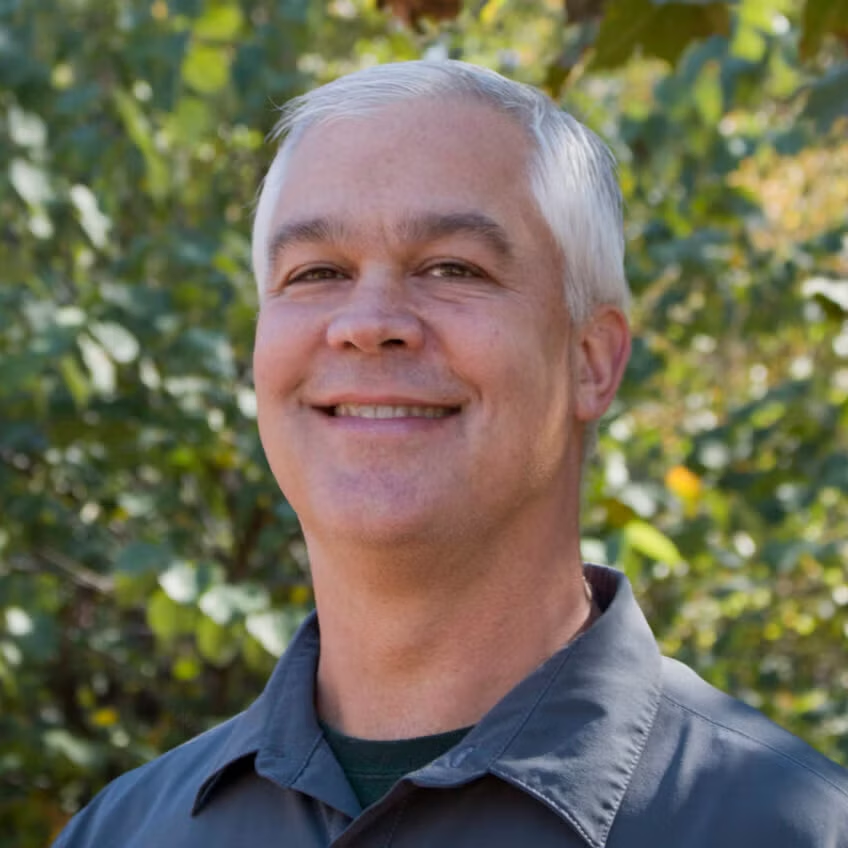
Disease Ecology in Health and Medical Geography: History, Progress, and Innovations, by Distinguished Professor Michael Emch, University of North Carolina at Chapel Hill, 13 October 2025, 3pm, Geography Seminar Room AS2-03-02.
Seminar
Disease Ecology in Health and Medical Geography: History, Progress, and Innovations, by Distinguished Professor Michael Emch, University of North Carolina at Chapel Hill, 13 October 2025, 3pm, Geography Seminar Room AS2-03-02.

NUS Research: High Mountain Asia Hydropower Systems Under Climate Change Threat
Climate change causes the recession and collapse of high mountain glaciers, posing compounding risks to downstream hydropower systems.
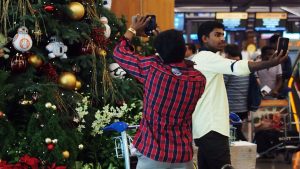
More Than Race: A Comparative Analysis of “New” Indian and Chinese Migration in Singapore
The Comprehensive Economic Cooperation Agreement (CECA) was signed on 29 June 2005. It eased the flow of goods, services and investments between Singapore and India. As Indian immigrants flowed into Singapore, Singaporeans resisted the changing cultural dynamics and increase in job competition. Some even left spiteful social media comments to air their displeasure. Such incidences […]
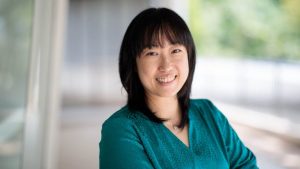
Associate Professor Elaine Ho featured in CNA’s ‘Innovating for the Future – S1E7: Ageing’
On 15 June 2022, Associate Professor Elaine Ho (NUS Geography and Asia Research Institute) was featured on Channel NewsAsia (CNA) in ‘Innovating for the Future – S1E7: Ageing’. In recent years, Singapore has seen a gradual shift towards ageing in place. Long-term care for the elderly is crucial but often ignored in this transition. A/P […]