

News

On 15 June 2022, Associate Professor Elaine Ho (NUS Geography and Asia Research Institute) was featured on Channel NewsAsia (CNA) in ‘Innovating for the Future – S1E7: Ageing’. In recent years, Singapore has seen a gradual shift towards ageing in place. Long-term care for the elderly is crucial but often ignored in this transition. A/P […]

On 27 June 2020, the Society for the Promotion of Attention-Deficit Hyperactivity Disorder Research & Knowledge (SPARK) organized an online session with Mr Albert Lee (http://www.spark.org.sg/meetings). Mr Lee represents a social enterprise that helps people with disabilities reach their life potential through obtaining gainful employment and independence. During the session, Mr Lee spoke about his […]
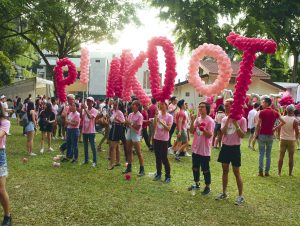
PPink Dot, an annual LGBTQ pride event in Singapore, took place on 18 and 19 June 2022. The use of the colour pink aligns the organisers with the LGBTQ community worldwide. With Singapore known colloquially as the ‘little Red Dot’, the terms Pink and Dot represent LGBTQ communities in Singapore. In ‘Negotiating LGBTQ rights […]
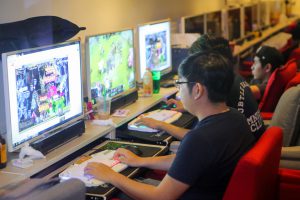
On 22 June 2020, HealthHub, an online portal by the Ministry of Health Singapore, published an article on screen time and gaming addiction (https://www.healthhub.sg/live-healthy/178/stuckintheweb). The article warns readers about the dangers of cyber addiction and offered tips to help a friend or family member who may be addicted to online gaming. Video games have […]

Developed by the Next Age Institute (NAI) with Citi Foundation’s funding, the new Financial Capability and Asset Building (FACB) training curriculum follows success of training programme for social workers rolled out in 2020.

Pink Dot is an annual lesbian, gay, bisexual, and transgender (LGBT) pride festival in Singapore, taking place in 2022 on 18 and 19 June. The community-based festival is named Pink Dot because the colour pink is often associated with LGBT, the pink colour of the Singapore identity card, and the city-state’s small dot size on […]

An important step in safeguarding workers against unfair and unlawful employment practices is for them to be aware of their rights under the Employment Act. Yet, in ‘New approach needed to protect young workers from exploitation’ (The Straits Times, June 2022), Dr Ong Qiyan (NUS Social Service Research Centre), Ms Evelyn Kok (NUS Social Service […]
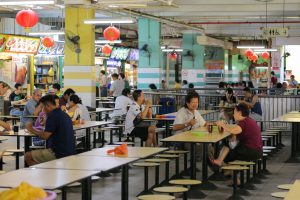
On 13 June 2019, The Straits Times and Business Times podcast channel (ST & BT Podcasts) aired an episode on a guide to durian feasting. The durian is a fruit native to Southeast Asia, known for its pungent odour and thorny exterior. Its taste divides opinion, but it is popular eaten on its own, or […]

Professor Audrey Yue (NUS Department of Communications and New Media) and Professor Helen Leung (Simon Fraser University, Canada) consider the different theoretical approaches by which to understand homosexuality in Asia in ‘Notes towards the queer Asian city: Singapore and Hong Kong’ (Urban Studies, 2017).
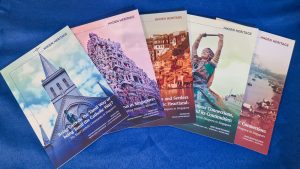
‘NUS Faculty of Arts and Social Sciences launches series of books and documentaries on Singapore’s minority South Asian communities’ (NUS News, May 2022) On 28 May, the NUS Faculty of Arts and Social Sciences (FASS) showcased a series of books and short documentaries that focused on Singapore’s lesser-known South Asian communities at a book launch-cum-documentary […]