

News

As digital technologies become more embedded in everyday life, the nature of sexual harm is shifting in ways that increasingly challenge existing regulations and social understanding. In Singapore, recent developments show how image-based sexual abuse has evolved alongside advances in artificial intelligence (AI), transforming from the non-consensual sharing of real images into the creation and […]

Singapore, though a relatively young city-state, boasts a rich animal history that reflects its evolving relationship with nature amidst rapid urban transformation. In ‘Tilapia, Travel, and the Making of a Singaporean Creature’, the first chapter of Singaporean Creatures: Histories of Humans and Other Animals in the Garden City (NUS Press, 2024), edited by Associate Professor […]

The “Taixu in Singapore: A 100-Year Commemoration” exhibition, curated by Associate Professor Jack Meng-Tat Chia (NUS History), commemorates the centenary of the renowned Chinese Buddhist monk Taixu’s first visit to Singapore in 1926. Taixu (1890–1947) was one of the most influential figures in twentieth-century Buddhism, known for his efforts to modernise Buddhist thought and institutions […]
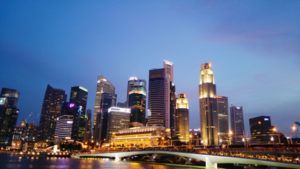
The culture of startup entrepreneurship has surged in popularity in recent decades, attracting significant venture capital and fostering innovation. Singapore is no exception, ranking eighth in the latest global startup ecosystem rankings and serving as home to over 4,500 startups. Amidst this landscape, the term ‘zombie startups’ refers to firms that neither grow into high-value […]
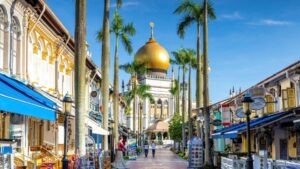
‘Malayo-Islamic Aesthetics in Singapore: Continuation and Shifts through Place and Architectural Histories, Collections, and Curatorial Dimensions’ is a research project led by Assistant Professor Imran bin Tajudeen (NUS Malay Studies & NUS Architecture) and supported by the National Heritage Board’s Heritage Research Grant (2025-2027). The project examines the historical continuities and transformations of Malayo-Islamic aesthetics […]
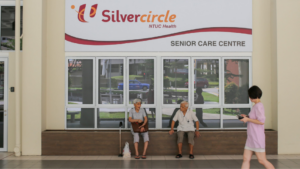
In 2026, Singapore will cross a demographic threshold few countries have reached as quickly – becoming a super-aged society with at least 21 percent of its population aged 65 and above. The focus is no longer just on how long people live, but on how well they age and who will care for them and […]
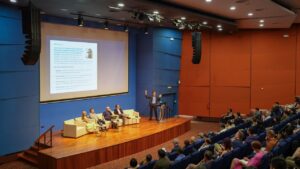
As artificial intelligence (AI) reshapes industries and classrooms in Singapore, the skills needed to navigate an increasingly automated world are rapidly evolving. Are the humanities and social sciences, long hallmarked by critical inquiry and ethical reflection, losing their relevance? To conclude the Ideas Festival Singapore 2026, NUS FASS hosted ‘Future Horizons: Envisioning the Humanities and […]
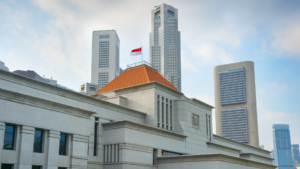
Singapore, as a small city-state, adopts a deliberate hedging strategy in its foreign policy, maintaining strong ties with both the United States and China while avoiding alignment with either. This approach allows it to maximise economic and strategic benefits while mitigating risks in the context of intensifying US-China rivalry. Although this stance is often viewed […]

Missed the live event? You can now watch the video recording of the launch of Figures of Buddhist Diplomacy in Modern Asia (Bloomsbury, 2026), hosted by the Singapore Research Nexus and the GL Louis Religious Pluralism Research Cluster at the NUS Faculty of Arts and Social Sciences. The book, funded by Singapore’s Social Science Research […]
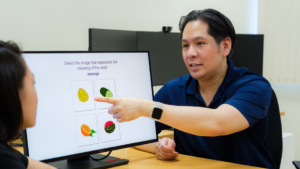
A simple habit many learners try to avoid, guessing, may actually be the key to learning languages more effectively. In ‘Duolingo-inspired pretesting with words and pictures improves vocabulary learning’ (Cognitive Research: Principles and Implications, 2026), Assistant Professor Steven Pan and Ms Tabitha Chua (both NUS Psychology) have found that attempting an answer before knowing it, […]