

CLaSIC 2026
11th Centre for Language Studies International Conference (CLaSIC)
|
|
Beyond Borders: Language Education in the Era of AI3-5 DECEMBER 2026 UTown Education Resource Centre |
Welcome MessageDear colleagues and friends, On behalf of the Organising Committee, I am pleased to welcome you to the 11th CLS International Conference (CLaSIC 2026), which will be held in Singapore from 3 to 5 December 2026. CLaSIC 2026 marks the 25th anniversary of the Centre for Language Studies at the National University of Singapore. Under the theme Beyond Borders: Language Education in the Era of AI, the conference invites critical reflection on the evolving landscape of language education, while reaffirming the central role of the human teacher in technology-mediated learning. We warmly welcome our long-standing colleagues and friends, and we are equally delighted to greet those joining the CLaSIC community for the first time. We look forward to a meaningful exchange of ideas and perspectives across language, disciplinary, and educational contexts.
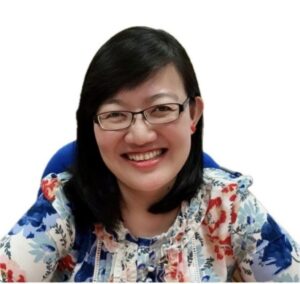
Warm regards, |
|
About CLaSIC
|
CLaSIC is a biennial conference organised by the Centre for Language Studies of the National University of Singapore, and aims to bring together academics, researchers, and professionals from Asia and beyond for a productive and meaningful exchange of insights, experiences, views, and perspectives on current and future developments in foreign language teaching and learning. The conference serves as a platform for participants to report on current research and practices in foreign language education and related disciplines. Since the inaugural conference in December 2004, CLaSIC has been a resounding success, drawing researchers and professionals from all over the world. Leading scholars in foreign language education, applied linguistics, and second language acquisition have featured as keynote speakers, among them Anna Uhl Chamot, William Littlewood, Richard Schmidt, Elaine Tarone, Amy Tsui, Michael Byram, Claire Kramsch, Rod Ellis, and Michael Levy. Six scholarly volumes with selected papers from CLaSIC 2004, 2006, 2008, 2010, 2012, and 2014 have been published by the international publishing house, De Gruyter Mouton (Boston and Berlin). They are titled: Foreign Language Teaching in Asia and Beyond: Current Perspectives and Future Directions, Processes and Process-Orientation in Foreign Language Teaching and Learning, Media in Foreign Language Teaching and Learning, Perspectives on Individual Characteristics and Foreign Language Education; Culture and Foreign Language Education: Insights from Research and Implications for the Practice; and New Perspectives on the Development of Communicative and Related Competence in Foreign Language Education. |
Keynote Speakers
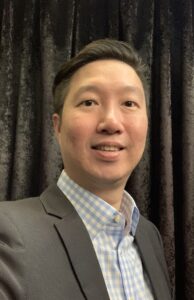
| Fei Victor Lim (Nanyang Technological University, Singapore) |
Tomohisa YAMADA (Seinan Gakuin University, Japan) |
 |
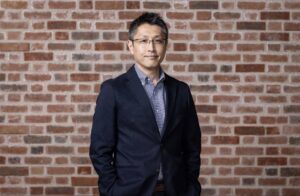 |
| "When Bots Teach: Language and Literacy Learning Reimagined" | "Reconceptualizing Human-Centric Technology Adoption in Education" |
| Abstract: As GenAI reshapes the communicative landscape, language and literacy education confront a pressing question: how can educators reimagine language and literacy learning with the affordances of digital tools now made available to us. Grounded in social semiotics, my keynote frames learning as design: learning is not merely the accumulation of knowledge, but an agentive, situated process of meaning-making in which students build their semiotic capital and negotiate their identities as knowers and writers. I draw on findings from two recent research projects to examine the promises and limitations of GenAI in language and literacy learning. The first study investigates university students’ cognitive, emotional, and physiological engagement in online interactions with an AI chatbot and a human teacher during the planning phase of academic essay writing. The results reveal a tension: while AI can sustain engagement and reduce evaluative anxiety, it cannot replicate the relational trust, affective resonance, and critical guidance provided by human teachers. The second project explores a bespoke GenAI chatbots as Learning Companion designed to support graduate students’ critical reasoning and academic writing. I conclude by reflecting on the need for language and literacy learning to be reimagined in light of the pedagogical opportunities and challenges GenAI brings. | Abstract: Reconceptualizing Human-Centric Technology Adoption in Education In the contemporary pedagogical landscape, the integration of digital tools has become increasingly expected, contributing to disparities among educators in terms of technological literacy and implementation. This research examines the key factors that shape educators’ transition from hesitation to technology adoption. By integrating the Diffusion of Innovations theory and the Technology Acceptance Model (TAM), the study identifies the cognitive and contextual factors that influence educators’ decision-making processes. The analysis shifts the focus from functional utility to the psychological mechanisms underlying acceptance. Ultimately, this session seeks to delineate the conditions for effective synergy between human agency and technological or algorithmic support. By advocating for a human-centric paradigm, the presentation proposes a theoretically grounded framework for sustaining pedagogical integrity in increasingly automated educational environments, positioning technology as a pedagogical affordance rather than a limiting factor. |
| Biography:Fei Victor Lim is Associate Professor and Deputy Head (Research) in English Language and Literature at the National Institute of Education, Nanyang Technological University, Singapore. His research and teaching focus on multiliteracies, multimodal discourse analysis, and digital learning. He serves as an Editor of Multimodality and Society and Associate Editor of Computers and Composition. He leads the Literacies Research Group at NIE and MERLIN (Multimodality in Educational Research and Learning International Network) comprising a community of researchers and practitioners interested in multimodality and learning.
Victor has secured and led multiple research grants as Principal Investigator and Co-Principal Investigator, delivered keynote and plenary lectures internationally, and published widely in leading journals on multimodality in education. He is author of Designing Learning with Embodied Teaching: Perspectives from Multimodality, lead author of Designing Learning for Multimodal Literacy: Teaching Viewing and Representing, and most recently, Designing Learning with Digital Play: A Multimodal Perspective, in Routledge. For his contributions, Victor has been recognised among the top 2% of scientists worldwide in Education and in Language and Linguistics (2023–2025) in a study conducted by Stanford University, and has received awards for excellence in research, teaching, and service. |
Biography:Tomohisa YAMADA is a Professor in the Faculty of Foreign Languages and Director of the Center for Language Education at Seinan Gakuin University. His previous appointments include positions as a Japanese language instructor at the Language Centre, SOAS University of London; the International Student Center at Saga University; and the Institute for the Advancement of Higher Education at Hokkaido University, prior to assuming his current position in 2021. While at Hokkaido University, he received the Excellent Teacher Award for five consecutive years (2014–2018). His research centers on educational technology and teacher education, with particular emphasis on decision-making models for ICT and AI integration in education. In addition to his research activities, he promotes ICT literacy among Japanese language teachers through lectures and professional development programs and has served on ministerial committees related to ICT utilization at the Ministry of Education, Culture, Sports, Science and Technology (MEXT). His major publications include Utilizing ICT (2nd ed.), Active Learning for Japanese Language Teachers (co-author), Reconsidering Online Education (editor), and Will AI End Language Education? New Perspectives on Teaching and Learning Foreign Languages (co-author), all published by Kuroshio Publishing. |
Chair
Dy. Chair
Advisors
Ms Indrianti TJAN
Dr. Sasiwimol KLAYKLUENG
A/P Titima SUTHIWAN
A/P Izumi WALKER
Abstracts & Program
Logistics
Registration
Deputy Head:
Ms Sophie Micheline UNDORF
Mr Sergio RODRIGUEZ FLORES
A/P Izumi WALKER
A/P CHAN Wai Meng
Dr LIAN Oi Lin
Dr Daniel CHAN
Dr Haoshu WANG
Dr Omar SALAWDEH
Mr Masanori NAGAMI
Mr Muzzammil bin MOHAMED YASSIN
Ms Kavita Devi
Ms Zhang Mo
Mr Thach Ngoc Minh
Ms Saeko KITAI
Ms Rungnapa KITIARSA
Mr Yuzuru HAMASAKI
Ms Ing Ru CHEN
Ms. Sara Sainz LANZA
Dr. Osamu AMAZAKI
Dr. Sandhya SINGH
Ms. Satomi CHIBA
Secretariat
Treasury
Admin
Assistant Secretary
Ms Euneee KO
Assistant Treasurer
Ms Yoko MORIKAWA
Ms Mas Minarni MASJUMI
CLaSIC 2026 celebrates the 25th anniversary of the Centre for Language Studies at NUS. To mark this milestone, we invite educators, researchers, and practitioners to explore how language education is evolving in an age of rapid technological change. While AI and digital tools increasingly shape teaching and learning, a central question remains: How does the human teacher continue to guide, transform, and enrich language learning today?
Our central theme focuses on the role of the teacher in AI-mediated environments, but we warmly welcome contributions across the broader field of language education. Submissions offering theoretical insights, empirical findings, classroom innovations, cross-cultural perspectives, or policy implications are all encouraged.
Topics of Interest
1. Pedagogy, Teachers, and AI
- Teaching design, human–machine interaction, teacher cognition, affect, and professional development
2. Curriculum, Materials, and Assessment
- Curriculum design, materials/textbooks, assessment, and feedback (including AI-supported approaches
3. Learning Environments and Contexts
- Blended, hybrid, extended, informal, community-based, and technology-mediated learning spaces
4. Learner Development, Competence, and Identity
- Fluency, competence, engagement, agency, motivation, identity, and proficiency frameworks
5. Digital Literacy, Ethics, and Equity
- Critical digital literacy, access, inclusion, ethics, policy, and responsible AI use
6. Multilingualism and Global Perspectives
- Multilingual practices, mobility, intercultural communication, and international perspectives.
You may make your abstract submission here.
All abstracts will undergo peer review.
We look forward to receiving your submissions and welcoming you to Singapore, 3–5 December 2026, for an engaging exploration of language education in the era of AI.
| Ticket Type | Price | Sales Period |
| Early Bird | SGD $530 | 1 March 2026 - 30 September 2026 |
| Standard | SGD $580 | 1 October 2026 - 30 November 2026 |
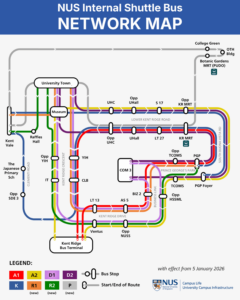
Visitors can get to UTown by:
Bus:
NUS Internal Shuttle Bus D
-
- D2 from Kent Ridge MRT to UTown
- D1 from Central Library/Museum to UTown
-
- Public buses 33 and 196 from Dover Road
- Public buses 33, 96, 151, 183 and 196 from Clementi Road
MRT:
Circle Line HarbourFront to Kent Ridge and NUS Shuttle Bus D2
East West Line Changi Airport to Buona Vista transfer to Kent Ridge Circle Line and NUS Shuttle Bus D2
Motor Vehicles:
- Via Dover Road
- Via College Link from Kent Ridge Campus
- or by foot from Kent Ridge Campus (where there is a sheltered walkway)
For more information, please refer to Getting Here (UTown) or NUS Internal Shuttle Bus (ISB) service.
For more information, please refer to Utown.
Where to eat in UTown?
During the lunch breaks on Day 1 and Day 2, you may wish to try a range of cuisine @ UTown. These are available at very affordable prices.
You may also want to download the app "NUS Dining" to get the directory of NUS food outlets.
Official Conference Hotels (Recommended)
1. Lyf Hotel (Special Rate for Conference Attendees) ★★★★
Address: 80 Nepal Park, Singapore 139409
Tel: +65 6970 2288
To enjoy a special rate, please follow the instructions below:
- Input NUSCLS under the corporate field on the brand website.
- Promo code: NUSCLS. Booking code can be applied for online booking via the ASR website.
2. Park Avenue Rochester (No Special Rates) ★★★★
Address: 31 Rochester Drive, Singapore 138637
Tel: +65 6808 8600
Other nearby hotels
3. Quay Hotel West Coast ★★★
Address: 428 Pasir Panjang Rd, Singapore 118769
Tel: +65 6778 6788
4. Fragrance Hotel - Ocean View ★★
Address: 432 Pasir Panjang Rd, Singapore 118773
Tel: +65 6778 0888
5. ibis budget Singapore West Coast ★★
Address: 418 Pasir Panjang Rd, Singapore 118759
Tel: +65 6777 9888
Singapore is a dynamic city with a population of about 5 million where you'll find a harmonious blend of culture, cuisine, arts, and architecture.
Weather
Average temperature is about 30 - 32 degrees Celsius, and most of the time you will have sunshine. It usually rains in December, so it is advisable to bring along an umbrella.
Clothing
As Singapore is a humid country, it is advisable to bring light clothing. It is not considered rude if you do not wear a coat, and wearing your normal working attire is considered proper. The air-conditioning in the conference venues might be cold, and it is advisable to bring along a sweater or jacket.
More Information
- Official Singapore Tourism Website - Information for tourists
- Singapore Border Authority - Information on visa application and requirements
- Singapore Customs - Information on clearance of arriving travelers and baggage at entry checkpoints, Tourist Refund Scheme
Transportation
Getting from Airport to City
Please click here for general information on getting from and to Changi Airport.
Getting Around Singapore
Please click here for some general information.
Address
The Secretary
CLaSIC 2026 Organising Committee
Centre for Language Studies
Faculty of Arts and Social Sciences
National University of Singapore
9 Arts Link, AS4/02-05
Singapore 117570
Telephone
(+65) 6516 6346
In conjunction with the Centre's 25th anniversary, a celebratory dinner will be held on the second night of the conference, to honor the years of excellence, growth and meaningful impact. The evening will bring together staff, partners and esteemed guests to reflect on key milestones and achievements that have shaped the Centre's journey, amid warm fellowship and shared memories.
| Organising Committee |
|
| Head | Ms. Lin Chiung Yao |
| Deputy Head | Dr. Osamu Amazaki |
|
Members |
|
| Dr. Daniel Chan | Ms. Blanca Pérez |
| Ms. Chen Ing Ru | Mr Sergio Rodriguez Flores |
| Dr. Isabel De La Fuente Cobas | Dr. Salawdeh Omar |
| Dr. Zulfati Izazi | Mr. Sew Jyh Wee |
| Ms. Saeko Kitai | Dr. Sandhya Singh |
| Ms. Rungnapa Kitiarsa | Mr. Thach Ngoc Minh |
| Ms. Euneee Ko | Ms. Sophie Micheline Undorf |
| Ms. Liana Kosasih | Dr. Wang Haoshu |
| Ms. Kazuko Morita | |