
Mosquitoes, Public Health, and the Construction of a Modern Society
May 14, 2026
A key member of the Culicidae family, mosquitoes have evolved from being a minor nuisance to a formidable public health threat as carriers of deadly diseases, particularly in tropical Singapore. Associate Professor Timothy Barnard (NUS History) delves into the historical efforts to monitor, regulate, and eradicate these insects in the context of Singapore’s transformation into a modern state in ‘Mosquitoes, Public Health, and the Construction of a Modern Society’, the third chapter of Singaporean Creatures: Histories of Humans and Other Animals in the Garden City (NUS Press, 2024), also edited by A/P Barnard.
A/P Barnard highlights the 19th century as a pivotal period when the role of mosquitoes as vectors of disease was first recognised. This posed a significant threat to public health, jeopardising the workforce and, by extension, the country’s economic development. By 1911, malaria – transmitted primarily by the Anophelesmosquito- accounted for 30% of all hospital admissions in Singapore. In response, an ‘anti-malarial committee’ was established to combat the disease by identifying key mosquito breeding grounds, filling pools, and clearing stagnant water. The campaign achieved notable success in Telok Blangah, then the island’s most malaria-prone area, setting a precedent for future mosquito control efforts. These measures combined surveillance, infrastructural improvements, and public education, forming a systematic approach that would shape Singapore’s mosquito management strategies throughout the 20th century.
After the Japanese Occupation, the British revived the Anti-Mosquito Department. Squatter settlements and roadside drains were maintained by coolie workers tasked with clearing stagnant water, while residents were educated on practices that could contribute to mosquito breeding. These efforts were complemented by more advanced methods, such as larvae collection to identify high-risk areas and the development of more effective insecticides. By 1960, Singapore was largely malaria-free – a milestone that paralleled the nation’s progress toward overcoming its third-world conditions.
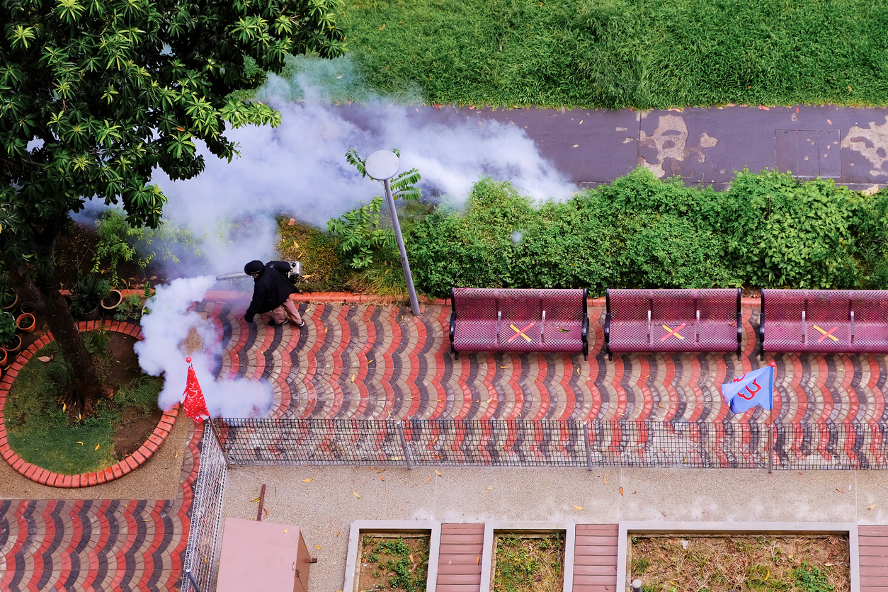
However, Singapore’s rapidly evolving urban landscape led to the emergence of the Aedes aegypti mosquito, a primary vector for dengue fever. This species thrives in built-up environments and feeds almost exclusively on humans – conditions that were amplified by the city-state’s industrialisation and public housing developments. In response, the nationwide ‘Keep Singapore Clean and Mosquito-Free’ campaign was launched in 1969, aligning with efforts to transform Singapore into a green city with an emphasis on keeping a neat and tidy environment without breeding sites for insects. Homeowners were also expected to keep their households free of mosquito habitats, which was supported by extensive public education initiatives, including poster distribution, residential visits, and strict law enforcement through monetary fines for violations. The absence of significant mosquito-borne disease outbreaks throughout the 1980s highlighted the success of these efforts, cementing Singapore’s reputation as a global model in the fight against mosquito-borne illnesses.
However, the beginning of the new millennium marked the resurgence of dengue as an endemic disease in Singapore. This was attributed to factors such as the emergence of new dengue variants, rising island temperatures, a growing population, and expanded feeding grounds for mosquitoes. Traditional eradication methods proved inadequate, prompting Singapore to adopt innovative genetic strategies. One such measure involved releasing genetically modified male Aedes mosquitoes carrying Wolbachia, bacteria that renders reproduction ineffective, thereby reducing mosquito populations.
A/P Barnard concludes the chapter reflecting on the evolving mosquito-human dynamic. Whether mosquitoes and the diseases they carry will adapt to these new measures remains uncertain. He frames this ongoing struggle as part of a broader narrative – a century-long battle against these insects that has profoundly shaped Singapore’s development through public health initiatives and infrastructural advancements.
Read the chapter here.