

Martin Mattsson
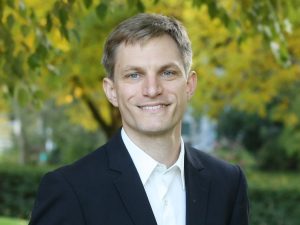 |
Martin Mattsson has been an Assistant Professor in the Department of Economics since 2021. Originally from Sweden, he received his PhD in Economics from Yale University. In this article, he discusses his motivation for the research projects he conducts and the courses that he teaches. |
My underlying motivation as an economist is straightforward yet ambitious: to improve the welfare of as many people as possible, as much as possible. This drive shapes both my research and teaching.
I started studying government institutions as I was convinced by the core arguments in the broad research agenda on institutions that Daron Acemoglu, Simon Johnson, and James Robinson were recently awarded the 2024 Nobel Memorial Prize in Economic Sciences for. The central conclusion of this stream of research is that the types of institutions a nation has are the key factor in determining the material well-being of its people. While this is a very important insight, I found this research agenda had insufficient answers to the critical question: how can institutions be improved? This meant that the practical implications for policymakers were somewhat limited.
This gap has led me to employ modern empirical approaches, such as experiments and tools from the so-called “credibility revolution” in Economics, to understand the effects of specific changes to government institutions. My hope is that if we understand what effects changes to government institutions have in specific instances, this creates a body of knowledge that will allow policymakers around the world to make better decisions when designing institutions for the future. I was particularly influenced by the paper "Institutions and Development: A View from Below" where Rohini Pande and Christopher Udry described a research agenda where we understand institutions from the ground up, examining how they function in practice and how they can be reformed through careful, evidence-based interventions.
Research on the Effects of Changes in Government Institutions
With the motivation to understand what institutional reforms work and what doesn’t, I started working closely with the Government of Bangladesh. I completed two large-scale field experiments that directly measured the effects of two specific reforms. The first experiment examines how performance scorecards can change the behaviour of government bureaucrats—essentially asking whether accountability metrics can drive better public service delivery (Mattsson, 2025). The second, written together with Mushfiq Mobarak, investigates the effects of village courts, exploring how local justice systems impact communities and whether strengthening them can improve access to high-quality justice in rural Bangladesh (Mattsson and Mobarak, 2025).
I also have research papers on other countries that are not based on field experiments. For example, I have written a paper together with Siddharth George on what happens to the performance of bureaucrats at the lowest tier of government in India when their salaries increase (George and Mattsson, 2025). Furthermore, I have written about how corruption was affected when politicians face re-election incentives in Brazil (Dahis et al. 2025) and when education levels in Vietnam increased (Malesky et al. 2025).
Tackling South Asia's Air Pollution Crisis
One particularly harmful way government institutions are failing in in low- and middle-income countries is their inability to control air pollution—a crisis that causes enormous health and economic damage globally. The problem is especially severe in South Asia where air pollution is estimated to cause more than a million deaths every year. Going back to my original motivation of improving the welfare of as many as possible, as much as possible, this has become a major focus of my current research agenda. I'm working on understanding how to design and implement better pollution control mechanisms that can work within the existing institutional constraints of South Asian countries. Together with my co-authors I have evaluated the Indian government’s flagship policy to reduce air pollution (Bala et al. 2025), provided air monitors and air purifiers to understand why so few households use air purifiers in Dhaka (Chowdhury et al. 2025), and built a prioritization tool to help the government of Bangladesh enforce environmental regulations in a more efficient manner (Thakrar et al. 2025).
This work isn't just academic—as I have gained a deeper understanding of the problem of air pollution, I have also started advising the Government of Bangladesh on how to best tackle the problem and writing articles in Bangladeshi media advocating for the most feasible and effective solutions (e.g. here, here, and here).
Teaching Effective Altruism: Expanding Impact Through Education
My commitment to improving aggregate welfare as much as possible aligns closely with the philosophy of the Effective Altruism (EA) community. Together with my colleague Joel Chow, I teach a course on Effective Altruism at NUS. Through this course, we help students think systematically about how they can use their careers, resources, and skills to have the largest positive impact on the world.
The EA framework provides students with practical tools to evaluate different ways of doing good, whether through their careers, charitable giving, or personal choices. We don’t tell the students what conclusions to draw, but we provide them with a systematic way of evaluating different options. It's rewarding to see students realize they can be both analytical and altruistic—that rigorous thinking can amplify their ability to help others.
Looking Forward
My research agenda continues to evolve, but the core mission remains constant. Whether it's improving bureaucratic performance, strengthening local governance, or tackling environmental challenges, each project is chosen for its potential to generate insights that could improve the lives of large numbers of people.
References to academic papers:
Bala, Archana Dhinakar, Martin Mattsson, and Sangita Vyas. 2025. "Why do Governments Overpromise and Underdeliver? Evidence from India's National Clean Air Programme." Working Paper. Available at: https://papers.ssrn.com/sol3/papers.cfm?abstract_id=4959010
Chowdhury, Ashfaqul, Teevrat Garg, Maulik Jagnani, and Martin Mattsson. 2025. "Misbeliefs, Experience, and Technology Adoption: Evidence from Air Purifiers in Bangladesh." Working Paper. Available at: https://papers.ssrn.com/sol3/papers.cfm?abstract_id=5284948
Dahis, Ricardo, Martin Mattsson, and Nathalia Sales. 2025. "Reelection Incentives and Corruption: Revisiting the Evidence with LLM-Classified Audit Reports." Working Paper. Available at: https://www.ricardodahis.com/papers/Dahis,%20Mattsson,%20Sales%20-%20Reelection%20Incentives%20and%20Corruption.pdf
George, Siddharth, and Martin Mattsson. 2025. "Public Sector Salaries and the Quality of Governance: Evidence from Frontline Bureaucrats in India." Working Paper. Available at: https://papers.ssrn.com/sol3/papers.cfm?abstract_id=4955273
Malesky, Edmund, Martin Mattsson, Khoa Vu, and Liaoliang Zhang. 2025. "The Effects of Education on Corruption: Evidence from Vietnam's University Expansion." Working Paper. Available at: https://papers.ssrn.com/sol3/papers.cfm?abstract_id=4998173
Mattsson, Martin. 2025. "Information Systems, Service Delivery, and Corruption: Evidence from the Bangladesh Civil Service." American Economic Journal: Applied Economics. Available at: https://www.aeaweb.org/articles?id=10.1257/app.20230672
Mattsson, Martin, and Ahmed Mushfiq Mobarak. 2025. "Formalizing Dispute Resolution: Effects of Village Courts in Bangladesh." Working Paper. Available at: https://papers.ssrn.com/abstract=4740074
Pande, Rohini, and Christopher Udry. 2005. "Institutions and Development: A View from Below." Proceedings of the 9th World Congress of the Econometric Society, pp. 349-403.
Thakrar, Sumil K., Doreen Boyd, Xueying Yu, Sheikh Rafi Ahmed, and Martin Mattsson. 2025. "Mapping the Health Harm of Bangladeshi Brick Kilns." Working Paper. Available at: https://eartharxiv.org/repository/view/9267/
Media articles referenced:
· “Interview with Martin Mattsson”, Prothom Alo, November 1, 2025
· "Remove duties on air purifiers in Bangladesh," The Business Standard, December 10, 2024
· "Breathing easier: Making clean air affordable for everyone," The Business Standard, November 28, 2024