

Mrs Lee Choon Guan Endowed Research Fund
Awarded Projects 2025
ROOTS Program Evaluation: Goal Attainment and Good Life in Community Elders
Organisation:
St Andrew's Community Hospital
Grant Cycle 3
Authors:
Anne Chew Chooi Bee, Practitioner-Principal Investigator
Ng Tzer Wee, Co-Investigator
Dr Hui Zhang
Amber Lim
Mina Lee
Dr Gerard Chung, Academic-Principal Investigator
Abstract
ROOTS (Relationships, Opportunities, Ownership, Togetherness, Support) is a community-based intervention adapted from the Local Area Coordination (LAC) model1, first developed in Australia in 1986 to support people with disabilities. The National Heart Centre Singapore (NHCS) piloted LACE, an adaptation of LAC, from 2020 to 20232. Building on this foundation, ROOTS is being piloted from 2025 at SACH and two Active Ageing Centres (AACs) to support community-dwelling elders in achieving a good life as defined by themselves.
The objectives of ROOTS are to (1) support elders in defining their vision of a good life through structured conversations, (2) empower them to achieve their goals and lead self-determined, fulfilling lives, and (3) foster supportive relationships and community connections. The intervention makes use of the conversational framework SCALE (adapted from NHCS)2 and the Goal Attainment Scale (GAS)3, and is guided by the 7 keys to citizenship concept developed by Dr Simon Duffy4, which emphasises inclusion, participation, and agency in community life.
The study aims to evaluate the effectiveness of ROOTS in enhancing elders’ quality of life and health outcomes. We hypothesize that participation will (1) improve elders’ goal attainment by enabling them to harness personal strengths and resources for self-defined goals, and (2) reduce hospital utilisation and re-admissions by fostering resilience, self-efficacy, and positive help-seeking behaviours.
The distinctiveness of ROOTS lies in its strengths-based, person-centred approach, integrating established international frameworks and with locally adapted practices to support ageing in place.
Findings will provide critical insights into the value of community-based interventions for elders and inform scalable, population health models with potential to transform care delivery.
This is a work in progress, study results are not available at this point.
Exploring Caregivers’ Perceived Needs and Priorities for Support Groups in EarlyIntervention Programmes
Organisation:
SPD Ltd
Grant Cycle 3
Authors:
Khor Ming Li, Practitioner-Principal Investigator
Mok Jia Min, Co-Investigator
Dr Peace Wong, Academic-Principal Investigator
Abstract
In Singapore, Early Intervention Programme for Infants and Children (EIPIC) services support children with developmental needs, with caregiver involvement recognised as essential for optimal outcomes. However, caregivers often experience stress, burnout, and social isolation, underscoring the importance of peer-based support. Support groups such as SPD’s Kopi Kakis provide informal spaces for caregivers to connect and share, yet their long-term impact may be constrained by limited caregiver input in programme design.
This study aims to explore caregivers’ perceived needs, preferences, and priorities regarding support group participation within the EIPIC setting. Guided by Social Support Theory, the research adopts a qualitative design involving semi-structured interviews with caregivers across SPD’s six EIPIC centres. Participants will be purposively sampled into two groups: those who have previously attended Kopi Kakis sessions and benefitted from sessions, and those who have expressed interest but not attended. Data will be analysed thematically, with two caregivers engaged as co-researchers to strengthen relevance, trust, and depth of findings.
Findings will inform the redesign of Kopi Kakis to be more relevant, responsive, and sustainable, while also contributing evidence to family-centred practice in early intervention.
This is a work in progress, study results are not available at this point.
Impact of facilitator-led group intervention on identity, family, and drug desistence
Organisation:
Thye Hua Kwan Moral FSC
Grant Cycle 3
Authors:
Felix Ee, Practitioner-Principal Investigator
Serena Lon
Kevin Wee
Dr Katherine Kwan, Academic-Principal Investigator
Abstract
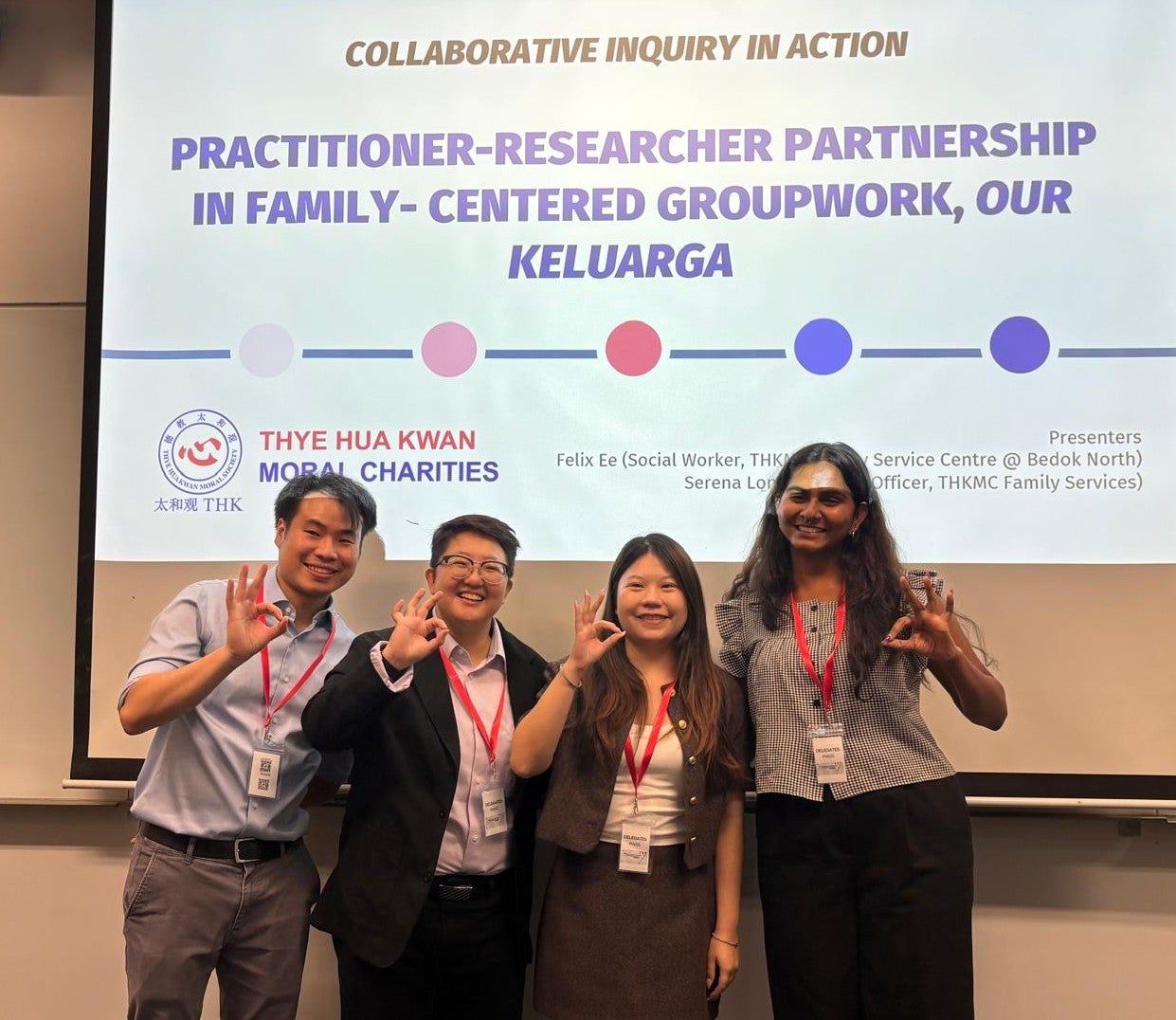
This study outlines a mixed-method study examining the role of groupwork practitioners in facilitating identity transformation among persons with substance use history (PSUh) and their families in a substance recovery groupwork program known as Our Keluarga (OK). The main objective is to understand how OK facilitators perceive their role in supporting identity change and what strategies they employ in a family-oriented groupwork program. The study also seeks to explore the perceptions of PSUh regarding their own identity shifts throughout the OK program cycle and how are factors associated with identity transformation; peer learning, positive family communication and emotional regulation linked to identity transformation and subsequent reduction in drug use motivation.
The research consists of a) pre- and post-program focus group discussions with practitioners, b) pre- and post-program semi-structured interviews (>1 hour), self-reported questionnaires and PSUh-oriented observational rubrics with PSUhs, c) observational data of facilitators, PSUhs and their family members from group sessions.
Unlike prior research that examines the experiences of the PSUh or their family members, this study uniquely emphasises practitioner perspectives while integrating both PSUh and family members’ experiences within the Singapore context. The findings will contribute valuable practice-based evidence that can inform clinical practice of other practitioners and stakeholders working with this population.
This is a work in progress, study results are not available at this point.
Awarded Projects 2021
Evaluation of the Implementation of a Mental Health App, Myloh, within a Mental Health Service
Organisation:
SHINE Children and Youth Services
Grant Cycle 2
Authors:
Eric Sng, Practitioner-Principal Investigator
Nicole Liaw
Elizabeth Tan
Vanessa Koh
Natasha Koo
A/P Jungup Lee, Academic Principal Investigator
Abstract
Despite rising mental health concerns among youths, few seek help. Within this context, digital mental health technology presents itself as a potential tool to reach out to youths who may be hesitant to receive formal support while ensuring that services remain youth-centric.
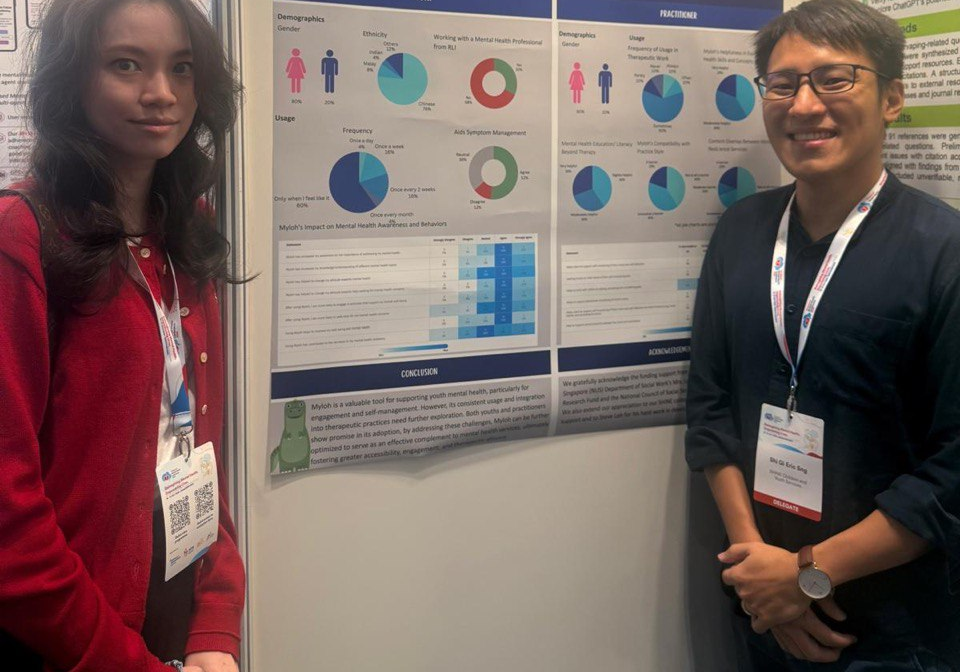
In this light, ResiL!ence—a SHINE youth mental health service—has adopted a mental health application called Myloh to support existing outreach and intervention efforts for youths. The application uses Artificial Intelligence (AI), Natural Language Processing (NLP), and sentiment analysis to provide users with evidence-based, personalised self-help tools and early intervention.
Crucially, few studies have examined the use of mental health applications within therapy and their potential implications for therapeutic engagement. Accordingly, through online questionnaires completed by youths and practitioners, as well as semi-structured interviews conducted with practitioners, this study investigated the implementation of Myloh within the ResiL!ence programme. It explored youths’ and practitioners’ views on using Myloh, as well as Myloh’s adjunctive role in therapeutic engagement between youths and their practitioners.
Consequently, this study found that youths and practitioners recognised the pragmatic value of integrating Myloh into mental health services, although reservations regarding its use surfaced. These findings can inform relevant practices of integrating digital mental health technology into mental health services to best support youths and practitioners.
Evaluation of Clients' and Practitioners’ Experiences in the delivery of Face-to-Face versus Remote Casework and Counselling Services: A Pragmatic Randomised Evaluation
Organisation:
Allkin Singapore Ltd
Grant Cycle 2
Authors:
Chuah Xing Jun, Practitioner-Principal Investigator
Aw Chin Bee
Siti Muneera Binte Ahmad Badjenid
A/P Srinivasan Chokkanathan, Academic-Principal Investigator
Abstract
The COVID-19 pandemic accelerated the adoption of remote service delivery in social work, raising questions about its effectiveness relative to face-to-face (F2F) modalities. This study examines the comparative effectiveness of F2F and remote casework and counselling (C&C) services within a Family Service Centre (FSC) context in Singapore, incorporating both client and practitioner perspectives.
A mixed-methods sequential explanatory design was employed. Quantitative data were collected through surveys with 14 clients who had experienced both service modalities, followed by qualitative interviews with six clients and focus group discussions with six practitioners. Effectiveness was assessed across four domains: therapeutic alliance, platform conduciveness, timeliness of service delivery, and perceived intervention outcomes.
Findings indicate that F2F services were consistently perceived as more effective across all domains. Clients reported stronger relational connection, greater emotional engagement, and more impactful outcomes in F2F sessions. Practitioners highlighted the importance of physical presence in facilitating emotional attunement, managing risk, and maintaining therapeutic control.
Remote modalities, while associated with reduced relational depth, were valued for their convenience, accessibility, and ability to support continuity of care. They were perceived as most appropriate for lower-risk interactions such as check-ins and administrative support. However, challenges related to privacy, technological barriers, and environmental distractions were noted.
The study also found that practitioner competence and established therapeutic relationships can partially offset the limitations of remote delivery. Overall, findings support the adoption of hybrid service models that integrate both F2F and remote modalities, enabling more flexible and context-sensitive service delivery.
This study contributes to the growing body of literature on remote social work practice by providing context-specific insights from Singapore’s FSC setting. It highlights the importance of aligning service modality with client needs, intervention complexity, and environmental considerations to optimise outcomes in social work practice.
Awarded Projects 2018
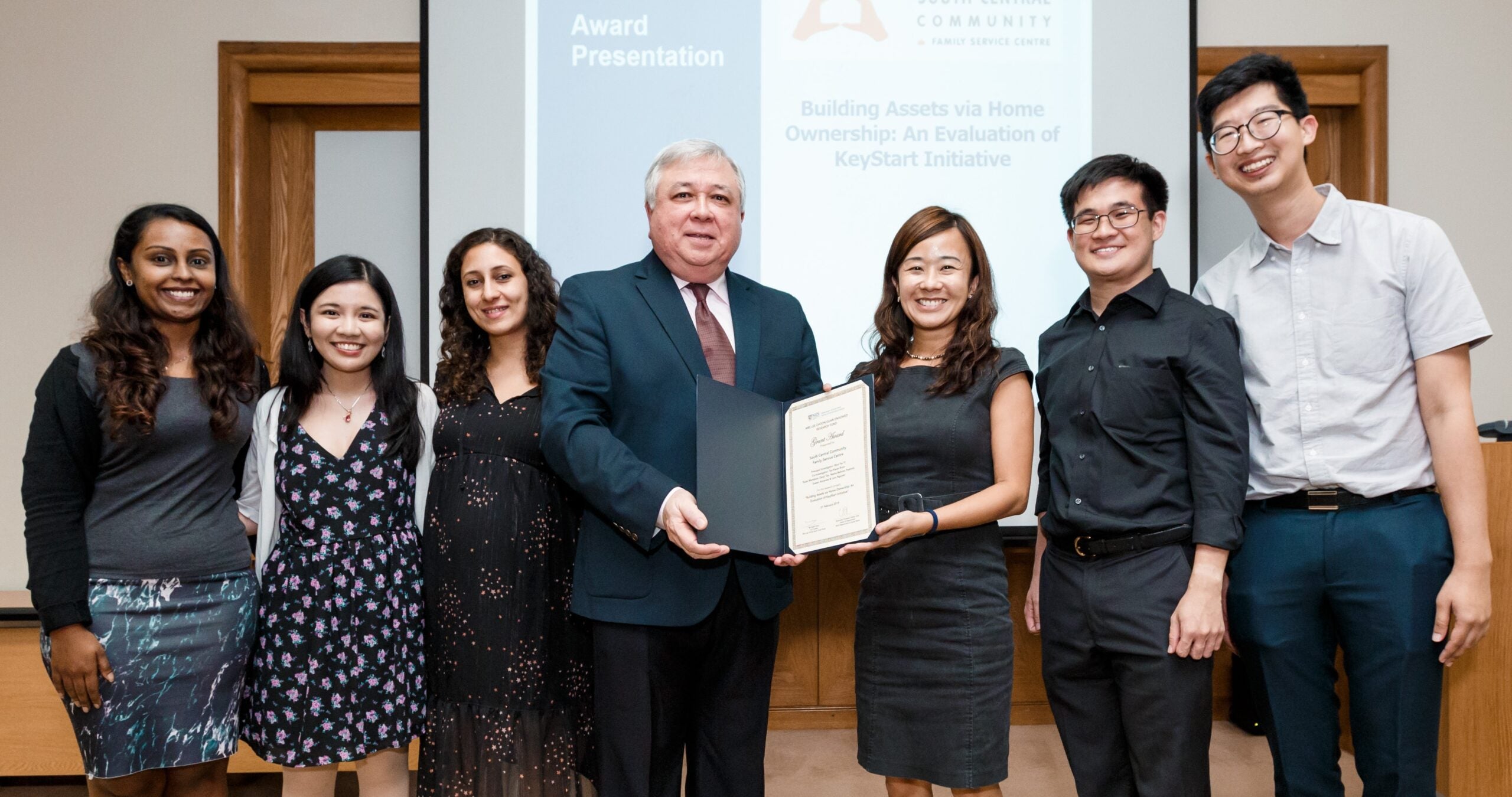
Risk Management or Asset-Building? Social Work Practice Research in Financial and Home Ownership Conversations
Organisation:
South Central Community Family Service Centre
Grant Cycle 1
Authors:
Ms Woo Pei Yi, Practitioner-Principal Investigator
Mr Tan Kwan Boon, Co-Investigator
Mr Daryl Tan
Ms Lora Nguyen
Ms Eswari Annavee
Dr Rosaleen Ow, Academic Advisor
Dr Jiang Nan, Academic-Principal Investigator
Abstract
This practice research examines how social workers can guide low-income families with children from rental housing to home ownership and develops practical tools to support asset building for housing. A two-phase qualitative design was used. In Phase 1, semi-structured interviews with 20 family members and 10 social workers explored lived experiences of the home ownership journey and included four decision vignettes to surface cultural beliefs and financial logics; transcripts underwent thematic analysis.
In Phase 2, four reflective practice circles translated findings into a conversation guide that was iteratively tested, reviewed using session recordings, and refined; field notes and meeting notes further enriched the analysis.
Findings cluster into three domains: content, process, and perspectives. Content themes show multifaceted motivations (safety, space, privacy, stability, proximity to amenities and kin), complex financial planning (hidden and recurring costs, debt attitudes, credit implications, and preparedness for shocks), and transition challenges before, during, and after moving (applications, relocation stress, conflicts, new cost burdens, and cliff effects as assistance tapers).
Process themes highlight the need for holistic, multi-role practice that bridges instrumental tasks (e.g., affordability calculations) with emotional support and case advocacy, while coordinating stakeholders and resources. Perspective comparisons reveal misalignments: social workers prioritize financial readiness, risk reduction, and budget adherence; families prioritize space, proximity, reunification, and shorter timelines. Home ownership conversations are often not proactively initiated by practitioners, while families may not view them as within scope unless invited—creating missed opportunities and ethical tensions around self-determination versus prudence.
Implications include strengthening long-term, housing-focused casework; enabling targeted supports (e.g., permitting grants or pension accounts to fund essential renovations); and improving rental environments to enhance children’s access to opportunity.
School Attendance in Low-income Families and Children: Beliefs and Strategies
Organisation:
SHINE Children and Youth Services
Grant Cycle 1
Authors:
Tok Kheng Leng, Practitioner-Principal Investigator
Vanessa Koh
Nicole Liaw
Elizabeth Chia
Dr Esther Goh, Academic-Principal Investigator
Abstract
Students who leave school prematurely are at risk of unemployment or unstable employment, lowered earnings, and financial strain. Since research has found poor attendance in elementary school to be predictive of dropout and later school completion, it is crucial for intervention to begin early. From practice wisdom and organisational statistics, students with poor attendance tend to be disproportionately from low-income families, hence this study will focus on children in Primary 3-6 from low-income families.
Given the lack of research into school attendance in Singapore, this proposed study aims to investigate the motivations, beliefs and attitudes of low-income families and children towards education and school attendance, and how those beliefs are related to school attendance. We also aim to elicit the strategies used to help children attend school regularly, and understand which strategies are effective. Finally, the differences amongst low-income families and children with and without good school attendance will be investigated.
Semi-structured interviews with 12 children and their parents will first be conducted to elicit the motivations, beliefs, attitudes and strategies of interest to the study. Interviewees will be recruited within SHINE, and will either have good attendance (90% and above), or poor attendance (below 60%). A survey created based on the findings of the interviews will then be administered to 150 children and their parents to understand the prevalence, trends and relations between the variables. Survey participants will be recruited within SHINE and through other organisations, with a variety of attendance levels, to analyse trends and relations.
This study hopes to capture and learn from the attempts, challenges, successes, and failures of local low-income families in relation to school attendance. The findings of this study will be used to develop a group work programme to improve school attendance, and disseminated to the community, fellow practitioners and social service researchers.
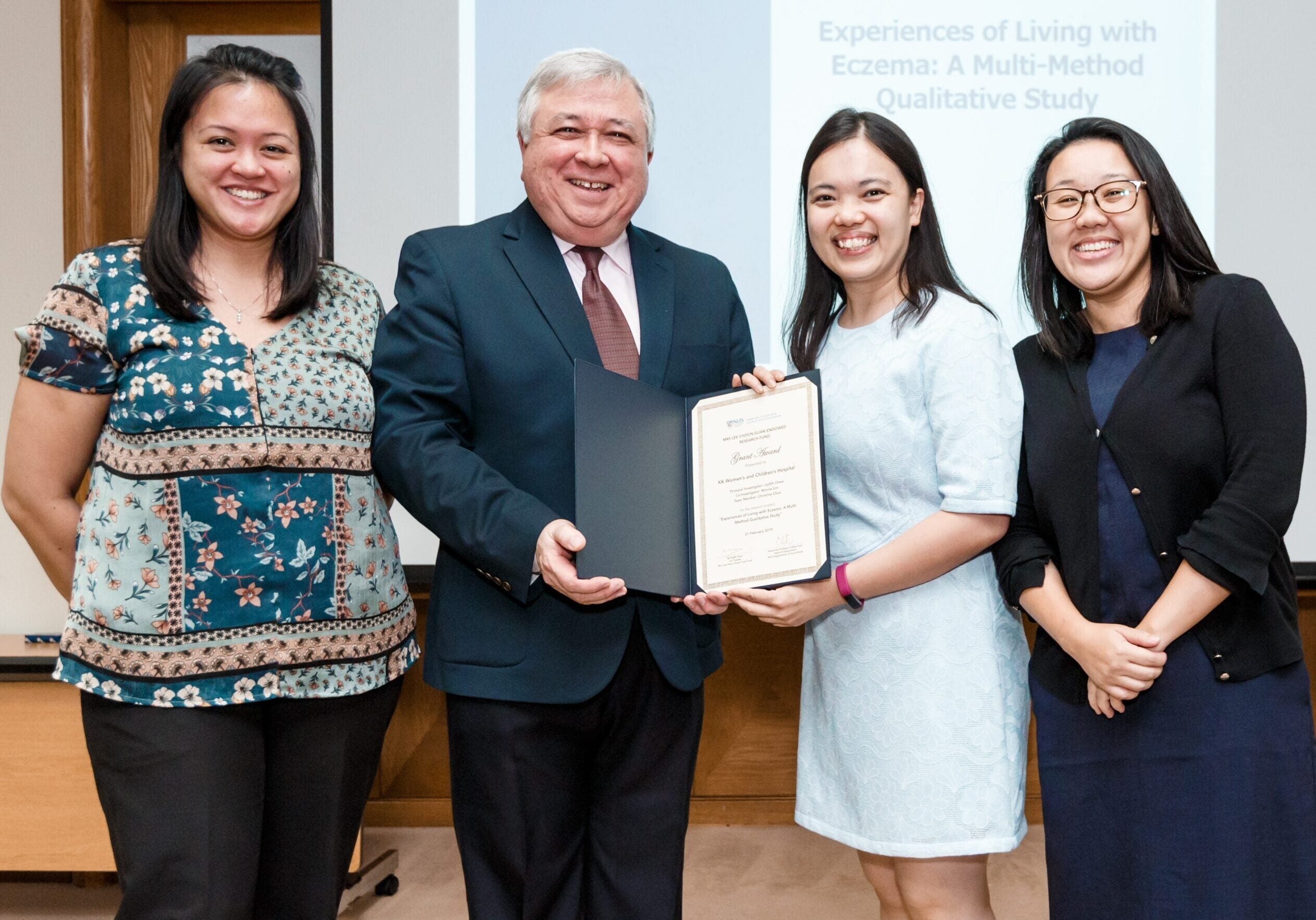
Experiences of Living with Eczema: A Multi-method Qualitative Study
Organisation:
KK Women's and Children's Hospital
Grant Cycle 1
Authors:
Dr Judith Chew, Practitioner-Principal Investigator
Winnie Lim, Co-Investigator
A/P Srinivasan Chokkanathan, Academic-Principal Investigator
Abstract
Atopic eczema affects 15–20% of children worldwide and often persists into adolescence, exerting profound psychosocial and practical burdens on young people and their families. Sleep disruption, fatigue, academic and social difficulties, stigma from visible skin changes, teasing/bullying, and elevated anxiety and depression have been reported, alongside substantial caregiver strain and disrupted family routines. Yet, qualitative evidence from Asia—and children’s own accounts—remains scarce.
To understand adolescents’ and family members’ lived experiences of eczema, focusing on its impact, coping strategies, and support needs, to inform and refine social work interventions in a paediatric hospital setting.
Grounded in an interpretivist stance that views realities as socially constructed, we conducted a practice-research study using semi-structured interviews to elicit participants’ meanings and actions. Participants were recruited from the outpatient dermatology service at KK Women’s and Children’s Hospital, Singapore—the largest paediatric hospital locally, serving approximately 200 eczema cases weekly. Eligible adolescents were aged 10–16 years, diagnosed with eczema, and attending mainstream school; family members (parents and siblings aged ≥10) were also recruited. Purposive sampling sought diversity in illness severity (mild/moderate /severe), age, and gender. Recruitment was facilitated by physicians and social workers. A staged consent process was used: written consent/assent was obtained initially, and participants were re-consented after interviews regarding use of their shared information. Study design and questions were co-informed by consultations with six youths (aged 8–15). Ethical approval was granted by the SingHealth Centralised Institutional Review Board.
By centering adolescents’ and families’ voices within the Singapore context, this study addresses a critical knowledge gap and will guide development of tailored, multidisciplinary psychosocial supports to improve quality of life for youths living with eczema and their families.
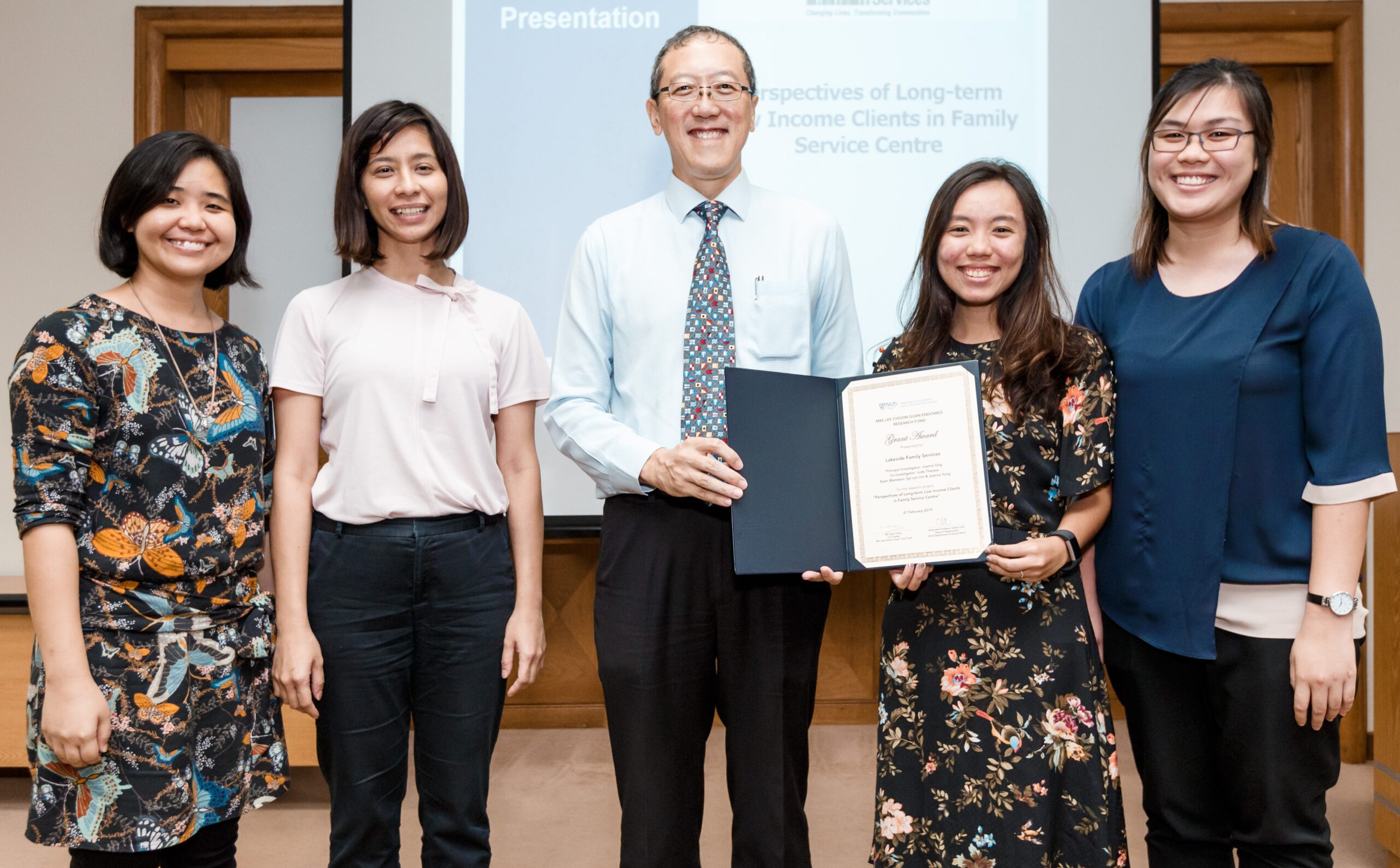
Perspectives of Long-Term Clients with Low Income in the Family Service Centre
Organisation:
Lakeside Family Services
Grant Cycle 1
Authors:
Joanne Ong, Practitioner-Principal Investigator
Theresa Jude, Co-Investigator
Syl-vyn Lim
Joanna Yong
Dr Jiang Nan, Academic-Principal Investigator
Abstract
This study explores the two-fold perceptions of families who have been long-term clients of the FSC: firstly, clients’ perceptions of experiences with the helping process, and secondly, how these experiences have impacted the clients’ perception of themselves and their help-seeking behaviour. In the first phase twenty participants underwent two semi-structured narrative interviews. These were analysed for key themes and the findings are reported. A particular theme of shame was selected and an intervention conducted in the second phase. Implications for local social work practice are discussed.
Evaluation of Suicide Survivors Counselling and Support Services of the Local Outreach to Suicide Survivors (LOSS) Programme in Singapore - A Pilot Study
Organisation:
Samaritans of Singapore
Grant Cycle 1
Authors:
Charlene Heng, Practitioner-Principal Investigator
Oh Seyoung
Janice Leong
Shawn Lai
Naomi Toh
A/P Lee Jungup, Academic-Principal Investigator
Abstract
Launched in 2006 by Samaritans of Singapore (SOS), the Local Outreach to Suicide Survivors (LOSS) programme is the only suicide postvention and specialist counselling service in Singapore for suicide survivors, i.e., individuals who are bereaved by the suicide deaths of their loved ones. LOSS provides on-site postvention outreach, face-to-face counselling, phone call support, and support groups.
This pilot study is the first evaluation of LOSS and it aimed to assess the bio-psycho-social well-being and grief management of LOSS clients. We surveyed suicide survivors at two different time points, upon entry to SOS and at termination over a maximum duration of the year. Participants completed standardized instruments to measure their grief experiences (Grief Experiences Inventory Questionnaire; Barrett and Scott, 1989), the impact of the suicide death (Impact of Event Scale Revised; Weiss, 2007), and their social adjustment (Social Adaptation Self Evaluation Questionnaire; Bosc, Dubini, and Polin, 1997). Suicide survivors were interviewed as well to learn about their grief experiences and their experiences with LOSS. The study was completed by 6 participants.
A key limitation was participant attrition as we found that some participants expressed concern about being found out as a suicide survivor. There is a lack of literature, however, on the social stigma of being a suicide survivor in Singapore and thus, our pilot study is the first of its kind to focus on this vulnerable population. We plan to conduct future studies that evaluate LOSS with a larger sample and further explore the social stigma of suicide in relation to suicide survivors.