

Asian Anti-Bullying Symposium 2026: Towards Safer Schools, Communities, and Digital Spaces
Click here to register
Download programme here
Contact SSR for more details
About the Symposium
Bullying remains one of the most pressing threats to the well-being, safety, and healthy development of children and youth worldwide. Across Asia, rapid digitalisation, increasing social media use, growing academic pressures, and changing family and community structures have transformed both the nature and consequences of bullying. While traditional forms of school bullying continue to affect many young people, cyberbullying, online harassment, image-based abuse, AI-generated harmful content, and anonymous online aggression have created new challenges for educators, practitioners, policymakers, and families.
Despite growing research, significant gaps remain between evidence, policy development, and frontline practice. Asian societies also face unique cultural, educational, technological, and policy contexts that may shape the prevalence, manifestation, and prevention of bullying differently from Western settings.
The SSR 2026 Anti-Bullying Symposium aims to convene leading scholars, practitioners, government representatives, educators, and community organisations from across Asia to examine emerging trends, share evidence-based interventions, and identify future directions for regional collaboration. Through comparative discussions across East Asia, South Asia, and Southeast Asia, the symposium seeks to strengthen regional knowledge exchange and promote integrated responses that span prevention, early intervention, and recovery.
Symposium Objectives
The symposium seeks to:
- Examine contemporary trends in bullying and cyberbullying across Asian societies.
- Compare national policies, prevention frameworks, and intervention strategies.
- Explore emerging digital challenges, including AI-enabled online harms.
- Highlight evidence-based school, family, and community interventions.
- Foster collaboration among researchers, practitioners, policymakers, and technology stakeholders.
- Identify future priorities for anti-bullying research, policy, and practice in Asia.
Opening Presentation
Bullying in the Digital Age: Emerging Trends, Persistent Challenges, and Future Directions

Professor,
Department of Social Work, NUS
Irene Y.H. Ng is a Professor of Social Work and Steering Committee Member of the Social Service Research Centre in the National University of Singapore. As a poverty scholar, she has researched on welfare recipients, in-work poverty, social safety nets and digital access.
Moderator: Professor Rebecca Ang

Professor, Associate Vice Provost,
National Institute of Education, Nanyang Technological University & Singapore
Rebecca P. Ang is a Professor with the Psychology and Child & Human Development Department, National Institute of Education, Nanyang Technological University, Singapore. She obtained her PhD in School Psychology (specializing in clinical child psychology) from Texas A & M University, USA. She is a Nationally Certified School Psychologist in the USA, and a Registered Psychologist in Singapore. Professor Ang is a well-cited researcher whose scholarly work has been published in high-impact journals. She has been recognized in Stanford University/Elsevier’s world’s top 2% scientists list for the last consecutive 5 years from 2021 to 2025. Her research and professional interests focus on developmental child psychopathology, with an emphasis on bullying, cyberbullying, and related prevention and intervention strategies. She works with multiple stakeholders including government ministries, educators and allied mental health professionals to promote multisystemic support for the mental health and wellbeing of children and adolescents.
Panel 1: Origins, Family, Work
Understanding Precarious Work Through Labour Regimes and Risks

Research Associate,
Social Service Research Centre, NUS
Asher is a Research Associate at the National University of Singapore (NUS) Social Service Research Centre. He graduated with a Master of Arts in Sociology at Nanyang Technology University. Asher’s research interests lie in social policy, poverty, and inequality. He is currently involved in the qualitative research portion of the In-Work Poverty study. His past research experience includes housing insecurity, youth risks, and an evaluation of financial assistance delivery models via social service organisations in Singapore.
How Husbands' Shifts, Gigs, and Office Work Affect Domestic Division of Labour
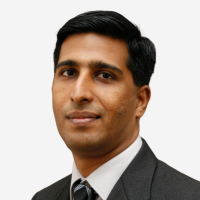
Principal Research Fellow,
Institute of Policy Studies,
Lee Kuan Yew School of Public Policy, NUS
Mathew Mathews has been involved in over 70 research projects examining social policy issues ranging from social cohesion to family. Current projects he is leading that examine low-income families include a three-year ethnographic study on work and savings behaviour, a longitudinal panel study examining the pathways and trajectories of households and the effectiveness of an intervention directed at developing the competencies of low income parents seeking to assist their young children's mathematical literacy. Mathew is active on various boards including the National Volunteer and Philanthropy Council and the MoneySense Council. He is President of a social service agency, Alive Community Network.
Adverse Childhood Experiences and the Well-being of Young Workers: Exploring the Longitudinal Impact on Health and Work-Related Functioning
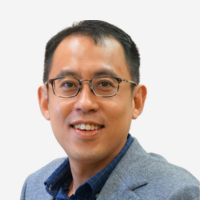
Assistant Professor,
Department of Social Work, NUS
Gerard Chung is an Assistant Professor at the Department of Social Work in NUS. He graduated with a PhD in social work from University of North Carolina at Chapel Hill. He then did his postdoctoral at A*STAR, and Social Service Research Centre. Before academia, he practiced as a social worker at Fei Yue Family Service Centre.
His research focus on the intersection between technology and social work. He is still in love with doing social work practice on the frontline and maybe one day he will return!
Moderator: A/P Vincent Chua
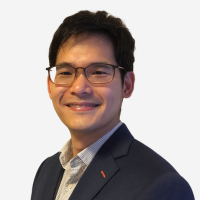
Associate Professor,
Department of Sociology
and Anthropology, NUS
Vincent Chua is an Associate Professor in the Department of Sociology & Anthropology at the National University of Singapore. His research examines social inequalities, focusing on how social networks both reinforce and reduce disparities through mechanisms of social reproduction and social mixing. He has a PhD in sociology from the University of Toronto.
Panel 2: Social and Human Capital
Ties that Pay: The Effects of Ethnic Social Capital on Wages

Student,
Department of Social Work &
Lee Kuan Yew School of Public Policy, NUS
Amalia is a student in the Concurrent Degree Programme at NUS, pursuing a B.Soc.Sci in Social Work and a Master in Public Policy. Her research interests centre on inequality, race, and social inclusion, with a focus on how structural factors shape lived experiences. Outside her studies, she enjoys film photography, watching films, and discovering new bakeries and coffee spots in Singapore.
Sources of Inter-ethnic Social Mixing in Singapore
Associate Professor,
Department of Sociology
and Anthropology, NUS
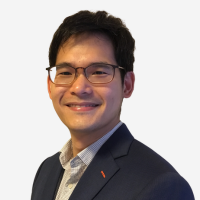
Vincent Chua is an Associate Professor in the Department of Sociology & Anthropology at the National University of Singapore. His research examines social inequalities, focusing on how social networks both reinforce and reduce disparities through mechanisms of social reproduction and social mixing. He has a PhD in sociology from the University of Toronto.
Skills Training: Prevalence and Effects

Professor,
Department of Social Work, NUS
Research Associate,
Social Service Research Centre, NUS
Irene Y.H. Ng is a Professor of Social Work and Steering Committee Member of the Social Service Research Centre in the National University of Singapore. As a poverty scholar, she has researched on welfare recipients, in-work poverty, social safety nets and digital access.
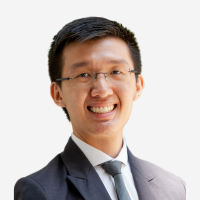
Zhi Han is a Research Associate of the In-Work Poverty and the Challenges of Getting By research project at the Social Service Research Centre (SSR), National University of Singapore. He is also involved in SSR’s conferences and research capability development service. His research interests include occupational and educational inequalities, social mobility, and wage policies.
Moderator: Dr Mathew Mathews
Principal Research Fellow,
Institute of Policy Studies,
Lee Kuan Yew School of Public Policy, NUS
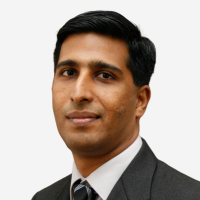
Mathew Mathews has been involved in over 70 research projects examining social policy issues ranging from social cohesion to family. Current projects he is leading that examine low-income families include a three-year ethnographic study on work and savings behaviour, a longitudinal panel study examining the pathways and trajectories of households and the effectiveness of an intervention directed at developing the competencies of low income parents seeking to assist their young children's mathematical literacy. Mathew is active on various boards including the National Volunteer and Philanthropy Council and the MoneySense Council. He is President of a social service agency, Alive Community Network.
Closing

Professor,
Department of Social Work, NUS
Irene Y.H. Ng is a Professor of Social Work and Steering Committee Member of the Social Service Research Centre in the National University of Singapore. As a poverty scholar, she has researched on welfare recipients, in-work poverty, social safety nets and digital access.