

News
Small States and Buddhist Diplomacy
How can small states turn religion, heritage, and cultural networks into diplomatic influence? In “When Small States Practice Buddhist Diplomacy” (The Diplomat, 5 August 2026), Associate Professor Jack Meng-Tat Chia (NUS History) examines how Bhutan and Singapore practise Buddhist diplomacy in ways that differ from the Great Power strategies of China and India.
Chia points out that Buddhism has become an increasingly visible part of Asian diplomacy. China has promoted itself as a centre of Mahayana Buddhist civilization, while India has drawn on its status as the birthplace of Buddhism through pilgrimage circuits, Buddhist conferences, and the lending of sacred relics abroad. Chia argues, however, that focusing only on these two powers misses how smaller states also use Buddhist heritage and networks to build influence.
Bhutan’s Buddhist diplomacy is closely tied to its identity as a Vajrayana Buddhist kingdom. Buddhist values are embedded in its monarchy, national identity, and development philosophy, especially through the nation’s concept of Gross National Happiness. For Bhutan, Buddhism is not only cultural heritage but also a way of asserting distinctiveness and sovereignty as a small state located between India and China.
The article highlights Bhutan’s growing ties with Thailand, another Buddhist monarchy, through recent royal exchanges and shared religious symbolism. These relationships allow Bhutan to deepen partnerships beyond its immediate geopolitical neighbourhood. Chia also points to the Gelephu Mindfulness City project, where Bhutan is turning ideas of mindfulness, sustainability, and well-being into a national brand for attracting global investment and talent.
Singapore offers a very different model. As a secular and multireligious republic, it does not base diplomacy on Buddhist identity. Instead, Buddhism becomes one cultural resource among many, allowing Singapore to act as a connector between governments, religious communities, scholars, museums, and cultural institutions.
Chia discusses figures such as the late Venerable Hong Choon, whose Buddhist networks linked Singapore to Thailand and China, as well as former Foreign Minister George Yeo, who supported the revival of Nalanda University as part of a broader vision of Asian civilizational exchange. Singapore’s museums also play a role, using Buddhist material culture and exhibitions, such as the upcoming Dunhuang exhibition at the Asian Civilisations Museum, to foster regional cultural ties.
By comparing Bhutan and Singapore, Chia shows that small-state Buddhist diplomacy has no single form. In Bhutan, Buddhism is central to state identity and monarchy. In Singapore, it functions more flexibly as part of cultural diplomacy and regional bridge-building.
Read the article here.
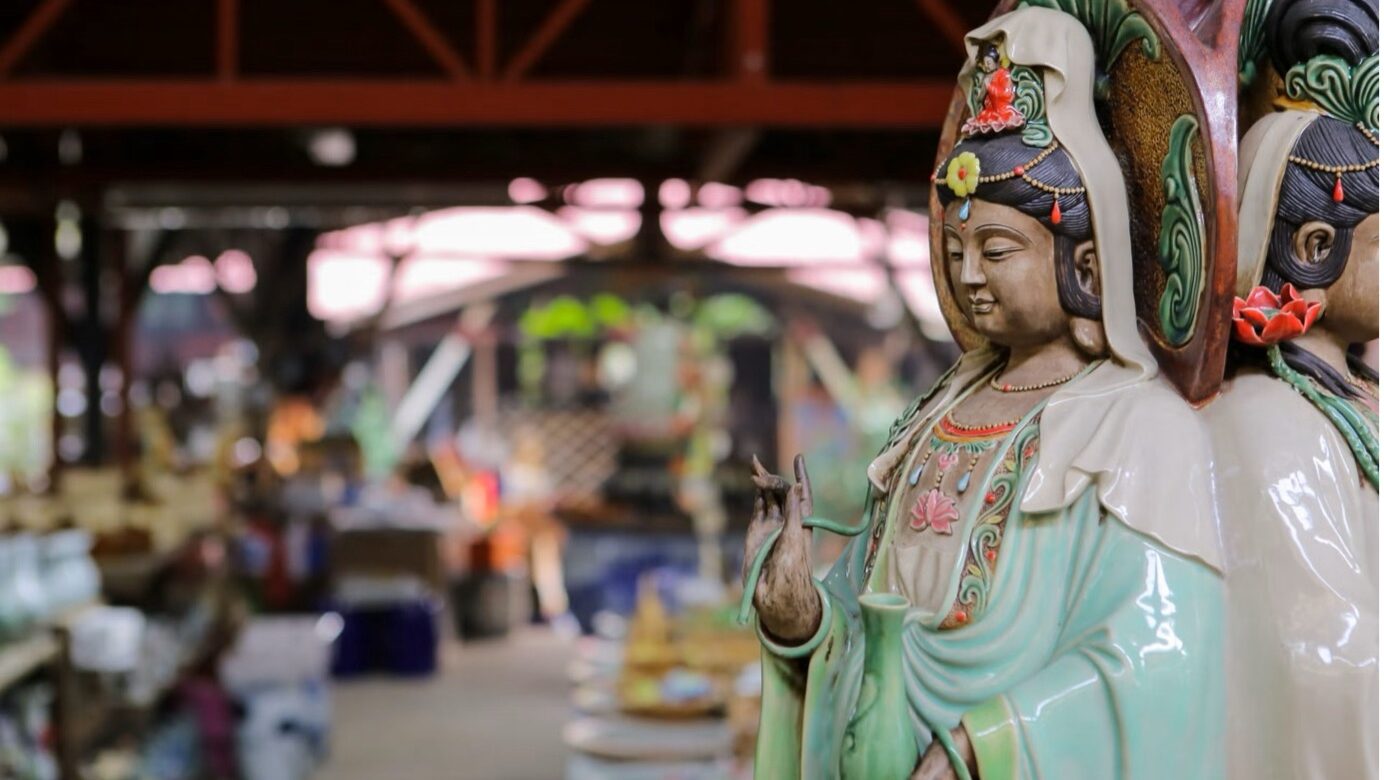
Assistant Professor in Digital Humanities and Computational Methods
We are seeking applicants for an Assistant Professor position with expertise in digital humanities. Please click on the link here for more details.
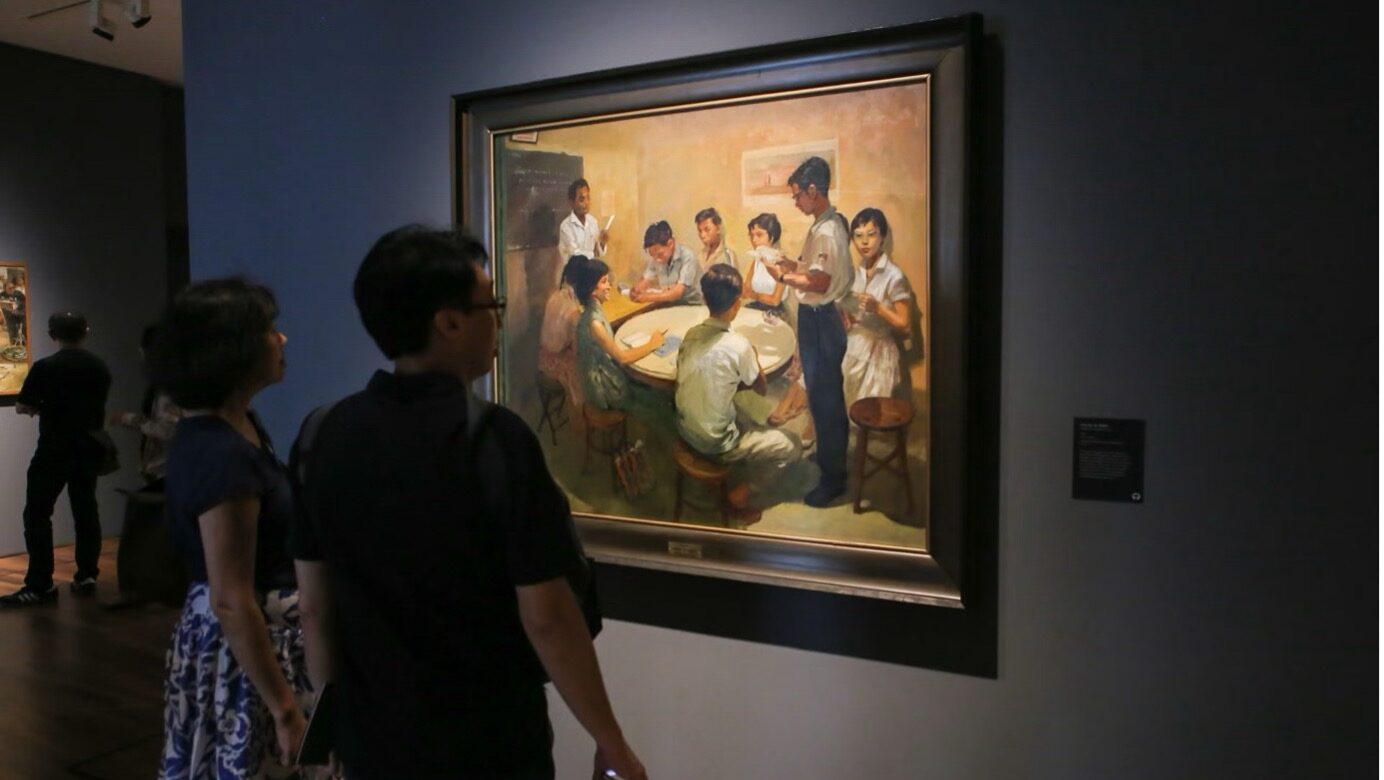
Looking beyond Raffles: New NUS course uncovers Singapore’s deeper history and heritage through art
How can objects change the way we understand Singapore’s past? In “Looking beyond Raffles: New NUS course uncovers Singapore’s deeper history and heritage through art” (NUS News, 14 August 2026), Dr Priya Jaradi and Dylan Chng introduce “700 Years of Visual Arts: Singapore in the World”, a new General Education course developed by the Art History Minor Programme at NUS FASS’ Department of History. The course invites students to look beyond the familiar story of Singapore’s colonial founding in 1819. Instead, it presents Singapore as an island shaped by centuries of movement, trade, cultural exchange, and artistic production across Southeast Asia and the wider world.
Drawing on more than 700 objects and images, the course uses visual and material culture to uncover Singapore’s deeper history. These include ceramics, textiles, paintings, manuscripts, natural history illustrations, and other artefacts from collections such as the Asian Civilisations Museum, NUS Museum, NUS Libraries, and overseas institutions.
Rather than treating objects as decorative or secondary to written history, the course asks students to see them as historical evidence. A Chinese ceramic, a Gujarat textile made for Southeast Asian clients, or a portrait produced in Bombay, Singapore, or Canton can reveal how people, ideas, tastes, and materials moved across regions long before modern Singapore emerged. For Dr Jaradi, the course fills an important gap in art history education. While students have long been able to take broad introductory courses on the arts of places such as India, China, and Italy, Singapore has lacked a comparable course that situates its own visual and cultural history within a longer regional and global story.
The course is also designed to encourage close looking and active questioning. As Chng explains, students learn to ask where an object came from, why it was made, and what stories it can tell. In doing so, they develop new ways of understanding not only Singapore’s past, but also the wider networks of connection that shaped the island.
With its blended learning format, “700 Years” combines online lectures, in-person tutorials, and independent museum research. From January 2027, the course will also be made available to the public through FASS’ Continuing Education and Training offerings, allowing learners in Singapore and beyond to access its materials online or through blended learning.
Ultimately, the course offers a different way of encountering Singapore’s history. It shows that the island’s past did not begin with Raffles, nor can it be understood only through political milestones. By turning to objects, images, and material traces, students and public learners can see Singapore as part of a much older world of exchange, creativity, and connection.
Read the news article here.
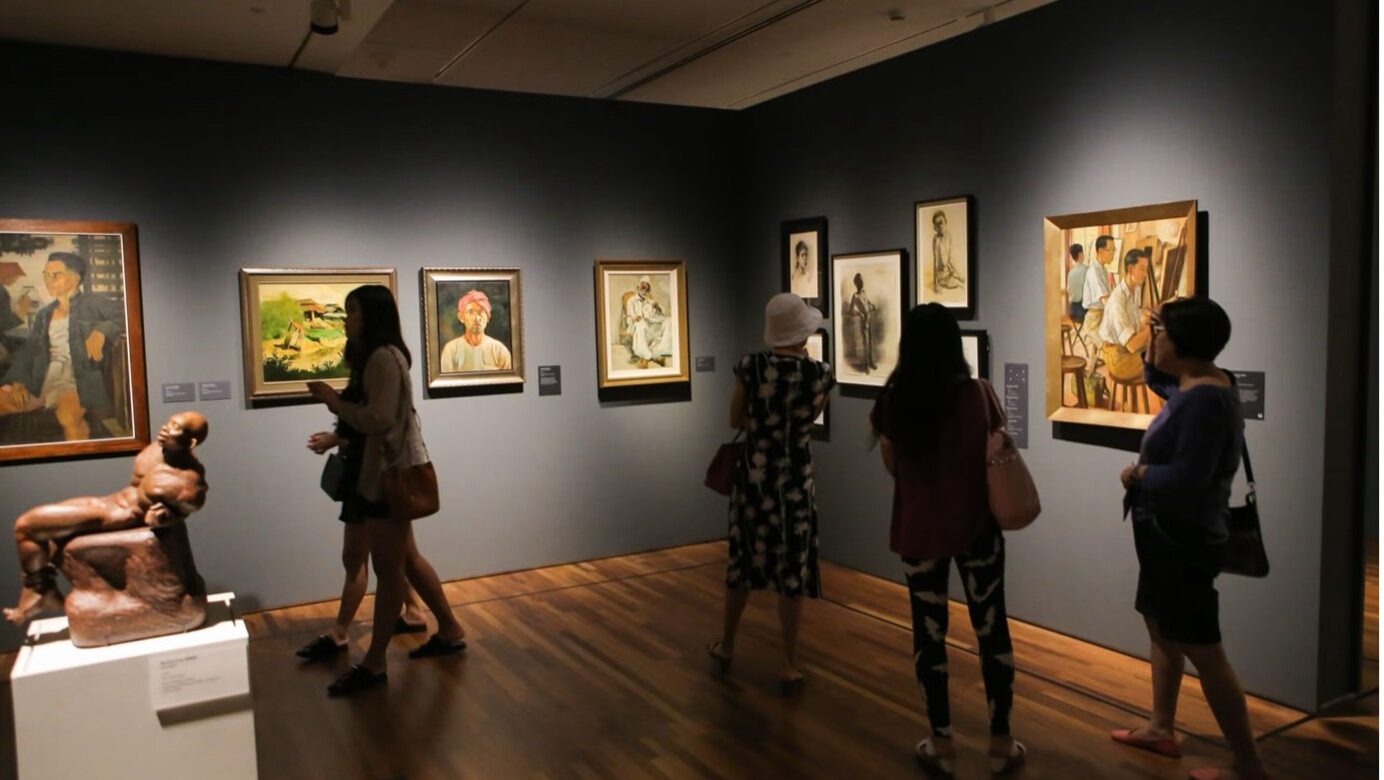
Speaker Series
Join us on Wednesday afternoon for our Speaker Series -- don't miss out. Click here for the details.
700 Years of Visual Arts: Singapore in the World | 14 Aug, 6-9pm
The Art History Minor Programme and the Department of History at the National University of Singapore will launch 700 Years of Visual Arts: Singapore in the World, a new blended teaching and learning initiative for NUS, local, and global learners.
Developed by the NUS Art History Minor Programme, Department of History, the course offers a longer, more connected, and inclusive approach to the teaching and learning of art histories through Singapore’s engagement with Southeast Asia and the world from the 9th to 19th centuries. It will be offered from August 2026 as an undergraduate blended learning course for NUS students, and from January 2027 as a Continuing Education and Training offering for a Singaporean and global learner base.
The course responds to a long-standing gap in art history education by asking what it might mean to teach “The Arts of Singapore” beyond familiar narratives of colonial Singapore and European art. Drawing on Singapore’s museums, archives, and national collections, 700 Years examines objects ranging from mass-produced ceramics and textiles to bespoke paintings, manuscripts, and natural history drawings. In doing so, it foregrounds Singapore’s deep history, regional connections, and place within wider global networks.
Designed in an online and blended format, the course adopts foundational art historical methods while incorporating technology-integrated and learner-centric pedagogies. It includes video lectures, lesson scripts, glossaries, readings, quizzes, and assessments, allowing learners to engage with Singapore and Southeast Asian art histories at their own pace. The course features over 700 images and objects, over 900 teaching slides, and more than 200 maps, infographics, and conceptual visualisations.
The launch event will feature a short course video and a Q&A session with the educators.
FASS community members can register here.
- Date and Time: Friday, 14 August 2026, 6:00–9:00 pm (Registration starts at 5:45pm)
- Venue: Ngee Ann Kongsi Auditorium, Education Resource Centre, Level 2, University Town (8 College Avenue East, Singapore 138677)
- Guest of Honour: Chang Hwee Nee, CEO, National Heritage Board, Singapore
- Welcome Remarks: Associate Professor Wang Jinping, Head, Department of History, National University of Singapore
- Speakers:
- Professor Melvin Yap, Associate Provost, Education & Technology, National University of Singapore
- Dr Priya Jaradi, Principal Educator, 700 Years
- Dylan Chng, Co-Educator, 700 Years
- Dr Donna Brunero, Senior Lecturer, Department of History, National University of Singapore
- Professor T. K. Sabapathy, Department of Architecture, National University of Singapore
Passion on and off the field: Three NUS athletes fly high in sports and academics
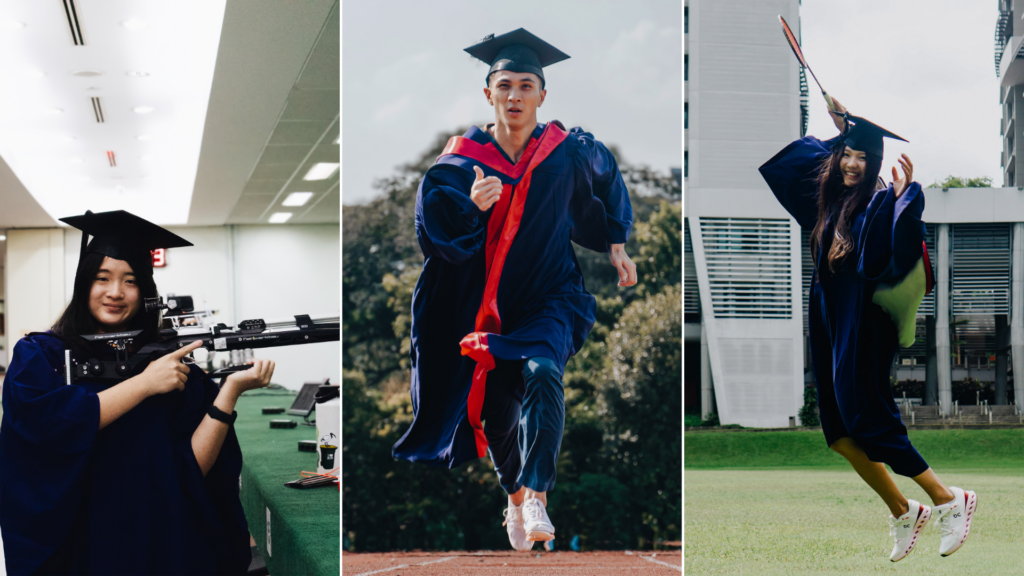
As NUS honours its newest graduates at Commencement, we spotlight three Class of 2026 student-athletes who balanced national competitions with the demands of their degrees. Through diligence and tenacity, they have excelled in their pursuits and carved out a rich university experience.
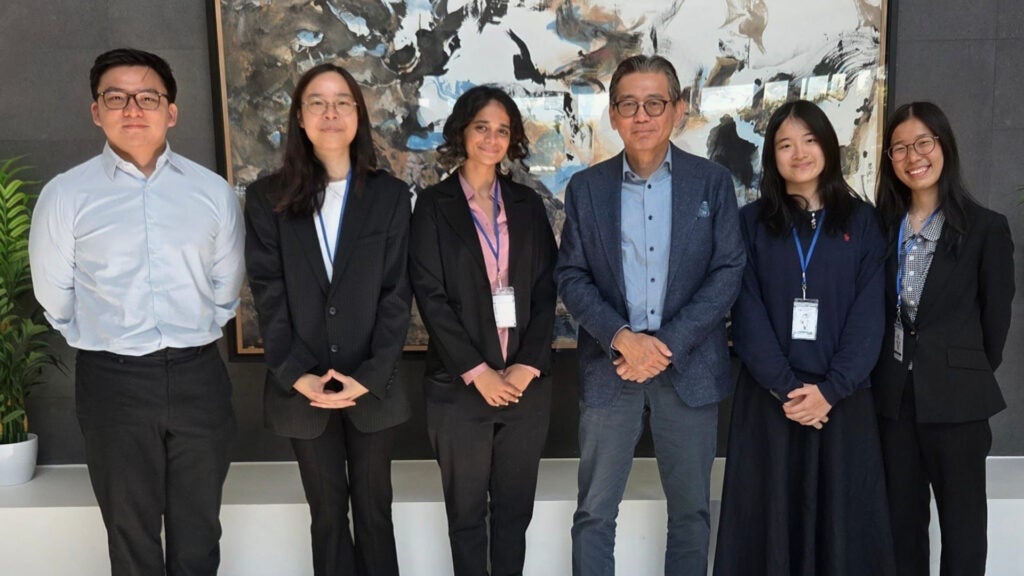
Gan Xin Chen: Shooting for the stars
National shooter Gan Xin Chen first picked up a rifle when she was only 10 years old. Intrigued by the sport, her fascination quickly blossomed into a lifelong love affair with shooting, taking her from local competitions to international events around the world.
Those experiences also shaped her academic interests. Travelling overseas exposed her to different cultures, political systems and ways of thinking, sparking a curiosity about international relations and global affairs.
That interest eventually led Xin Chen to pursue a double degree in history and political science at the NUS Faculty of Arts and Social Sciences, completing it in four years instead of the usual five, earning a place on the Dean's List, and graduating with Honours (Highest Distinction).
While her life as a shooter and student may seem disparate at first, they overlap in many ways. "Participating in overseas competitions helped feed my interest in the world," said Xin Chen. "History provides me with cultural context and the ability to read between the lines."
She chose to pair political science with history in part because of NUS' strong reputation in Southeast Asian history. Studying both subjects helped her appreciate the many dimensions of international relations, from culture and science to defence and security.
Xin Chen's experiences as an athlete often reinforced what she learnt in the classroom. Travelling internationally for competitions gave her first-hand insights into how countries interact and cooperate.
She cited, for example, her experience of travelling overseas for competitions with the team's air rifles, noting how the security checks varied between countries. While some allowed them to pass with minimal hassle due to diplomatic courtesies, others subjected them to more rigorous scrutiny.
"There's a lot of undertones of diplomacy that you'll observe in the sporting world... some things cannot be read or learnt," she said.
While balancing academics and elite sports was demanding, Xin Chen found that the discipline she developed through shooting helped her navigate both. "Learning how to control my emotions and stay focused during competitions was good personal growth," she said. "It helped me in other aspects of my life as well."
The same mindset shaped her approach to her studies. When assignments did not go as planned, she sought feedback from professors and worked to improve.
It is an academic feat she has replicated in the realm of sports.
Aside from clinching a bronze medal at the 2025 Southeast Asian Games, she made her mark at the International Shooting Sport Federation World Cup in 2025, placing 16th in the mixed team event.
She has also been long-listed for the 2026 Asian Games, and will soon begin a career in public sector.
Reflecting on her journey, Xin Chen expects to draw on many of the lessons she learnt through sport.
"In a competition, you're bound to make mistakes," she said. "Through shooting, I learned how to give myself grace and learn from them. No matter how much you train or prepare, you're still human."
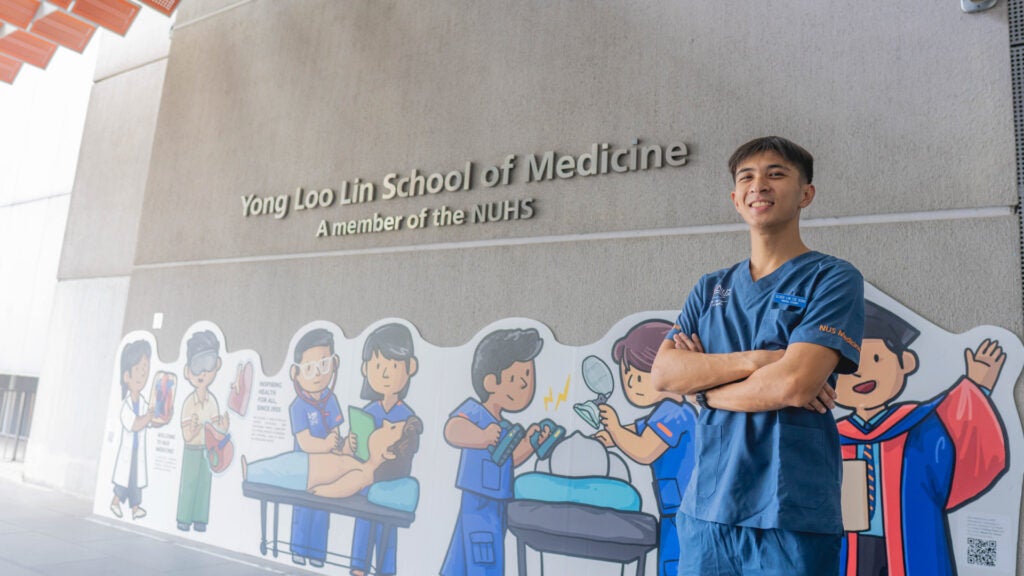
Oliver Lim: 'Pressure is a privilege'
At 17 years old, Oliver Lim fell during a race and broke his thumb. The injury left the track and field athlete, who had inter-school competitions coming up, distraught.
But a visit to the doctor would ultimately shape his future career. "The doctor said, 'I want to be able to help you achieve your dream,'" he recalled. Rather than simply treating Oliver's thumb, the doctor took the time to understand what the injury meant to him. Running wasn't just a sport - it was a huge part of Oliver's identity. Together, they discussed the risks and benefits of the available treatment options before making a shared decision that balanced his recovery with his hope of returning to competition.
Oliver went on to compete in the 4×400m relay wearing a protective hand guard and eventually clinched a gold medal with his team.
"What stayed with me wasn't just the decision itself," Oliver recalled. "It was that my doctor saw me as more than just a medical problem to fix. He recognised what running meant to me and took that into account when caring for me. That experience changed how I viewed medicine. I realised that being a doctor isn't just about treating a condition. It's about caring for the whole person." In fact, Oliver was so inspired that he later applied to study medicine at the NUS Yong Loo Lin School of Medicine.
Although he was rejected on his first attempt, he reapplied the following year and succeeded on his second try. Not only that, but he was even awarded the NUS Merit Scholarship, a prestigious accolade given to top performers.
"I didn't expect it at all," he said. "The scholarship gave me a certain level of financial freedom, allowing me to experience living in a hall and spend more time on training. More than that, after being rejected from medicine the first time, it felt like a form of validation that encouraged me to pursue both medicine and athletics wholeheartedly."
Indeed, Oliver continued to chase his passion for running amid his hectic schedule. "When I'm running, I enter a flow state. Time stands still," he said, adding that he had never been a gold medal favourite throughout his track and field career.
That changed with his "breakthrough" race in 2024. At the Singapore Athletics All Comers Meet, he shaved two seconds off his personal best in the 800m race to hit a timing of 1 minute and 59 seconds. The result helped earn him a place on the national team, and later gave him the confidence to test himself in the 1500m.
"I decided, 'Okay, I'm going to treat this as a game,'" said Oliver. "My coach gave me a very specific race plan… I executed (the race) according to how he told me to do it."
What began as an experiment quickly proved promising. Within a year, Oliver had improved enough to qualify for the Southeast Asian Games in 2025, where he recorded one of Singapore's fastest 1500m performances in recent years.
Oliver said his experiences in medicine have also shaped the way he views success and setbacks. During his clinical training, he encountered situations that reminded him that not everything is within one's control.
"It made me realise that it's important to know your limits," he said. "In life, we're given the guise of control, but a lot of times, that's not true. The best we can do is focus on what we can control and make the best out of the situation when things don't go as planned."
Although it was hard to juggle studies and training, Oliver made it to the academic finish line and will graduate with a Bachelor of Medicine and Bachelor of Surgery in July.
Looking back, Oliver believes the lessons he learnt through sport have helped him navigate both medicine and athletics. "Pressure is a privilege," he said. "It was a challenge and I wanted to prove to myself that I could do it if I put my mind to it."
Oliver is now working as a house officer in the Internal Medicine department at a public hospital and will continue to pursue his dual passions for sports and medicine.
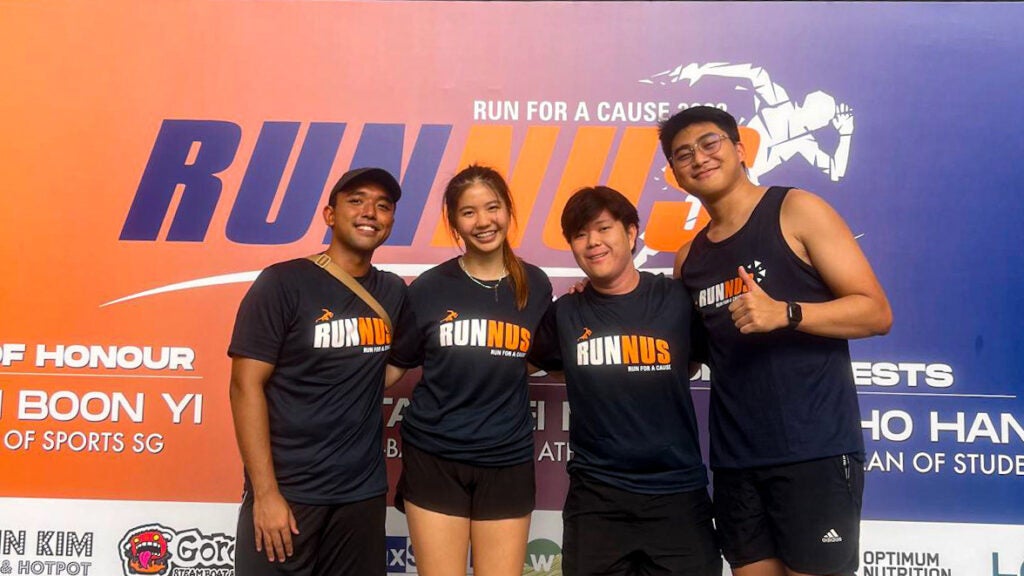
oanna Wu: From mentee to mentor
When Joanna Wu first stepped into NUS, she had only one goal: try everything.
Having spent most of her life playing badminton competitively as a member of the National Intermediate Squad, Joanna graduated from junior college feeling unsure of what came next. "Other than badminton, I felt useless," she said. "So in university, my goal was to try as many things as possible. I did not say no to any opportunity."
This never-say-no attitude led the Real Estate undergraduate from NUS Business School to try out squash and tennis during her stints in Temasek Hall and Eusoff Hall. She even ventured beyond the arena of sports, joining the NUS Students' Sports Club in 2022. There, she served as Project Director for RunNUS, an annual run that raises funds for the NUS Enhanced Financial Aid Scheme.
Her experiences helped her pick up a wide range of skills, from communication and stakeholder management to project planning and leadership. The skills proved valuable during her internships with CapitaLand and the Inland Revenue Authority of Singapore, where she deepened her knowledge of Real Estate through handling placemaking initiatives and property tax.
Yet the experiences she gained outside badminton ultimately brought her back to the sport. After dedicating four years to coaching badminton, Joanna and a business partner launched Wu Badminton Academy in 2025. The venture signalled her shift from mentee to mentor.
"I wanted to help players compete at a higher level," she said, adding that starting her own school gave her the autonomy to run lessons as she saw fit.
Looking back, Joanna credits NUS with supporting her both on and off the court. As a recipient of the NUS Sports Scholarship, she benefitted from subsidised tuition fees, while staff from NUS' Office Student Affairs (OSA) also conducted regular check-ins and supported her throughout her university journey.
The support extended beyond campus. OSA staff even turned up to cheer her on during the 2025 Summer World University Games in Germany, which she participated in as a member of NUS' Badminton varsity team. "Their hotel was far away, but they came down whenever they could and supported us the whole time," she said. "I was so lucky to have all these people behind me."
The encouragement bolstered Joanna's confidence, both as an athlete and as a student.
As Joanna graduates with a Bachelor of Science in Real Estate with Merit this July, an exciting new journey begins, one guided by lessons from both the classroom and the court.
This story first appeared in NUSnews on 16 July 2026.
Why Robot Monks Cannot Replace Human Faith
From chatbots in classrooms to AI assistants in workplaces, even religion is beginning to enter the digital age. The recent rise of robot monks in East Asia has sparked global fascination and debates over whether technology could one day replace spiritual leaders. In ‘Why Robot Monks Cannot Replace Human Faith’ (Eurasia Review, May 2026), Associate Professor Jack Meng-Tat Chia (NUS History) explores these concerns, discussing the growing phenomenon of AI-powered Buddhist monks. Assoc Prof Chia notes that Buddhist communities have quietly experimented with AI technologies over time. AI is increasingly used to translate scriptures, digitise fragile manuscripts, analyse Buddhist texts, and create searchable online archives. Buddhist organisations are also using chatbots and online Dharma platforms to engage younger, digital-native audiences. Most recently, examples such as Kyoto University’s ‘Buddharoid’, designed to deliver Buddhist teachings, and South Korea’s ‘Gabi’, reportedly the country’s first robot formally ordained as a monk, have shown how public fascination with robot monks has increased. On one hand, such innovations can be beneficial, especially since Buddhism has historically adapted well to technological changes from woodblock printing to livestreamed sermons. Assoc Prof Chia argues, however, that AI ultimately cannot replace religion for three main reasons. First, robots are not sentient beings. While they can process information and simulate conversations, they lack consciousness, moral awareness, and genuine spiritual experience. Buddhism is not merely about transmitting knowledge but about ethical cultivation, compassion, mindfulness, and self-transformation. Second, religion is fundamentally experiential. Practices such as meditation, chanting, pilgrimage, and repentance involve lived emotional and spiritual experiences that machines cannot truly replicate. A robot may imitate prayer or meditation, but it cannot genuinely experience suffering, hope, grief, or inner peace. Finally, religion depends on authentic human connection. Religious leaders provide empathy, trust, comfort, and companionship during moments of uncertainty and suffering. While AI can generate comforting responses, it cannot genuinely care or emotionally connect with others. Even though AI may become an increasingly useful tool in technologically advanced societies like Singapore, it cannot replace the human dimensions of faith. The growing fascination with robot monks therefore reveals less about machines replacing religion and more about humanity’s continuing search for meaning in an increasingly digital world. In Singapore, where AI adoption is rapidly accelerating alongside an increasingly tech-savvy society, these global developments raise deeper questions about whether machines can truly replicate the moral and spiritual roles traditionally fulfilled by religion and adjacent beliefs. Read the Eurasia Review article here.
