

MARTIN MATTSSON

Martin Mattsson is Assistant Professor at the NUS Department of Economics and an affiliate of J-PAL (Abdul Latif Jameel Poverty Action Lab) and CEPR (Centre for Economic Policy Research). He studies development economics, political economy, and public economics, focusing on how to improve government institutions and public policy, and most recently on reducing the effects of air pollution in South Asia. He has published in academic journals including Journal of Public Economics, The Economic Journal, American Economic Journal: Applied Economics, Review of Economics and Statistics, and Journal of Development Economics, as well as in local, regional, and international media outlets such as The Straits Times, The Daily Star, and VoxDev. The World Bank awarded his 2025 article "When Does Corruption Cause Red Tape? Bribe Discrimination Under Assymetric Information" (Journal of Public Economics) the 2026 David Dollar Memorial Prize.
Asst Prof Mattsson has carried out three large-scale field experiments in Bangladesh and has projects that employ non-experimental methods and data from countries including Pakistan, India, Vietnam, and Brazil. He is PI of the Singapore Ministry of Education (MOE) Tier-2 research grant, "Evaluating Public Sector Governance in Asia" (2026-2028), which studies how the design of public institutions affects the quality of governance in Asia.
Asst Prof Mattsson was recently granted the FASS Award for Promising Researcher (APR). This award is presented to researchers who have produced research that shows potential impact and promise. We congratulated and spoke to him about his research work.
1. How did you become interested in investigating how economics can be used to reduce corruption in government bureaucracies?

My interest in economics started because I wanted to help people living in poverty. After realizing that most poor people live in low-income countries, I started reading books like The End of Poverty, The White Man’s Burden, and Bad Samaritans about how (and how not to) raise living standards for those in low- and middle-income countries. These books were all written by economists, and they are what got me into economics in the first place.
Once I started studying economics a bit more seriously, I was convinced by the institutional economics literature showing that institutions and government capacity are among the most important determinants of long-run development. However, that literature says little about how to improve institutions, which I found a bit frustrating, as I wanted to understand how to change the situation for the better and not just analyse it. The literature using field experiments to figure out which approaches work best in which contexts was much more encouraging, as it was producing answers that policymakers could use to improve things such as education, healthcare, and social protection. This made me want to bring experiments and modern econometric methods to questions about how we can improve government institutions.
Corruption was a natural place to start for me. It is one of the most common complaints citizens have about their governments, and petty corruption is much more common in low-income countries than it is in high-income countries, so it is plausible that it has something to do with the long-run process by which a country becomes more prosperous. Furthermore, credible causal evidence on how to reduce corruption is rare, so my hope was that generating more evidence on this topic could improve the global knowledge base on how best to address it.
2. Who are your biggest research influences and how have they shaped how you conceptualise your projects?
Intellectually, I was first convinced by authors who argued that institutions are what matters most for long-run differences in income between countries, such as Daron Acemoglu and James Robinson. I was then influenced by the “credibility revolution” in applied microeconomics and the rise of randomized controlled trials in development economics. These intellectual currents gave me methods to estimate causal relationships (rather than just correlations) between different designs of government institutions and the outcomes that matter for people.
In particular, two review papers inspired me during the early days of my PhD when I was still figuring out what my research agenda should be about: “Institutions and Development: A View from Below” by Rohini Pande (who later became my PhD advisor) and Christopher Udry, and “Experimentation at Scale” by Karthik Muralidharan and Paul Niehaus. Much of my work follows the research agendas they set out in those papers.
Finally, the effective altruism movement has made me more ambitious in trying to think hard about how to have a large positive impact in my career. I try to choose projects by their expected welfare impact. I always find it inspiring when I see other researchers who are committed to having a positive impact, and not just to publishing papers. There are obviously many researchers doing that, but some who have inspired me directly are Jean Drèze, Michael Kremer, Johannes Haushofer, Dean Spears, and my PhD advisor Mushfiq Mobarak.
3. Why did you choose Bangladesh as your research site for many of your studies, including those involving performance scorecards for bureaucrats, the effects of village courts on dispute resolution, and air purifiers, brick kilns, and air pollution?
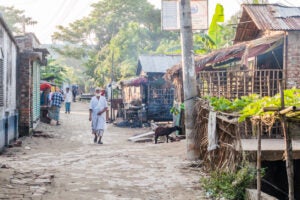
I first started working in Bangladesh because I wanted to be close to my partner, who was doing research there. I found a job as a research assistant and spent a summer in Dhaka working on a project related to tax collection. I had a really great time there, made many friends, and learned a bit of the language, history, and institutional context. When I started my PhD, it was natural for me to keep thinking about research ideas applicable to the Bangladeshi context, and Mushfiq Mobarak became my advisor, which gave me more opportunities to go to Bangladesh and work on a project with him there.
For a junior researcher who wants to do research on how to improve the lives of people living in poverty, there are also a lot of opportunities in Bangladesh. First of all, Bangladeshis are extremely hospitable, so going there as an outsider wanting to learn, listen, and get to know people can be a very heart-warming experience. For its level of income, Bangladesh also has a well-functioning infrastructure for quantitative research, which makes it possible to do the kind of research that I am doing. Finally, once you have identified the right people, it is possible to talk to policymakers and occasionally to influence policy, which is one of my main motivations for doing the research in the first place.
4. What challenges have you encountered when conducting research in Bangladesh?

Most of my work in Bangladesh has been experiments run directly with government institutions. This requires a close collaboration with government officials, which can be tricky, as officials sometimes think of researchers as investigative journalists trying to find out what is wrong with what the government is doing. I work very differently from that, with the starting point of doing research that will help the government achieve its objectives. But it can take a long time to build trust and understanding with individual officials, and once you have reached a point where you are doing productive work together, the official is sometimes transferred or the political leadership changes and you have to start all over again. For all the frustrations of working directly with the government, I also believe that it is my best opportunity to influence policy at scale, so I keep doing it.
5. How did you come to develop an appreciation for Effective Altruism (EA)? Which aspects of your research and teaching are inspired by EA?
Effective altruism is a social movement that uses evidence and careful reasoning to work out how to do as much good as possible with a given amount of resources (such as time or money), and then tries to act on that conclusion. Most of the work in the movement focuses on global health and development, farmed animal welfare, and existential risks to humanity’s future, in particular the risks associated with advanced AI systems.
I first came across this movement while I was doing my master’s degree in international development, and I immediately found their way of thinking intuitive. In fact, it felt a bit like “Wow, here is a community of people who think just like me!” But for a long time I mostly read and listened to what people in the EA community were doing, without interacting with it directly.
Today, the EA way of thinking certainly permeates a lot of my work. For example, when I choose which research projects to pursue, I look for topics that affect large populations, where the policy status quo is far from optimal, and where the type of evidence that I can create has a realistic chance of changing policy. This is more or less the same as the EA rule of thumb to work on problems that are important, neglected, and tractable. EA-aligned organizations have also funded some of my research projects on how to reduce air pollution in South Asia.
In my teaching, I initiated and co-designed the course HS2921 Effective Altruism in Theory and Practice with the Philosophy Department. It combines moral philosophy with analytical tools from economics to provide a framework for thinking about how to have a large positive impact on the world. My hope is that the course will inspire some students to pursue this goal after they graduate, and give students from other disciplines a sense of how moral philosophy and economics can be applied to real-world decision-making.
6. In your article, "Information Systems, Service Delivery, and Corruption: Evidence from the Bangladesh Civil Service" (American Economic Journal: Applied Economics, 2025), you examined the effect of a policy improving the speed of public-service delivery on corruption. One notable finding was that bureaucrats who already had performed well at rapidly providing public services increased their bribe-taking. Given the results of this study, going forward, how would you recommend formulating and testing a policy measure that seeks to incentivise civil servants of all performance levels to both increase their work speed and reduce their bribe-taking?
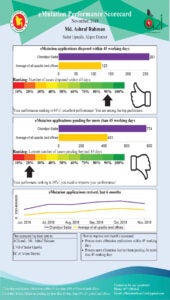
The finding was indeed surprising! The scorecards made delays visible, and officials who were already delivering services quickly could now show their supervisors their good performance. In the model I wrote down to explain the empirical results, officials hold back on taking bribes partly because bribe-taking damages their reputation. Once the scorecards had improved a high performer's reputation, that constraint loosened and bribes went up.
The paper has three main policy implications. First, in this context, speeding up service delivery is not in itself an anti-corruption tool. I think this finding extends to many other contexts where citizens have no alternative to the service and the official controls both how fast it is delivered and whether it is delivered at all. Second, the gains in speed came from the underperforming offices, so management information systems and performance recognition should focus on the bottom of the distribution rather than only recognizing the top performers. Schemes that celebrate the best officials without addressing the worst are, based on evidence from this context, exactly the wrong design. Third, what an information system measures tends to improve and what it leaves out is at risk, so the system should cover every dimension we care about, and if not all of those dimensions can be measured, it might be better not to measure any of them.
I still think management information systems such as performance scorecards can be important for some aspects of public sector management. However, there are limits to where these systems can be implemented, and they are typically not helpful for government officials who are already intrinsically motivated or whose jobs cover such wide areas of responsibility that they need to be flexible and exercise discretion in which tasks they prioritise.
7. Do you have plans in the future to expand your research sites to include additional countries within and/or beyond Asia? Which countries are you most keen on doing research in for your future projects?
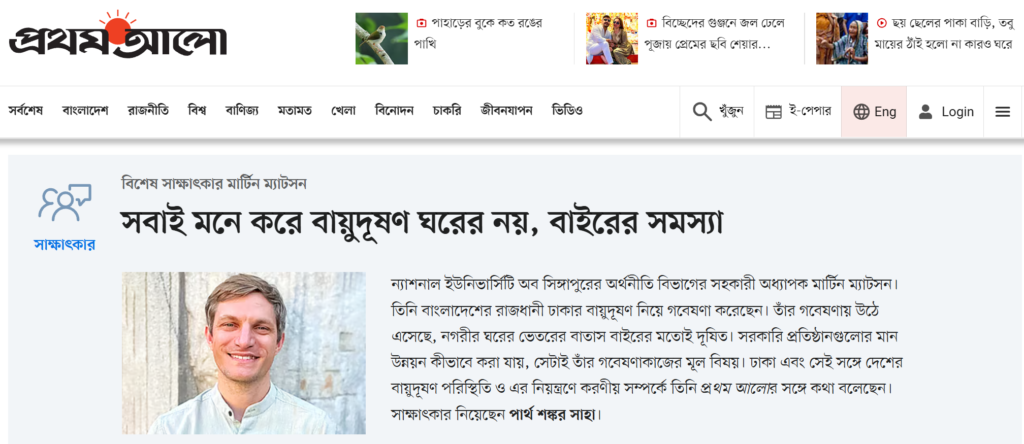
Most of my work is in South and Southeast Asia, and that is where I expect to stay. Besides Bangladesh, I have done or am doing projects in India, Pakistan, Vietnam, and Brazil. When I work in contexts that I do not know well myself, I work with co-authors who know the context better than I do, and my role is then more focused on the topic or the empirical methods. I think generative AI tools have also made it more feasible to combine detailed analyses from multiple settings into large projects spanning many countries, something I am experimenting with at the moment in my research on air pollution.
8. How have you been using AI tools in your research and teaching?
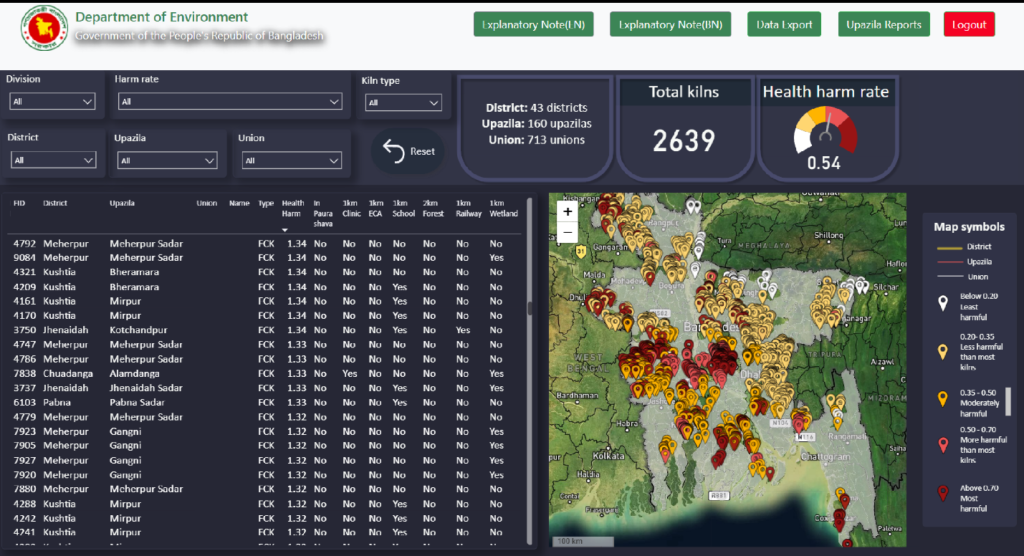
Over the past two years, AI tools have become more and more integrated into my work. In research, I use AI for coding, turning text into quantitative data, learning new methods, and many other things. For example, with Ricardo Dahis and Nathalia Sales, I use large language models to read audit reports of Brazilian municipalities and classify the irregularities they describe. That turns thousands of pages of text into a measure of corruption covering a much longer period than earlier hand-coded data, and lets us revisit a classic result on the determinants of corruption. In the brick kiln project, we use machine learning on satellite imagery to locate thousands of brick kilns across Bangladesh and determine whether they are operating. We then combine these data with air quality models to estimate the health harm of each individual kiln, which helps the government prioritise where to spend its limited resources for enforcing environmental regulations.
In teaching, I start from the view that students will use generative AI whatever we do, so the task is to help them use it to sharpen their own thinking rather than to replace it. For example, in my effective altruism course, I have students debate an AI persona of the philosopher Peter Singer and use the exchange to better understand where they agree and disagree with his arguments.
9. Lastly, what are some of your most memorable teaching experiences at NUS?
One of the most satisfying experiences as a teacher is seeing a student grasp a concept or method they previously did not understand. This happened a lot in my Applied Econometrics course (EC4305), where my role was to take the theoretical statistics and econometrics that students had built up over several semesters and turn them into skills they could apply to real-world tasks they may face in their future jobs or everyday lives. I am always particularly happy to hear from students that the course helped them do well in a job interview or that they are still using the methods they learned in the class several years after I taught them.
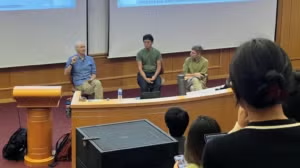
Another great memory is Peter Singer’s guest lecture in my effective altruism course. We had read and discussed a lot of his work on our obligations to others and on animal welfare, and it was great for the students to have the opportunity to listen to the man behind those texts and to ask him about his views directly.
Thank you very much for taking the time to answer these questions, Asst Prof Mattsson, and congratulations again on being awarded Promising Researcher!