

Singapore Mangrove Conservation: How NUS Geographer Dr Gretchen Coffman Is Growing the Next Generation of Leaders
July 27, 2026
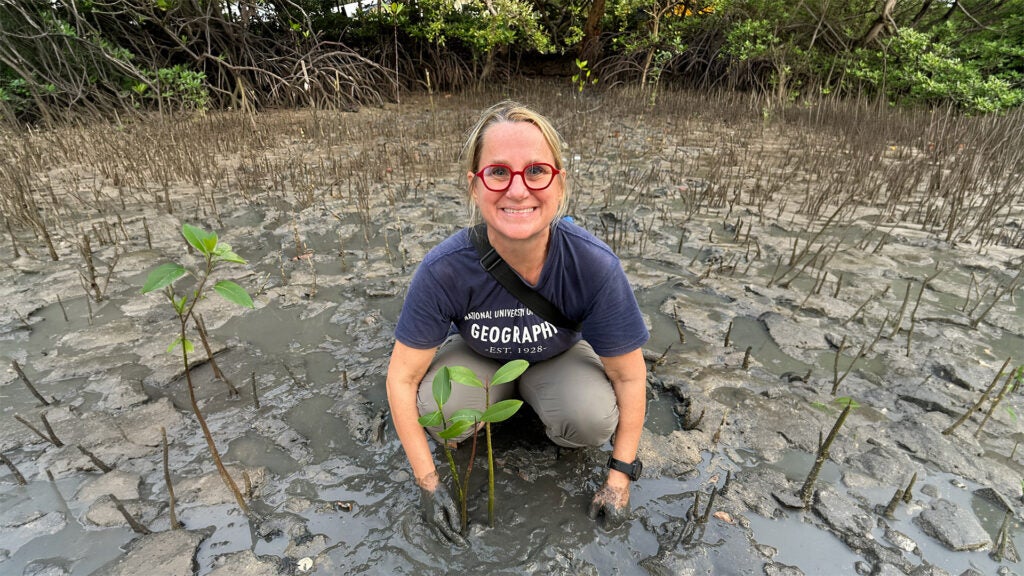
When most people think about mangroves, they picture a muddy forest along the shoreline. Geographer and Senior Lecturer Dr Gretchen Coffman (NUS Geography) sees something more extraordinary: the beginning of a living system that connects mountains, rivers, mangroves, seagrass meadows and coral reefs.
This interconnected approach, which she calls “roots to reefs”, recognises that ecosystems do not exist in isolation. What happens upstream in forests, rivers and coastal habitats can shape the health and resilience of mangroves and coral reefs downstream. This holistic vision has become the foundation of her research and teaching at NUS.
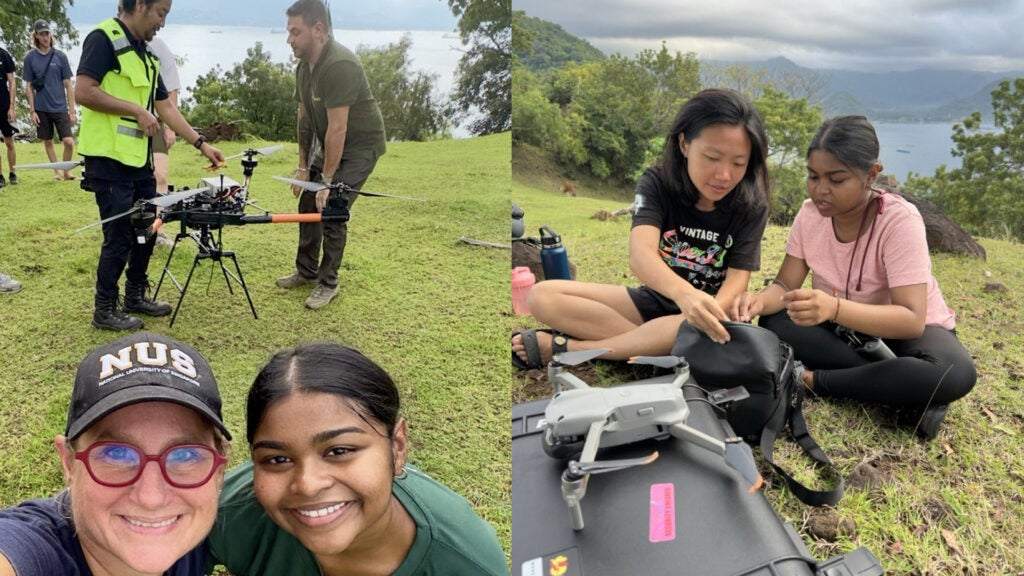
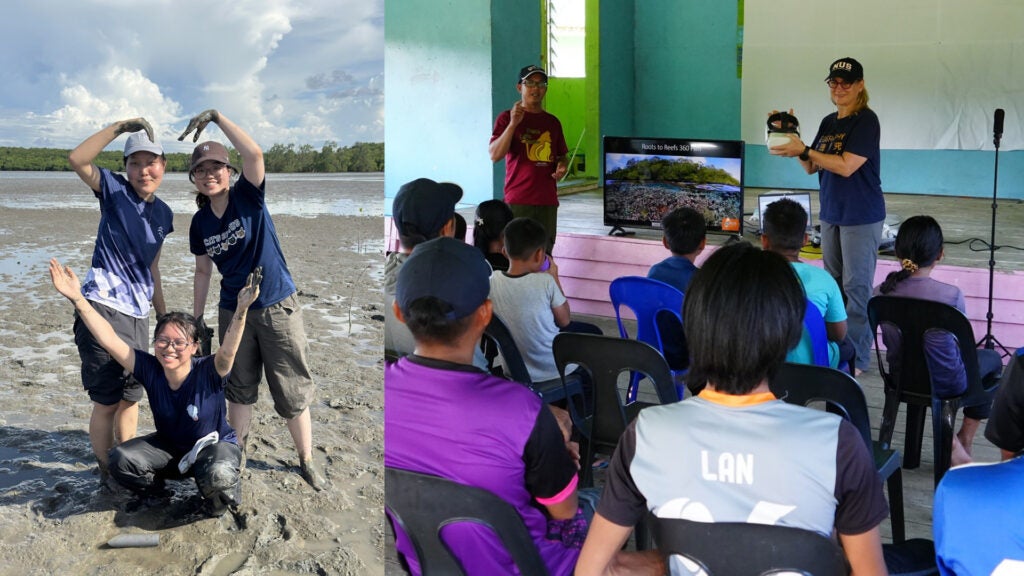
Her work spans mangrove restoration at Pulau Ubin to leading expeditions across Southeast Asia, where she uses drones and 3D mapping technologies to create detailed digital models of coastal ecosystems. She also produces immersive 360-degree conservation films — one of them, entitled Roots to Reefs 360, clinched the Bronze accolade at the 2023 QS Reimagine Education Awards.
As we observe World Mangrove Day on 26 July, Dr Coffman discusses Singapore’s mangrove story, why these forests matter for our climate future and what gives her hope in the next generation of mangrove champions.
World Mangrove Day puts a spotlight on mangrove ecosystems globally. What’s the current state of Singapore's mangroves?
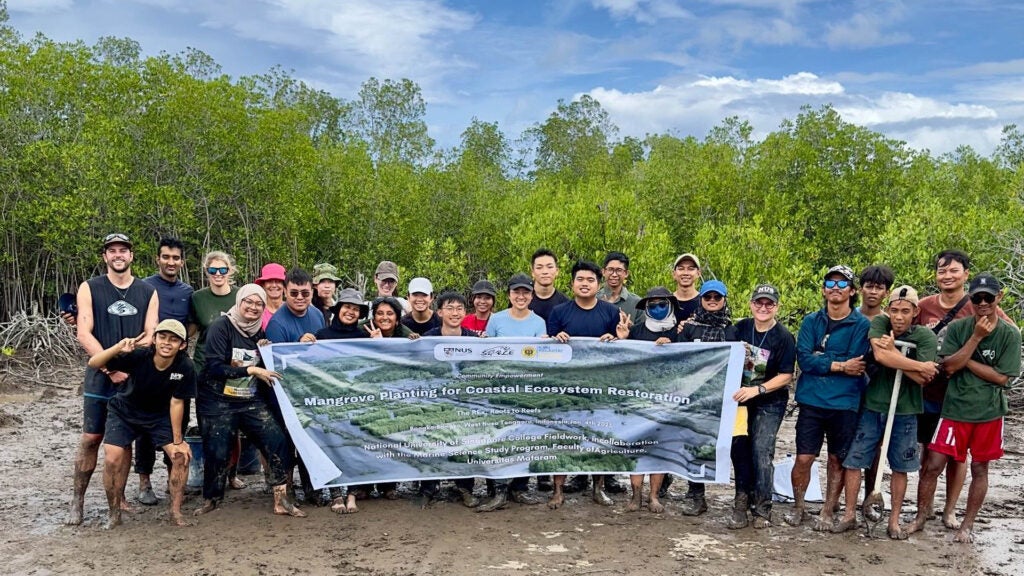
Around 13 per cent of our coastline was originally fringed by mangroves, but today less than 1 per cent of Singapore’s land area remains as mangrove habitat. Against a backdrop of continued mangrove loss across Southeast Asia, Singapore has become a regional leader in mangrove conservation through projects such as Sungei Buloh Nature Park Network and Sungei Durian in Pulau Ubin.
Singapore’s mangroves also remain rich in biodiversity. We have 35 species of true mangroves – almost as many as Indonesia, the global leader with about 48 species. Singapore’s mangrove flora is exceptionally diverse for a highly urbanised nation.
Every year, I begin my Aquatic, Riparian and Coastal Systems course at the Sungei Buloh Wetland Reserve because it tells one of Singapore’s greatest conservation stories. In the 1980s, the Nature Society Singapore recognised the site was internationally important for migratory shorebirds. Their advocacy helped protect it, making it Singapore’s first ASEAN Heritage Park. It is a powerful reminder to students that conservation succeeds when passionate people speak up and scientists, communities, policymakers and citizens work together.
What excites me most is that Singapore is no longer conserving isolated patches but restoring connected coastal ecosystems, reflecting the “roots to reefs” approach that underpins my research and teaching. The healthier these ecological connections become, the more resilient our wildlife, coastlines and communities will be.
Mangroves have been described as “climate infrastructure”. Can you explain what that means?
The word “infrastructure” brings to mind bridges, roads or seawalls. Mangroves perform many of those same functions naturally, which is why scientists call them natural climate infrastructure.
Mangroves are among the planet’s most efficient ecosystems for capturing and storing carbon, particularly in their deep waterlogged soils. Over hundreds of years, this builds up like an underground carbon bank.
But carbon is only part of the story. Mangroves reduce wave energy, buffer storm surges, stabilise shorelines, filter pollutants and provide nursery habitat for fisheries. A seawall protects a coastline, but a mangrove forest does this while storing carbon, supporting biodiversity and improving water quality.
As sea levels rise, our future resilience will depend on combining engineering with healthy ecosystems through nature-based climate solutions.
You bring NUS students into mangrove ecosystems for field learning. What do students discover that they cannot learn in a classroom?
One of my favourite moments happened during a field research trip in a mangrove forest in Lombok. After collecting data, I asked students to sit quietly on the mangrove roots, close their eyes and listen. They described hearing birds calling, crabs clicking beneath the mud and how surprisingly cool the forest felt.
It was a simple exercise but it changed how they saw mangroves — not just as muddy coastal forests but as a living, interconnected ecosystem.
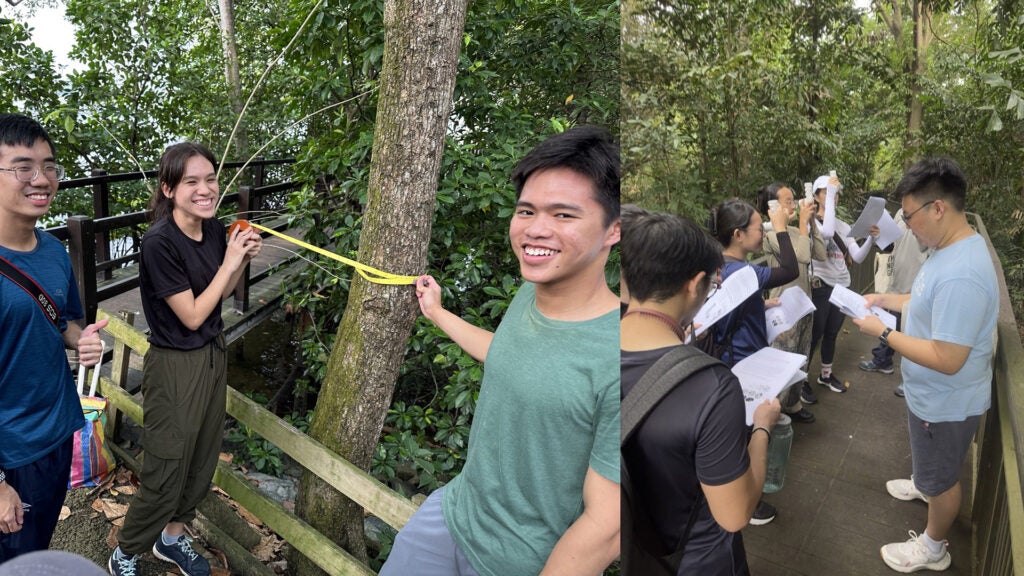
While lectures provide the scientific foundation, students develop deeper understanding by seeing and doing. They learn to observe like scientists and understand how every species plays a role.
I also want students to see themselves as future conservation leaders. In my course, teams choose a degraded mangrove site and develop restoration proposals. Successful restoration requires understanding tides, sediments, biodiversity, communities and long-term management. The best strategies bring together ecologists, engineers, planners, policymakers and communities to design solutions beneficial for people and nature.
As an educator nurturing the next generation of conservation leaders, what gives you hope?
I see hope in the moment curiosity turns into connection. Students often arrive thinking mangroves are muddy, smelly places. By day’s end, they’re excitedly pointing out mudskippers and kingfishers, imagining how these places can be restored.
I see the same hope when working alongside communities across Southeast Asia as I meet people who care deeply about restoring coastal environments. Conservation succeeds when local communities lead, because they continue caring long after researchers leave.
People protect what they understand, and understanding often begins with experience. I hope that everyone experiences a mangrove forest at least once. Once you’ve experienced that magic, it’s hard not to want to protect it.
How can one experience the “Mangrove Magic” this World Mangrove Day?
Visit Sungei Buloh Wetland Reserve, Chek Jawa Wetlands or Pasir Ris Mangrove Boardwalk. Pause, listen to the birds, watch the mudskippers and crabs and look out for the otters.
Consider joining a kayak tour at Pulau Ubin, or participate in mangrove planting and coastal clean-ups organised by NParks, the Nature Society Singapore and the International Coastal Cleanup Day in Singapore.
Once you spend time in a mangrove forest, you begin to see it differently.
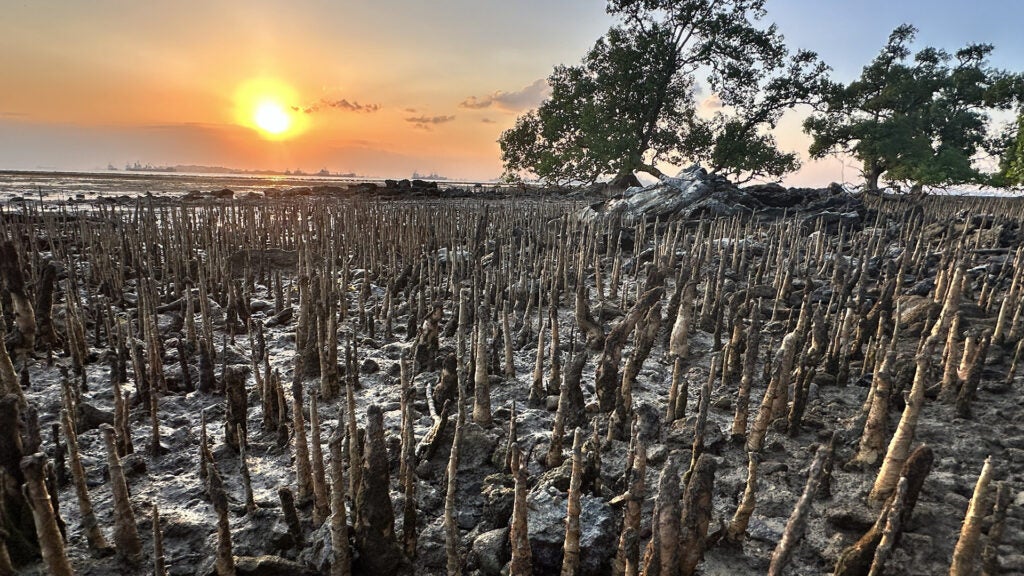
World Mangrove Day is observed annually on 26 July to raise awareness of mangrove ecosystems and promote their sustainable management, conservation and restoration.
This story first appeared in NUSnews (as From roots to reefs: How NUS geographer Dr Gretchen Coffman is cultivating the next generation of mangrove champions) on 26 July 2026.