

From climate change to criminal justice, NUS is training graduates to think across disciplines
November 14, 2026

Modern challenges require modern solutions — and the answers often lie beyond any single discipline.
Addressing rising flood risks, for instance, requires an understanding of environmental science and public policy, while tackling AI-enabled scams demands insights into technology, human behaviour and criminal justice.
To enable students to venture beyond their primary fields of study and gain interdisciplinary perspectives, the NUS Faculty of Arts and Social Sciences has introduced two programmes under the NUS College of Humanities and Sciences (CHS): the Second Major in Environmental Science for Sustainability and Minor in Criminal Justice.
Environmental expertise across disciplines
As climate challenges and sustainability priorities evolve, demand is growing for graduates who can turn environmental science into practical solutions.
Combining geography, biology, chemistry and more, the Environmental Science for Sustainability programme equips students to tackle challenges ranging from climate adaptation and flood resilience to biodiversity conservation.
Students gain a grounding in earth systems and natural resource management, while developing technical skills in areas such as Geographic Information Systems (GIS), remote sensing and environmental modelling.
Together with a compulsory internship, field trips — including to Malaysia and Kenya — will allow students to investigate issues such as water quality and mangrove ecosystems, and understand how local communities interact with their natural environments.
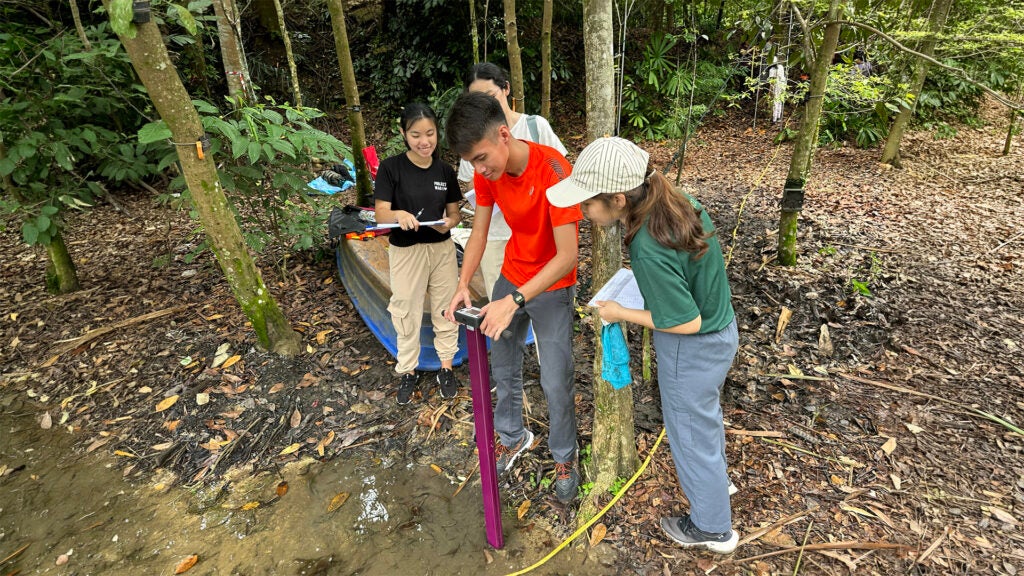
“By going into the field, they will learn about how these solutions can be applied and what other kinds of indigenous and local solutions may already be in place,” said Associate Professor Kamalini Ramdas, Deputy Head of the NUS Department of Geography.
Graduates can pursue careers in conservation, biodiversity management, environmental consulting, geospatial analytics and environmental policy.
From individual courses to structured minor
The new Minor in Criminal Justice applies a similarly interdisciplinary approach to understanding crime and the justice system.
Drawing on perspectives from sociology, psychology, law, geography and the sciences, students examine issues from cybercrime and online fraud to the causes of offending, victimisation, punishment and rehabilitation.
“The idea for the Minor grew out of our experience in Love that Kills, where we saw how different disciplines could come together to illuminate a complex social problem. We wanted to extend this approach to the wider study of crime and criminal justice,” explained Assoc Prof Narayanan Ganapathy from the Department of Sociology and Anthropology and the Minor’s academic convenor.
Love That Kills: A Criminal Justice Perspective, a CHS interdisciplinary course on gender-based violence, is now one of the Minor’s core courses, alongside Sociology of Deviance, which examines the social and structural roots of criminal behaviour.
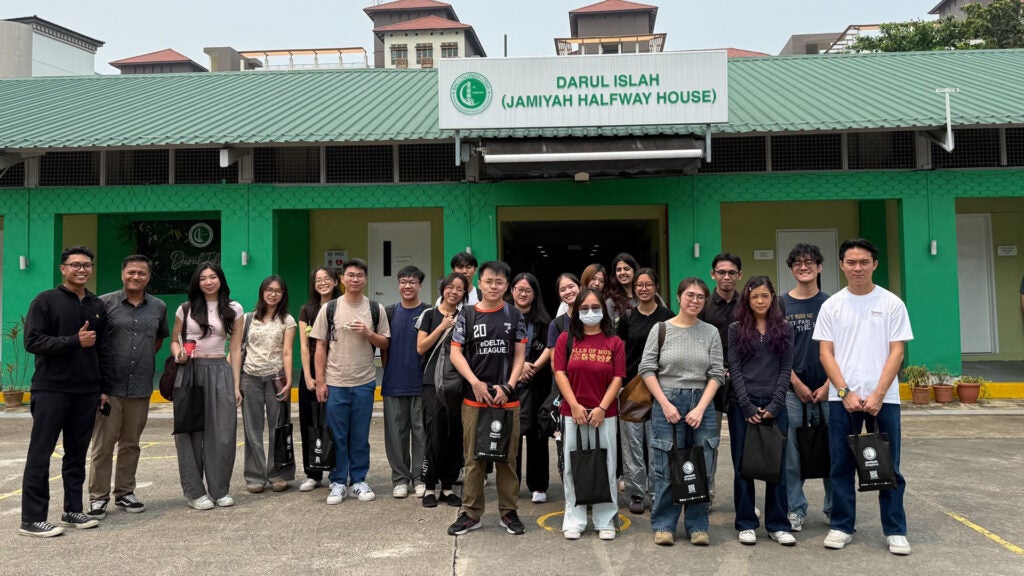
The new Minor also enables students to use GIS and spatial analysis to study how environments influence crime patterns, with experiential learning opportunities such as visits to halfway houses that connect sociological theories with practical insights on offender rehabilitation and reintegration.
Balancing depth and breadth
Reflecting CHS’s push for interdisciplinary education, FASS has led a series of new offerings in collaboration with the Faculty of Science and other schools across NUS, including the recently launched Bachelor of Science (Honours) in Geospatial Intelligence Cross-Disciplinary Programme (GI-XDP), offered jointly with the School of Computing.
“These programmes reflect our commitment to leverage the deep insights about humanity and society that FASS disciplines offer,” said Professor Joseph Park, Vice Dean of Undergraduate Matters at FASS.
“The widespread impact of AI calls for graduates who can respond to the demands of the workplace with a human edge. We will continue to develop programmes that make our students indispensable in today’s workplace.”
Find out more about the Environmental Science for Sustainability programme and Minor in Criminal Justice today.
This story first appeared in NUSnews on 10 November 2026.