

About Us
Welcome to CHPC! Click on the tabs below to learn more about us and the various therapy and assessment services that we offer.
Clinical and Health Psychology Centre (CHPC)
|
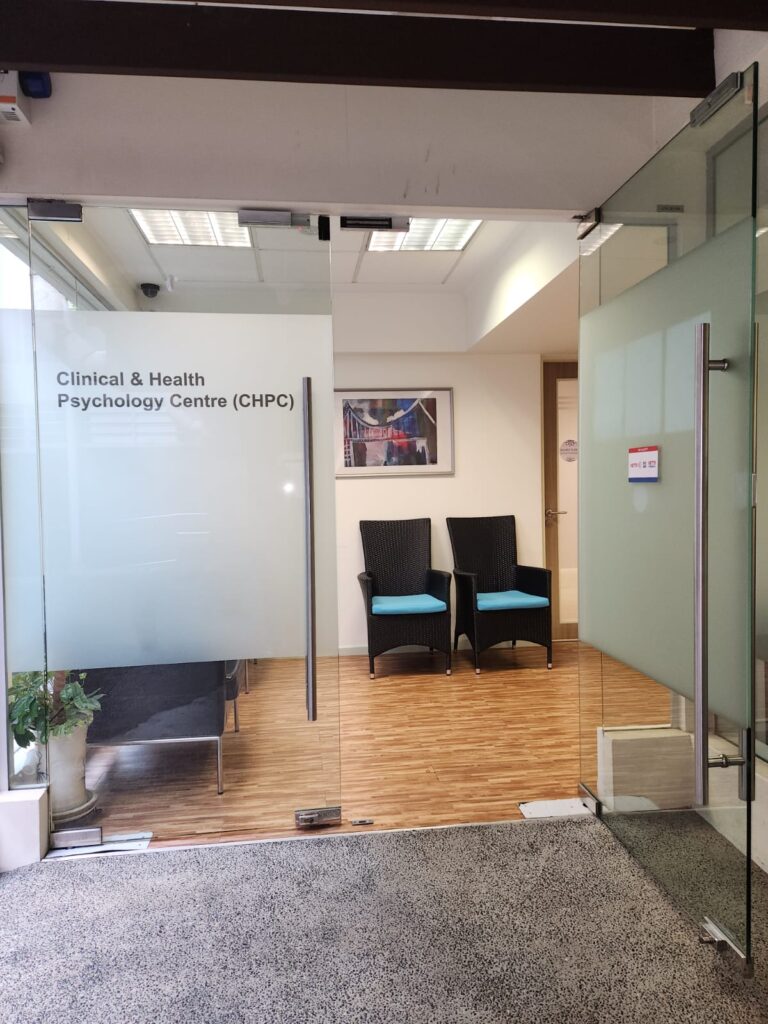
The NUS Clinical and Health Psychology Centre (CHPC) provides an array of specialised psychology services to the public. We are the training centre for the NUS Master of Clinical Psychology programme. Thus, CHPC is staffed by postgraduate clinical psychology interns who work under the close supervision of experienced master/doctorate level clinical psychologists (Intern Services), as well as faculty members who deliver high quality care to their clients directly (Professional Services). At CHPC, our clinical team abides by the highest standards of ethics and professionalism consistent with international and local codes of professional clinical practice. We strive to meet the individual needs of all our clients whilst ensuring confidentiality and privacy. |
 |
Therapy
Many people find relief from depression, anxiety, and other emotional difficulties through seeing a clinical psychologist. A clinical psychologist is a mental health professional who is trained to help people understand their feelings and assist them with changing their behavior (APA 2010). This is achieved through psychotherapy and counselling.
Research increasingly supports the idea that emotional and physical health are very closely linked and that psychotherapy/counselling can improve a person’s overall well-being and functioning (APA 2010).
Psychotherapy/Counselling is most effective when people attend regular sessions. One major study showed that 50 percent of patients improved after eight sessions while 75 percent of individuals in therapy improved by the end of six months. Psychotherapy with children is similar in effectiveness to therapy with adults (APA 2010).
To register with CHPC for psychotherapy, please click on one of the links below:
- Intern Services Online Registration Form - Adult (above 18 years) - Open for Registration
- Intern Services Online Registration Form - Child (under 18 years) - Open for Registration
- Professional Services Online Registration Form (Adult & Child) - Open for Registration
To learn more about the different service types, click/tap here, or email us directly.
AnxietyHaving anxiety is a normal part of life, and everyone experiences anxiety at various points in their life. A certain amount of anxiety is healthy, as it enables us to develop life skills and learn how to stay safe. However, individuals with an anxiety disorder regularly feel excessive and intense levels of worry and fear, which interfere with their daily activities and cause great distress. These anxiety disorders include selective mutism, specific phobias, social anxiety disorder, panic disorder, and generalised anxiety disorder. |
 |
DepressionEveryone feels down or sad at some point in their life when they experience adverse or upsetting life events. For most people, these feelings of sadness will likely dissipate or heal with time. Depression should not be confused with day-to-day sadness. Left untreated, it can become a very debilitating illness that impacts academic, social and occupational functioning. |
 |
Obsessive Compulsive Disorder (OCD)Obsessive Compulsive Disorder (OCD) is a common and disabling condition, which consists of obsessions and compulsions what take up a lot of time, are distressing and get in the way of doing important activities like going to work or school. |
 |
Post Traumatic Stress Disorder (PTSD)
Experiencing a traumatic event may lead to distressing memories, dreams, and flashbacks, leading to avoidance of any reminders of the event and suppression of memories, thoughts, and feelings about the event. Individuals who have been through a traumatic event may also have negative thoughts and moods, concentration, and sleep difficulties, as well as being hypervigilant.
Other difficulties we work with in CHPC:
- Adjustment Difficulties (e.g. grief, transition, chronic health problems, memory loss)
- Sleeping Difficulties
- Self-harm
- Body Image Issues
- Anger Issues
- Relationship Difficulties
- Educational or Occupational Difficulties
- Behavioural Difficulties (e.g. defiant behaviours, aggression)
- Academic Learning Concerns
If you are unsure of the type of service you need, feel free to email us directly.
Assessments
|
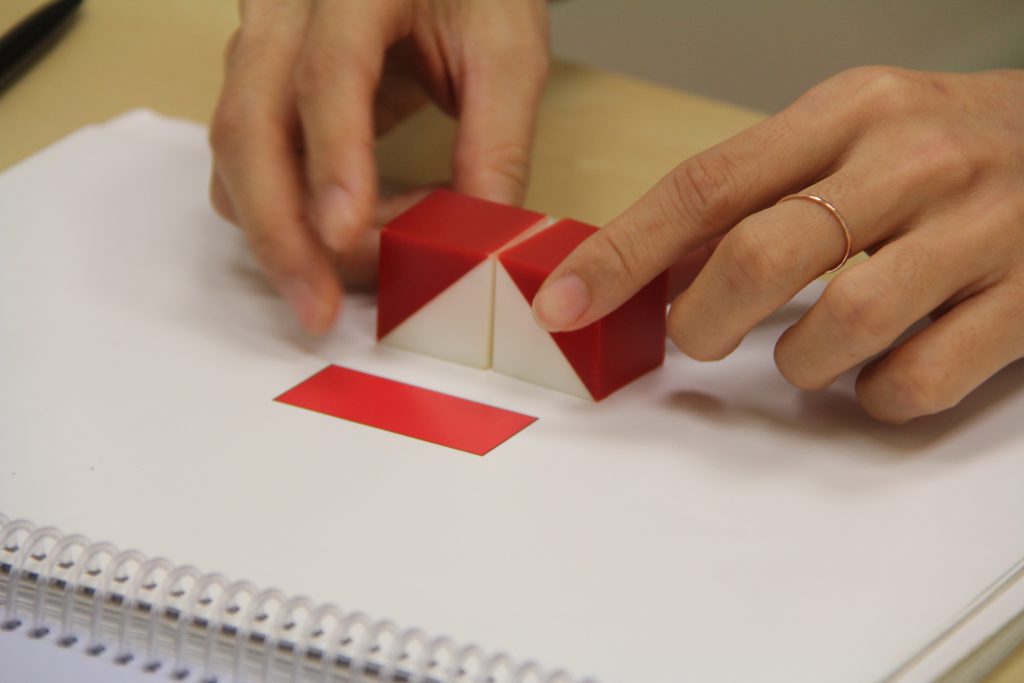
The CHPC provides comprehensive psychological assessments for children and adults to address an array of developmental, behavioural, cognitive, academic, social, and emotional concerns. An assessment at CHPC typically includes initial intake interviews, administration of standardised psychological tests that are selected based on the individual’s needs and concerns, school observation (for child cases), a feedback session to discuss the assessment results and recommendations, along with a written report. Areas that we can assess for are as below. If you are unsure of the type of service you need, feel free to contact us directly. |
 |
|
To register with CHPC for a psychological assessment, please click on one of the links below:
To learn more about the different service types, click/tap here, or email us directly. |
|
Attention-Deficit/Hyperactivity Disorder (ADHD)
Attention-Deficit/Hyperactivity Disorder (ADHD) is one of the most common neurodevelopmental conditions in children and can persist into adulthood. Individuals with ADHD are often easily distractible, fidgety, and have difficulties staying focused and seated. Other common difficulties include: not following through on instructions and tasks, losing things, poor time awareness and management, forgetting tasks or appointments, missing out on details, interrupting others, and having trouble waiting for turn. These difficulties can affect one’s school or work performance and social relationships. Individuals with ADHD can learn skills through psychological intervention to manage their difficulties.
Autism Spectrum Disorder (ASD)
Please note: assessment for ASD is not available until further notice.
Autism Spectrum Disorder (ASD) is a neurodevelopmental condition that causes challenges in social interaction and communication. For example, individuals with ASD often struggle to form relationships with others, engage in back-and-forth social interaction, as well as understand emotions and nonverbal communication (e.g. gestures, eye contact). They also display restricted and repetitive patterns of behaviours or interests, such as preoccupation with particular topics, rigidity in following routines/schedules, and unusual, repetitive motor movements. Sensory issues (e.g. over-sensitivity to light) and interests are common as well. ASD is usually diagnosed in childhood. Individuals with ASD vary in the presentation and severity of their symptoms and in the types and level of support needed to function in their daily lives. They also vary in their intellectual abilities. While some can cope with studying and working in mainstream environments, others may require more specialised support.
Forensic Psychological Assessments
A Forensic Psychologist is a specialist who works within the narrow intersection between psychology and the legal system. Within the Singapore court system, a psychological assessment may be ordered for a case where they will assist the Judiciary as an expert witness during the trial. This could apply for both civil or criminal cases depending on the specific needs required to secure a desired ruling. An experienced Forensic Psychologist is also able to understand the nuances of the case when delivering their professional opinion during legal proceedings.
Intellectual Disability (ID)
Intellectual Disability (ID) is a neurodevelopmental condition characterised by general intellectual deficits, such as in solving problems, academic learning, reasoning, and grasping abstract concepts. Individuals with ID also have adaptive deficits that affect their abilities to live and work independently. For example, they may have difficulties with social interaction and activities of daily living (e.g. hygiene, safety, travelling, mealtime, making purchases). ID has onset in childhood, and some young children with global developmental delay (GDD) may eventually meet criteria for ID. The types and level of support that individuals with ID need for daily functioning vary according to the severity of their ID, with some requiring more specialised support than others.
Special Educational Placement
Children with developmental disabilities/special needs, including those with a diagnosis of ASD or ID, can access education in a Special Education (SPED) school in Singapore. To apply for admission into a SPED school, the Ministry of Education (MOE) requires a comprehensive psychological assessment to ascertain an appropriate educational placement for the child. Please note that a psychological report alone is not sufficient for applying to SPED schools. More information on the application process and the other documents required can be found on MOE’s website.
Neuropsychological Functioning
Individuals with brain damage, such as those with traumatic brain injury (TBI), have various cognitive deficits that make it challenging for them to carry out daily activities. Examples of cognitive functions that can be affected are: language, attention, memory, information processing, problem-solving, reasoning, planning, visual-spatial skills, and visual-motor skills. Some individuals may also experience changes and problems in behaviours (e.g. aggression, poor impulse control) and emotions (e.g. depression, anxiety). A neuropsychological assessment helps to understand how an individual’s brain injury is related to their cognitive, behavioural, and emotional problems. It also aids in determining the individual’s cognitive strengths and weaknesses and in providing recommendations for rehabilitation.
If you are unsure of the type of service you need, feel free to email us directly.
Intern & Professional Services
CHPC serves the public through 2 separate services: Intern Services and Professional Services.
Intern Services are sessions conducted by graduate clinical psychology students under close clinical supervision from our experienced teaching faculty. For more information on this service, please click/tap here.
Professional Services are sessions conducted by our experienced teaching faculty for the NUS Clinical Psychology Masters programme. Every member of our teaching faculty are certified Clinical Psychologists and are registered with the Singapore Register of Psychologists (SRP). The fees for this service are also charged differently to reflect this. For further information on this service, please click/tap here.