Course Synopsis
The demand for evidence-based interventions to address mental health difficulties in youth has outpaced available community services. This workshop is designed for community workers assigned to mild and moderate mental health cases to deepen their expertise in Clinical Practice while working with youth populations. Participants will explore basic psychological theories, practice counselling skills and motivational interviewing, and discuss ethical practices in mental health. The training will emphasize hands-on learning through active participation in role-play exercises, discussion groups, etc. to refine their knowledge and skills in clinical practice and apply it to their respective contexts. This course is a foundational course for the short course titled Foundations of CBT for Mood and Anxiety in Youth.
Learning Outcomes
This workshop will equip learners with the following competencies:
- Comprehend and apply the key principles and concepts underlying core psychological theories.
- Demonstrate the ability to establish therapeutic relationships, employ counselling skills, and utilize motivational interviewing techniques to effectively support clients in their journey towards positive behavior change and improved mental well-being.
- Enable learners to identify and navigate ethical dilemmas, apply professional codes of conduct and guidelines, and make informed decisions that prioritize the well-being and autonomy of clients, while upholding ethical standards and promoting responsible and ethical practice in the field of psychology.
The workshop consists of four training days covering a range of topics:
- Day 1: Basic Psychological Theories
- Day 2: Ethical Practices in Mental Health
- Day 3: Basic Counselling Skills
- Day 4: Motivational Interviewing
The learning outcomes for each day of training are as follows:
| Day |
Module Topic |
Learning Outcome |
| 1 |
Basic Psychological Theories |
Comprehend and apply the key principles and concepts underlying core psychological theories
- Cognitive Mediation Model
- Behaviourism (Skinner & Pavlov)
- Cognitive Theory of Aaron Beck
- Bio-Psycho-Social Model
|
| 2 |
Ethical Practices in Mental Health |
- Understand the SPS Code of Ethics in clinical, legal, and ethical practices
- Identify the different types of ethical issues and dilemmas in professional practice
- Understand the professional duty to report ethical issues, misconduct and discriminatory behaviour
- Understand the importance of collaboration with other professionals and/or service agencies in achieving the goals of care
- Understand the importance of reflexive practice and self-care in professional practice
- Understand the provisions and key principles of the Mental Health (Care and Treatment) Act (MHCTA/MDTA)
- Understand the provisions and key principles of the Mental Capacity Act (MCA), Lasting Power of Attorney (LPA) and the Advanced Medical Directive Act (AMD)
|
| 3 |
Basic Counselling Skills (theory and practice) |
- Demonstrate effective communication skills, including active listening and empathy
- Demonstrate basic counselling techniques, such as summarizing, paraphrasing, and clarifying
- Demonstrate open-ended questioning and reflective responses
- Demonstrate cultural sensitivity and awareness of individual differences
|
| 4 |
Motivational Interviewing (MI) (theory and practice) |
- Demonstrate client-centred counselling skills such as open-ended questions, affirmation, reflective listening and summaries (OARS)
- Demonstrate effectively use of the DARN-CAT framework to recognize, elicit and respond to change talk
- Demonstrate the key principles of the Transtheoretical model of Behavioural Change (TTM)
- Recognize client’s readiness to negotiate a change plan, and develop a change plan collaboratively
|
Dates and Time
- Day 1: TBC in 2027
- Day 2: TBC in 2027
- Day 3: TBC in 2027
- Day 4: TBC in 2027
Classes will be conducted from 9 am to 5 pm.
Training Venue
Classes will be conducted face-to-face in the Faculty of Arts and Social Sciences, NUS.
About The Trainers
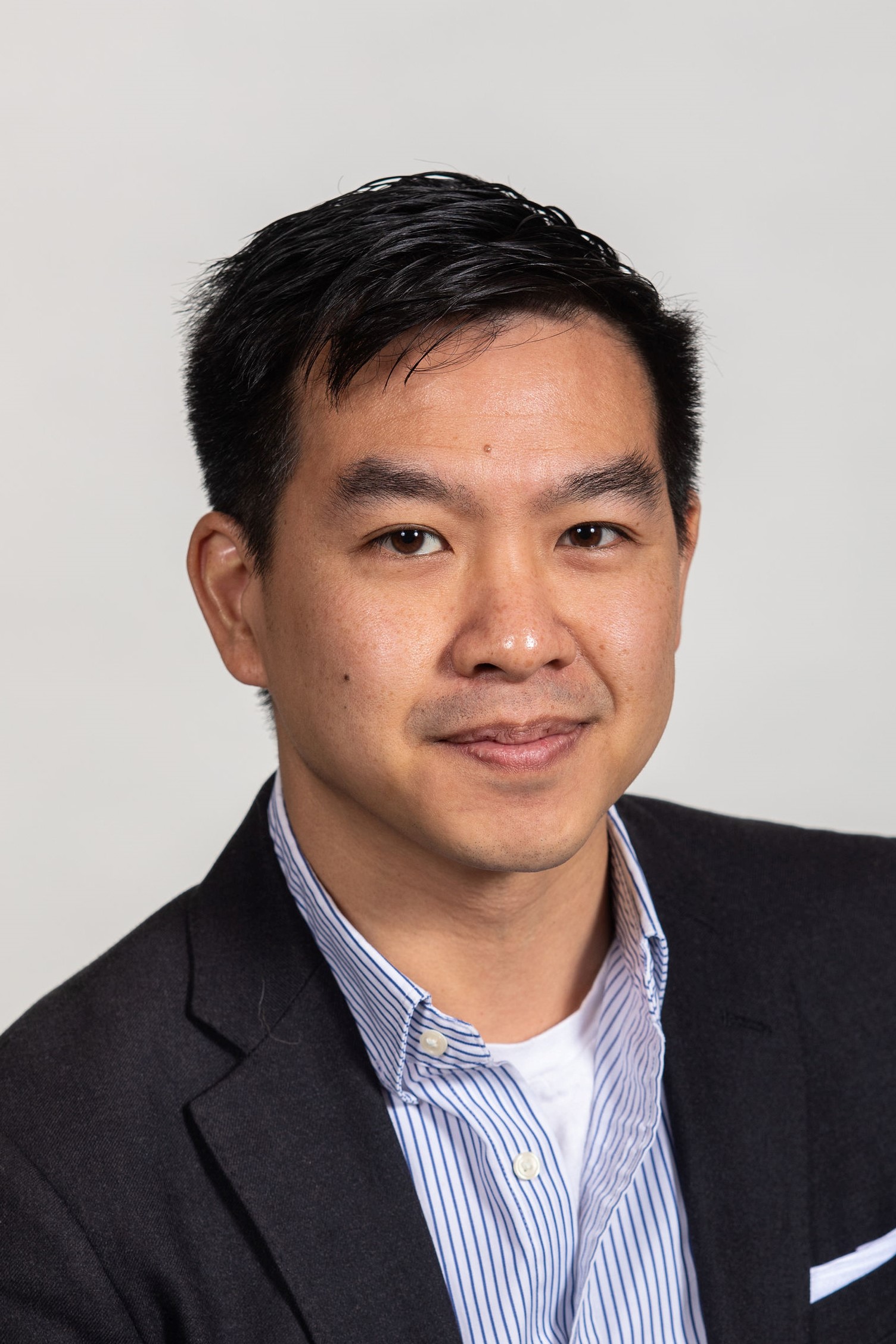
Dr Kean J. Hsu
Assistant Professor, National University of Singapore
Education
Ph.D. (Southern California)
M.A. (Southern California)
B.A. (Hons) (Yale)
Kean J. Hsu, Ph.D., is an Assistant Professor in the Department of Psychology at National University of Singapore. His research investigates how basic cognitive processes (e.g., attention, executive functioning) impact the etiology and exacerbate symptom severity of depression and anxiety. He is also interested in scalable mental health interventions (e.g., cognitive training, brief interventions) and examining mechanisms underlying psychotherapeutic interventions, as well as increasing awareness of issues surrounding mental health and stigma in communities that are typically under-served or under-utilize mental health services. Clinically, Kean specialises in the treatment of depression, anxiety disorders, and stress in adults.
Kean completed a B.A. with honours in psychology (with a behavioural neuroscience specialization) at Yale University before receiving his Ph.D. in clinical psychology at the University of Southern California in 2014. He completed postdoctoral research fellowships at McLean Hospital/Harvard Medical School, the University of California, Los Angeles, and the University of Texas at Austin. He previously co-directed the Anxiety and Stress Clinic with Jasper Smits, Ph.D., at UT- Austin. Most recently, Kean was an Assistant Professor in the Department of Psychiatry at Georgetown University.
Recent/Representative Publications:
- Hsu,K.J.,Shumake,J.,Caffey,K.,Risom,S.,Labrada,J.,Smits,J.A.J.,...Beevers, C. G. (2020, September 30). Efficacy of Attention Bias Modification Training for Depressed Adults: A Randomized Clinical Trial. https://doi.org/10.31234/osf.io/btmfy
- Hsu, K.J., McNamara, M., Shumake, J., Stewart, R., Labrada, J., Alario, A., Gonzalez, G.D.S., Schnyer, D.M., & Beevers, C.G. (2020). Neurocognitive predictors of self-reported reward responsivity and approach motivation in depression: a data-driven approach. Depression and Anxiety, 37(7), 682-697. Doi: 10.1002/da.23042
- Hsu,K.J.,&Davison,G.C.(2017).Compoundeddeficits:theassociationbetween neuropsychological impairment and attention biases in currently depressed, formerly depressed, and never depressed individuals. Clinical Psychological Science, 5(2), 286-298.

Dr Lohsnah Jeevanandam
Senior Lecturer and Director of Clinical Psychology Programme, National University of Singapore
Education
D.Clin.Psych (University of Queensland)
BA (Hons) (University of Sydney)
Research Interests
- Developmental disabilities
- Dual diagnosis
- Behavioral modification
- Parenting programmes
Recent/Representative Publications
- Jeevanandam, L. & Toh, A. (2021). The Singapore Psychological Society Code of Ethics: The Beginning, the Current, and the Future. In K.L. Parsonson. (Ed.). Handbook of International Psychology Ethics. Routledge.
- Jeevanandam, L. (2021). Sexuality Development in Persons with Intellectual Disability: A Singapore Perspective. In M.E Wong & L.Lim (Eds.). Special Needs in Singapore (pp 309-322). Singapore: Work Scientific Publishing Co. Pte. Ltd.
- Goh, P.S., Goh, Y.W., Jeevanandam, L., Nyolczas, Z., Kun, A., Watanabe, Y., Noro, I., Wang, R. and Jiang, J. (2021), Be happy to be successful: a mediational model of PERMA variables. Asia Pac J Hum Resour. https://doi.org/10.1111/1744-7941.12283

Dr Stephanie Si Min Lee
Lecturer and Graduate Clinical Research Coordinator
Education
Ph.D. (NUS)
M.Clin Psych. (NUS)
B.Soc.Sci. (Hons.) (NUS)
Dr. Stephanie is primarily interested in examining the development and treatment of psychopathology, with a specific focus on exploring the impact of parent-child relationship and peer associations on the development of emotion dysregulation.
Recent/Representative Publications:
- Lee,S.S.M.,Keng,S.-L.,Yeo,G.C.,&Hong,R.Y.(2021).Parentalinvalidationand its associations with borderline personality disorder symptoms: A multivariate meta-analysis. Personality Disorders: Theory, Research, and Treatment. Advance online publication. https://doi.org/10.1037/per0000523
- Lee, S. S. M., Keng, S.-L., & Hong, R. Y. (2021). Examining the intergenerational transmission of parental invalidation: Extension of the biosocial model. Development and Psychopathology. Advance online publication. https://doi.org/10.1017/S0954579421000778
- Hong, R. Y., Lee, S. S. M., Chng, R. Y., Zhou, Y., Tsai, F., & Tan, S. H. (2017). Developmental trajectories of maladaptive perfectionism in middle childhood. Journal of Personality, 85(3), 409-422. https://doi.org/10.1111/jopy.12249

Dr Matthew Lim
Senior Lecturer, Deputy Director and Curriculum Coordinator, Clinical Psychology Programme, National University of Singapore
Education
D.Clin.Psy (University College London)
D.Phil (University of Oxford)
Matthew completed his first degree in psychology at NUS. He later read a doctorate at the Department of Psychiatry, Oxford University, with a research focus on gambling-related cognitive vulnerabilities. His subsequent professional clinical doctorate was completed at University College London. Matthew wrote a doctoral thesis on recovery-based outcome measurement among Vietnamese refugees living in the UK as part of his clinical training. Upon graduation, Matthew returned to his alma mater, NUS, and received an early career award with his previous senior tutorship appointment at the Department of Psychology.
Matthew teaches and supervises on the masters in clinical psychology programme in NUS and received a faculty teaching award in 2021 for his teaching excellence. Matthew’s clinical and consultancy work has been informed by behavioural, cognitive, systemic and psychoanalytic ideas and contemporary "third-wave" meditative practices.
Matthew's research programme aims to develop local clinical psychology competency frameworks in specialist areas not covered by the SkillsFuture national guidelines. The masters and doctoral students he supervises have embarked on projects to articulate the competencies required in the following practice domains: mental health in disabilities, clinical health psychology, reflective practice, and clinical supervision. Findings from this research programme inform the curriculum design and assessment rubrics of professional courses in NUS.