
More than a simulation: SMUN 2025 prepares future leaders for global realities
July 30, 2025

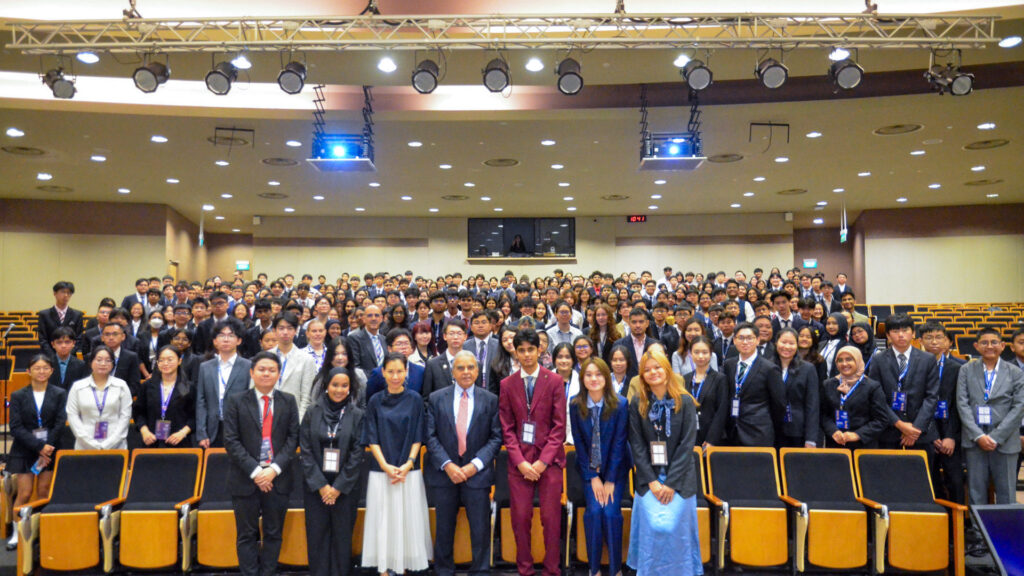
More than 400 students from over 20 pre-tertiary and tertiary institutions across Singapore and the Asia-Pacific region convened to debate critical global concerns at the 22nd Singapore Model United Nations (SMUN) conference that was organised by the NUS Political Science Society (NUS PSSOC) in June at NUS University Town (UTown).
Themed “Building a New Era of Diplomacy”, SMUN 2025 provided an incisive lens through which young participants navigated the intricate complexities of global geopolitics by role-playing as UN delegates and members of international organisations such as the International Monetary Fund and the World Trade Organisation to discuss current issues such as digital currencies and tariffs.
A key highlight of the event was the thought-provoking keynote by distinguished diplomat and academic Mr Kishore Mahbubani, Distinguished Fellow at the NUS Asia Research Institute. In his address, Mr Mahbubani explored the shifting paradigms of global power and offered compelling insights into the current international order. He highlighted the remarkable success of ASEAN as a testament to effective regional cooperation and presented it as a model for navigating complex global challenges.
Mr Mahbubani also critically examined the structure of the UN, particularly the influence of the permanent members’ veto powers. While acknowledging that the UN’s effectiveness is often shaped by the interests of the major powers, he emphasised that it remains in the interest of small states to strengthen the multilateral system by “build[ing] upon a rules-based order and cooperat[ing] in issues of global importance such as climate change and denuclearisation.” His remarks struck a chord with the young delegates, reinforcing their understanding of the importance of multilateralism and the pursuit of shared global interests to shape a more equitable world.
Diverse agendas and dynamic debates: Inside the councils of SMUN 2025
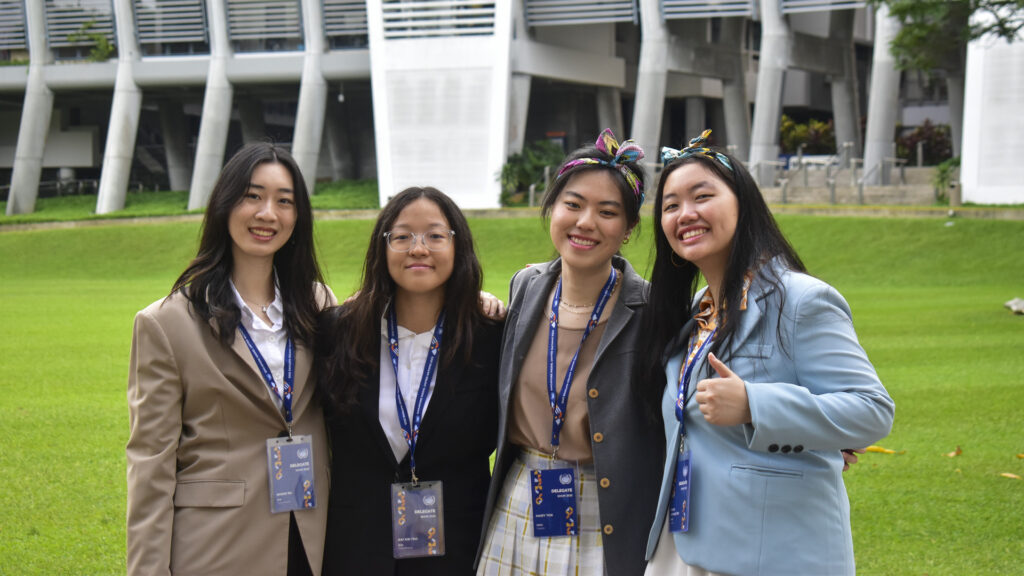
This year’s conference featured delegates from 11 councils tackling a wide array of pertinent topics. In the United Nations Security Council, discussions centred on reforming peacekeeping operations – with delegates debating their effectiveness, future direction and the complexities of maintaining peace in conflicts such as the Syrian Civil War. The United Nations Economic Commission for Europe (UNECE) engaged in intricate negotiations on transboundary water treaties across the Pan-European region, a critical issue with far-reaching environmental and geopolitical implications. Meanwhile, the House of Commons (HOC) simulation offered a unique platform to examine the ongoing complexities and multifaceted consequences of Brexit, giving participants the opportunity to explore national political dynamics within an international context.
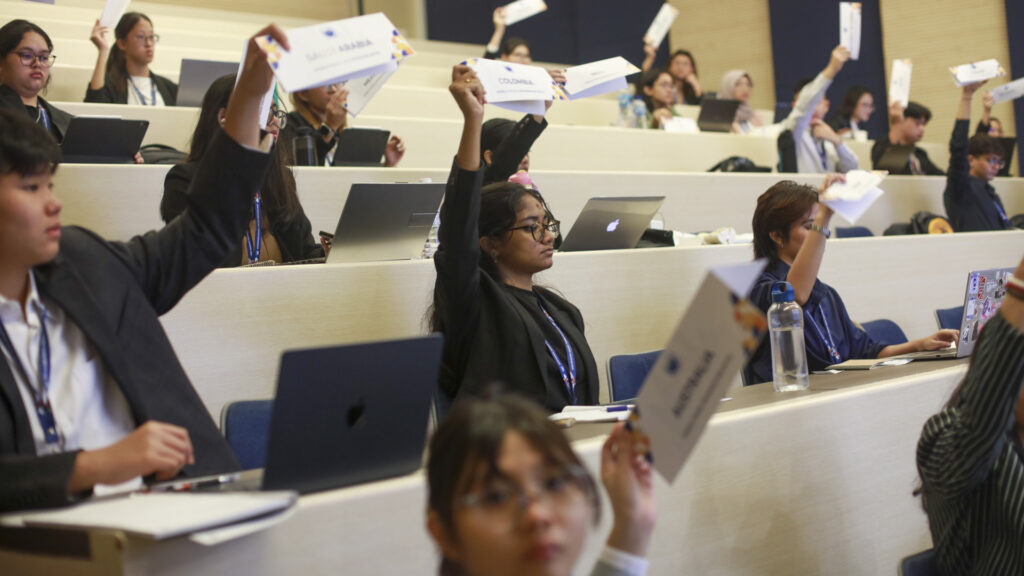
Through extensive research, preparation of detailed position papers, and the development of innovative policy proposals, delegates engaged in intense debates, striving to pass resolutions through collaborative effort and majority vote.
As with previous iterations, SMUN 2025 was meticulously designed to spur active participation and meaningful dialogue. Participants who demonstrated significant contributions throughout the conference were duly recognised with prestigious awards such as Best Delegate, Outstanding Delegate, Honourable Mentions, and Best Position Paper, celebrating their dedication and diplomatic acumen.
Mr Arav Taneja from Temasek Secondary School received an honourable mention award for his outstanding contributions in the House of Representatives of Japan (HRJ). Recounting his experience, he shared, “When I first walked into the House of Representatives Japan SMUN conference room, I felt like a small fish in a big lake. However, as we progressed through council sessions, I found my voice. I engaged in constructive debate with other delegates and worked on resolutions like it was second nature. I gained invaluable knowledge not only about Japan but also about global dynamics. However, I think the biggest takeaway was the connections and friendships I made along the way.”
PSSOC President and Year 2 student from the NUS Faculty of Arts and Social Sciences Ms Irdina Duran, expressed her thanks to all involved for the success of SMUN 2025. “We are immensely grateful to Mr Mahbubani for his profound insights and to all the dedicated participants who made this year’s conference an undeniable success.”
SMUN 2025 Secretary-General and first-year student from the NUS Faculty of Law Mr Aditya Garladinne noted that this year's event has proven to be a vibrant crucible of intellect and diplomacy. Far more than a mere simulation, it is a testament to the boundless potential of our youth, he said.
“Witnessing these bright minds grappling with the world's most pressing challenges is not just inspiring; it is a profound reassurance that the future of global cooperation rests in exceptionally capable hands. This event truly exemplifies how experiential learning can cultivate not only future leaders but also compassionate and globally aware citizens."