

It takes a “kampung”: Creating a sustainable ecosystem of care for everyone, by everyone
December 28, 2025
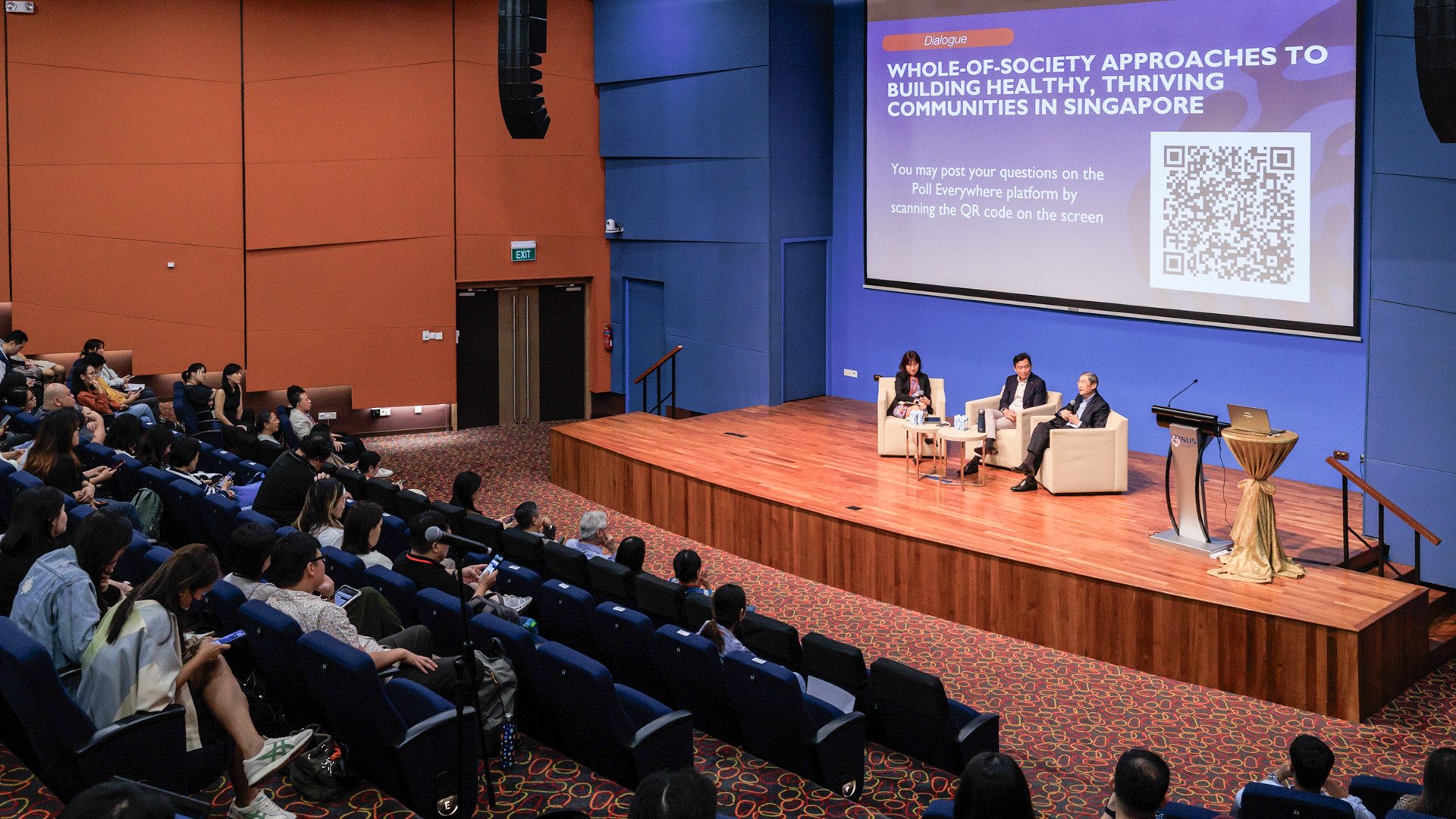
There was a time when neighbours in villages or kampungs kept an eye out for one another, shared food, and revelled in this shared sense of community and care.
As Singapore stands on the brink of becoming a “super-aged” society, with one in five citizens set to be over 65 by 2026, bringing back the kampung spirit, where everyone cares for everyone, might be the key to enabling healthy ageing here.
“This is neither a new formula for success, nor is there anything magical about it. I feel it is simply a resurrection or rejuvenation of our kampung spirit in action, where residents take ownership of their own health and look out for one another, alongside professionals and volunteers,” said Mr Eric Chua, Senior Parliamentary Secretary for Social and Family Development, and for Law.
Speaking at the NUS SSR-TOUCH Conference, jointly organised by the NUS Social Service Research Centre (SSR) and TOUCH Community Services, Mr Chua said achieving positive health and well-being outcomes for all requires everyone’s effort.
“Building a healthier Singapore that focuses on ageing well by going upstream, starting young, means all of us must pitch in: government, community organisations, family members, and individuals. We must all work together and play an active part in addressing social-health challenges,” he added.
Themed “Sustained Well-Being in Future-Ready Communities”, the conference, held on 11–12 November 2025, brought together about 300 participants from academia, research, practice, and policymaking. The goal was to advance dialogue and strengthen sectoral capabilities in social service research, evidence-to-practice translation, sustainable collaborations, and impact measurement.
Discussions focused on topics such as the use of technology and AI in social service planning and delivery, the importance of disability inclusion in building strong communities, and the challenges and opportunities for healthy longevity.
Strengthening the caregiving circle
One key focus of the NUS SSR-TOUCH Conference was supporting caregivers, an essential part of the kampung ecosystem. Grandparents, in particular, were highlighted as important caregivers in the family structure.
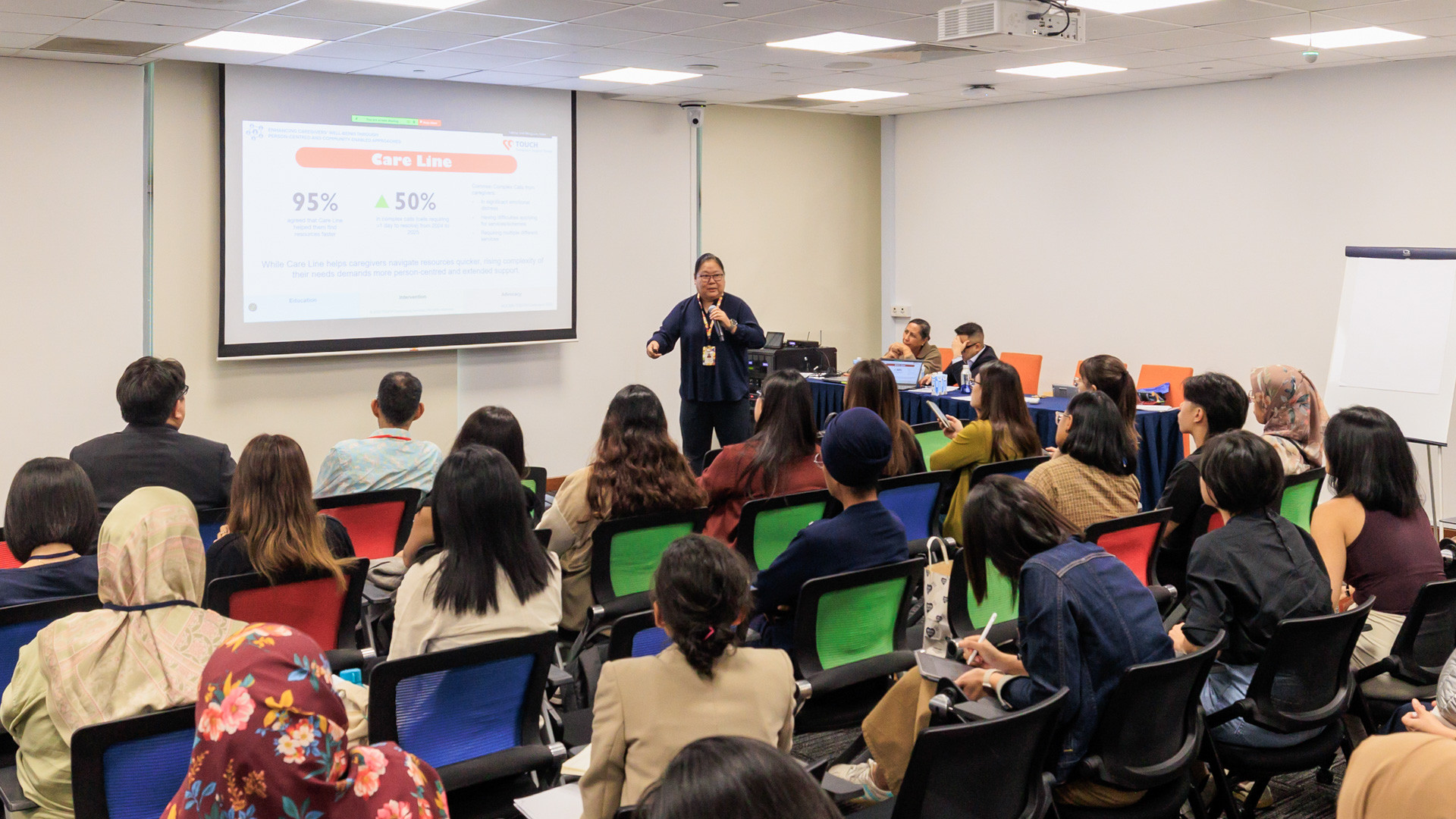
“There’s a need for much more research on respite for custodial grandparents and other things that we generally grant parents,” said Professor Premchand Dommaraju, Associate Professor of Sociology and Director of the Master of Science in Applied Gerontology programme at Nanyang Technological University, who presented on the topic.
He suggested policies such as childcare leave and flexible work arrangements for grandparents, citing Sweden’s 2024 Parental Leave Reform as an example; the reform allows parents to transfer up to 45 days of paid parental leave to grandparents and other child caregivers.
Ms June Sim, Group Head of TOUCH Caregivers Support Group, also underscored the need for proper support systems for caregivers. “Instead of thinking of caregivers as care deliverers, I encourage you to think of caregivers as people with their own needs and aspirations,” she said. Caregiver helplines, online communities, and raising awareness about caregiver challenges are necessary initiatives to support them, she added.
Designing together for stronger neighbourhoods
Another important area of discussion at the conference was the need to co-create programmes among stakeholders, as community initiatives cannot be created in silos.
Professor John Eu-Li Wong, Co-Chair of the Health District @ Queenstown (HD@QT) Steering Committee, who spoke on the initiative at the conference, emphasised this point, saying, “Things don’t work if you develop something for somebody else. We must involve the person we’re trying to develop for because that’s how they own it, and that’s how the chances of success are so much higher.”
HD@QT is a multi-stakeholder initiative spearheaded by NUS, National University Health System (NUHS), and the Housing & Development Board (HDB), bringing together partners from the public, private, and people sectors to develop lasting health and social solutions in Singapore.
Among the projects that have made an impact are Happy Village @ Mei Ling, a community space staffed by a team of healthcare and social workers who work closely with residents to co-develop personalised care plans, and “Come 4Tea Lah!”, a collaborative space where residents of all ages can come together to co-design community activities.
Prof Wong described “Come 4Tea Lah!” as “thriving”, with residents themselves spearheading activities such as “yum cha” (tea drinking) sessions with board games, sing-alongs, monthly birthday celebrations for all ages (funded by residents), and the Woofy Club, a 120-strong group of dog-lovers who meet regularly to share tips on obedience training. These initiatives are complemented by other regular activities such as educational talks by NUS and health screenings by NUHS.
“Our commitment is: not only do we collect the data, we also share it with the residents, and then we co-create the solution. We have them in the planning, and actually have them take a seat at the table in designing the intervention,” said Prof Wong.
When carers get “sandwiched”
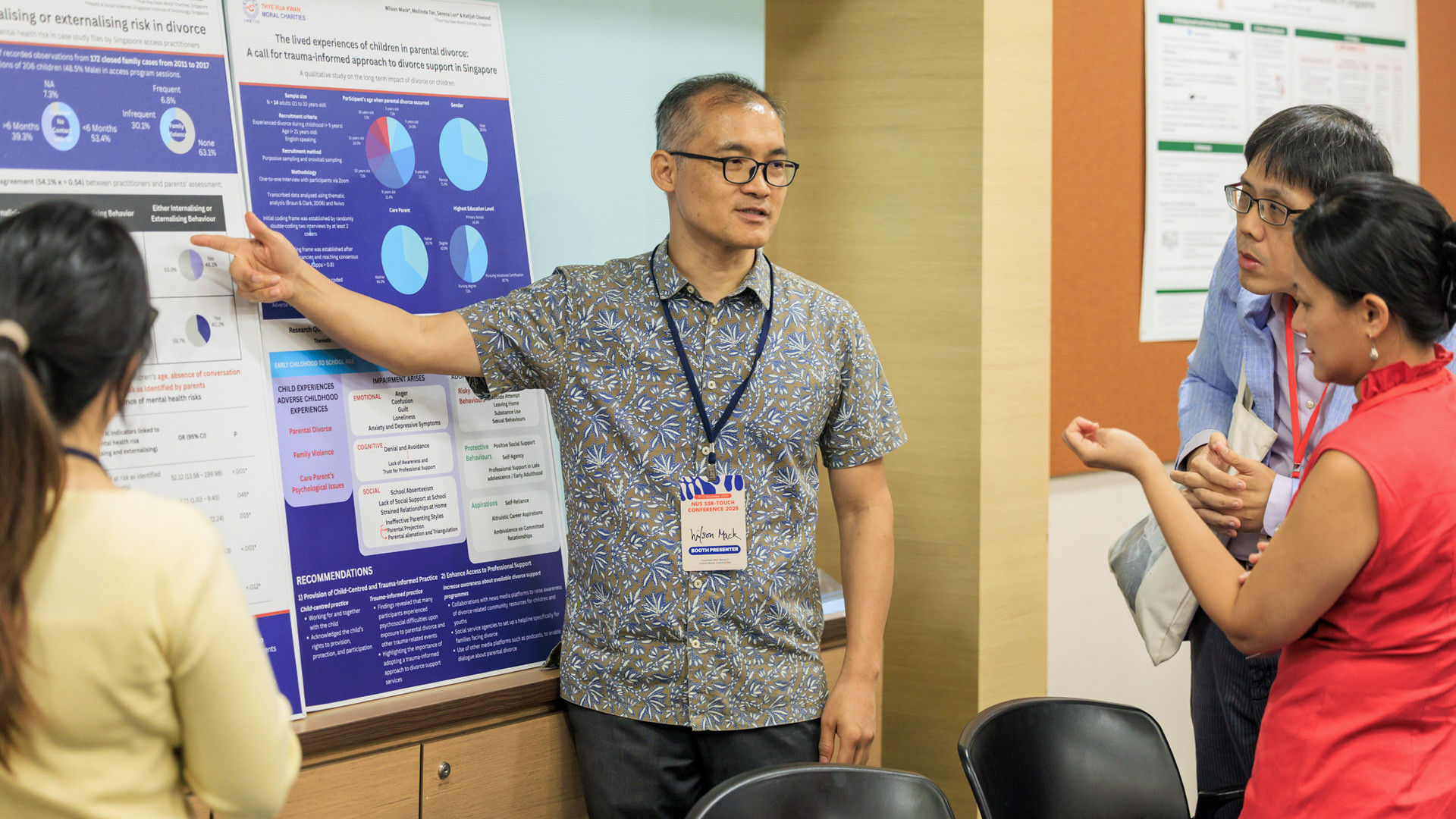
Many Singaporean adults today face the pressure of having to care for their elderly parents or family members while raising children of their own. This ‘sandwiched generation’ phenomenon can be particularly stressful for those with large families or low incomes.
Associate Professor Noor Aisha bte Abdul Rahman from the Department of Malay Studies at the NUS Faculty of Arts and Social Sciences highlighted that Malay family units tend to be larger, often including three to four children and elderly relatives living in the same household.
As such, Assoc Prof Noor Aisha said that Malay Muslim caregivers – particularly women – shoulder the heavy burden of being “sandwiched caregivers”, juggling both eldercare and childcare. They often face concurrent challenges, such as health and well-being gaps, social isolation and burnout risk, as well as financial insecurity and employment barriers.
“Supporting them requires a coordinated effort,” said Dr Ad Maulod, Principal Research Scientist at the Centre for Ageing Research & Education at Duke-NUS Medical School, who also presented on the topic. He cited raising health and well-being literacy, as well as quality and accessibility of health and social support services, as key to helping these sandwiched caregivers.
To better support our communities, Assoc Prof Noor Aisha stressed that social support systems should be caregiver-centric – programmes should be co-created with caregivers, rather than designed for them – to ensure timely and meaningful support. Such an approach is essential for supporting sandwiched caregivers across all demographic groups in Singapore.
Commenting on the success of the conference, Associate Professor Lee Jungup, SSR Co-Director said that the event has shown that it truly ‘takes a kampung’ to build a sustainable ecosystem of care – not just for older persons or caregivers, but for every generation in Singapore.
“By bringing together researchers, practitioners, policymakers and community partners, the NUS SSR-TOUCH Conference has created a shared space to listen, learn and co-create solutions grounded in real lives and real neighbourhoods. As we move towards a super-aged, future-ready society, our hope is that these collaborations will translate into concrete, community-led initiatives that sustain well-being for everyone, by everyone,” said Assoc Prof Lee.
This story first appeared in NUSnews on 12 December 2025.