

NUS students bridge generations through dance and dialogue
January 16, 2026
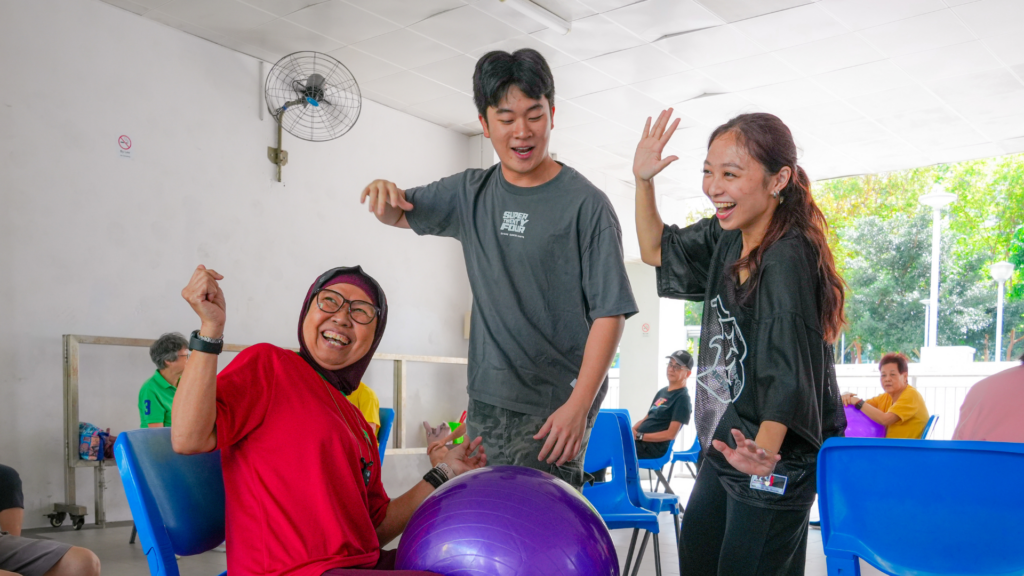
Within the open space in the void deck, figures clad in colourful sportswear flex their limbs to the catchy beats of APT. by Rose from South Korean K-pop girl group Blackpink, featuring American singer Bruno Mars. Interspersed among these older adults are several facilitators dressed in darker colours, who readily demonstrate the steps with zestful youth and vigour.
This is no ordinary dance class. The facilitators are students enrolled in the course NHT2210 Dancing Communities, a practice-based course offered by NUS College which enables them to design, deliver and evaluate a community dance programme, in addition to working on a project for an external community.
The project in question refers to the Intergenerational Community Dance Programme, where students facilitate 12 sessions of dance at various active ageing centres. Following a successful pilot, this was implemented as a regular programme in 2026. Jointly run by the Alice Lee Centre for Nursing Studies at the NUS Yong Loo Lin School of Medicine and Lions Befrienders, the initiative, which is led by Assistant Professor Vivien Wu Xi, combines movement, rhythm and storytelling to improve physical health, stimulate cognition and foster emotional well-being.
For the students, dance is both a deeply personal and social interest. For Sharifah 'Izzah Binte Muhammed Shahril, a third-year NUS College student majoring in Social Work, her dream of designing movement-based workshop sessions for women survivors of abuse was a key reason she took this course. Dancing, which she started in university, quickly became empowering and inspired her to share it with others, especially those who think they cannot dance.
Sharifah was impressed by the careful thought and sensitivity in the programme’s design and delivery. She said, “Beyond the dance, we needed to be attentive to the needs and well-being of the participants. Rather than looking to make the dance or movement perfect, we learned to tailor these to what they need.”
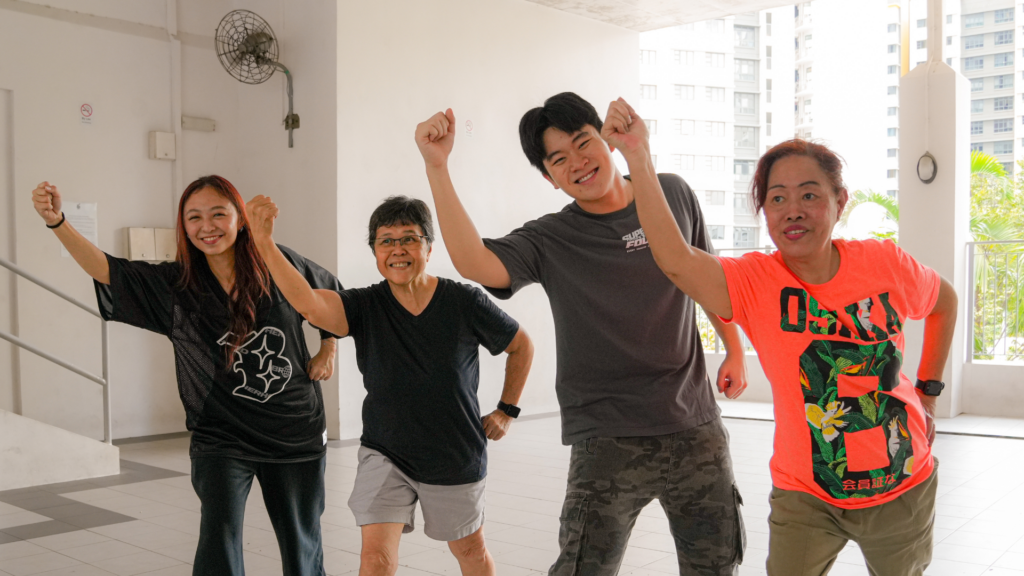
For second-year student Jovaan Tan from the Faculty of Arts and Social Sciences, dance is a language, encompassing different forms. As a Linguistics major with a minor in Performing Arts, he believes in using dance to make movement more accessible and connect communities. The programme led Jovaan to think more deeply about the basic elements of movement, prompting him to step back from the movements and concepts he was familiar with. “I approach sharing my craft with more of the intended audience in mind now,” he noted.
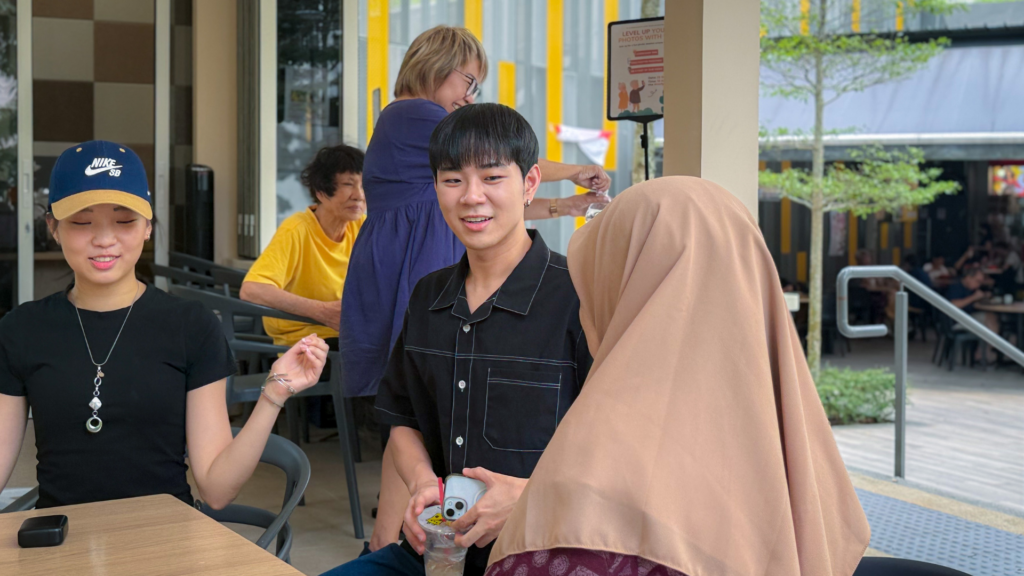
In another course – NM4230 Communications for Social Change – students work with a client or community group to design a communication intervention that addresses a social issue. Throughout the semester, they collaborate closely with a chosen partner – ranging from a non-profit organisation or a social enterprise, to a community they feel passionate about – to develop strategies that inspire dialogue and action.
Created to help students see communication as a tool to build understanding and drive social change, the course helps students to apply communications strategically while engaging with underserved communities on the topics of sustainability, heritage, or well-being. As the facilitator for this course, Dr Soh Kai Ruo, Lecturer from the Department of Communications and New Media, introduced Health District @ Queenstown (HD@QT), a multi-stakeholder initiative to develop lasting health and social solutions in Singapore, as a community partner in Semester 1 of Academic Year 2025/2026. Dr Soh is also Co-Lead, Communication and Engagement at HD@QT.
She shared, “In most courses at the Department of Communications and New Media, students learn how to reach mass audiences. However, communicating for social change at times requires us to listen, collaborate, and provide communities with a platform for their voices. Instead of telling communities what we think they need or would like to hear, we ask them what matters to them and how communication can support their goals.”
The students proposed and created communication interventions to present "meaningful ageing" from a young adult perspective and produced videos for HD@QT’s Instagram channel to inspire positive social change. The videos feature Queenstown residents, focusing on healthy and purposeful longevity and intergenerational bonding.
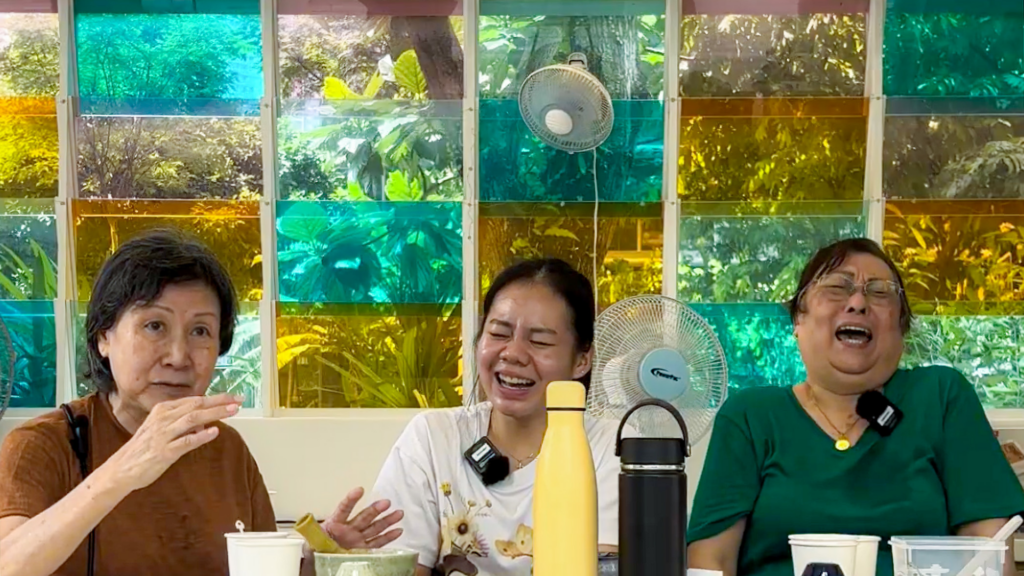
Through site visits and direct engagement with residents, students found the course particularly rewarding. Final-year student Hyun Jun-Ho from the Faculty of Arts and Social Sciences, majoring in Communications and New Media and English Literature, said, “I had fun bonding with them. I realised that social change campaigns must connect on a ground level and be shaped by understanding of community concerns.”
Third-year student Elicia Ng from the Faculty of Arts and Social Sciences, who also majors in Communications and New Media, agreed. “Meeting new friends of different ages was so meaningful! This reminded me to connect with the community before making assumptions, as even small conversations can build bridges across generations. As youths, we may sometimes think seniors are unfriendly or uninterested, but this project showed me how genuine, warm, and curious they can be. Many were eager to learn new things from us, share advice, and get to know us better. This experience was incredibly meaningful to witness."
This story first appeared in NUSnews on 15 January 2026.