

Arts for All enriches arts community within and beyond NUS
January 22, 2026
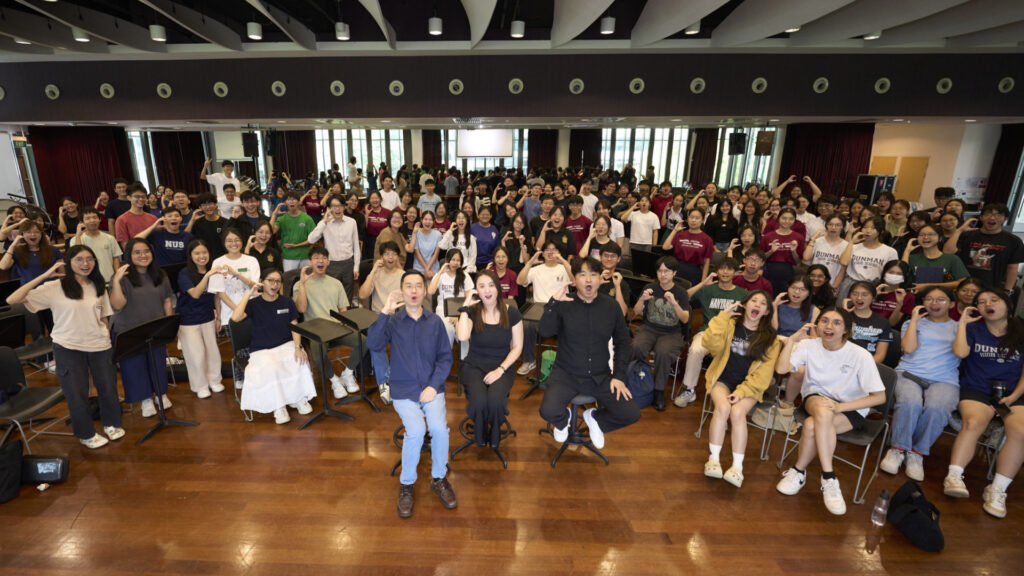
Two years after it was piloted in late 2023, the Arts for All (AFA) initiative is making waves in NUS, enabling students to embed the arts into their student life and learning journey – and beyond, through outreach efforts to younger musicians across Singapore.
Enriching the NUS student experience
The AFA framework developed by the NUS Office of Student Affairs Centre for the Arts (CFA) was designed to create access to the arts at various levels. It offers opportunities to initiate and participate in ground-up and student-led community initiatives, join extra-curricular activities and arts groups, and commit to year-long courses as part of four credit-bearing performing arts groups.
Programmes administered by the Yong Siew Toh Conservatory of Music (YST) and CFA also enable students to pursue a Minor or Second Major in Performing Arts using the credits earned from their participation in credit-bearing arts groups and courses. YST courses comprise the majority of additional courses that students can take to fulfil their Minor or Second Major requirements, and YST faculty contribute their expertise in assessing and grading students in the credit-bearing arts groups, which currently include the NUS Symphony Orchestra (NUSSO), NUS Wind Symphony (NUSWS), NUS Chinese Orchestra (NUSCO) and NUS Chinese Dance.
Associate Professor Chan Tze Law, NUS Vice Dean of Students who oversees CFA and led the creation of AFA, described the initiative’s intent as not being about producing more artists – “though some students may discover their calling that way,” he noted. Assoc Prof Chan, who is also Vice Dean at YST, added that “it’s about using the arts as a vehicle for developing a full range of human capabilities: creativity, resilience, moral reasoning, cultural intelligence, collaborative skills and the confidence to make something new in the world.”
From August 2024 to May 2025 (AY2024/2025), more than 10,000 students took part in student-led arts activities. These included the 22 programmes organised under third space, an initiative to create arts gathering spaces on campus and provide more opportunities for arts encounters, and 30 programmes presented over eight weeks by extra-curricular activity and arts groups at the NUS Arts Festival.
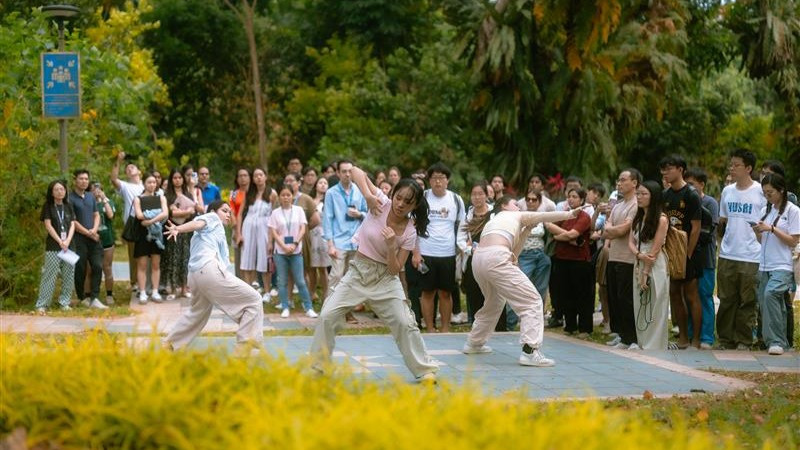
Enrolment in the credit-bearing groups and courses increased by more than 40 per cent in AY2023/2024 to more than 200 students in AY2024/2025, with NUSWS even gaining enough members to form two wind symphonies. More students are also expressing interest in pursuing a Minor or Second Major in Performing Arts.
Inspiring younger artists in the broader arts scene
A key factor in broadening AFA’s impact beyond NUS is the initiative’s requirement for all student groups to plan and produce two performances per academic year: one that showcases their excellence in their art form, and another that involves education or outreach.
Over the last two years, NUSWS, NUSSO and NUSCO have collaborated with local educational institutions, culminating in side-by-side concerts at NUS. NUSWS and NUSSO each partnered with one primary school in 2024, with NUSSO continuing its partnership in 2025, while NUSCO collaborated with six junior colleges (JCs) in 2025. CFA supported the groups in organising the practice sessions and concerts, with the two most recent concerts taking place in November 2025.
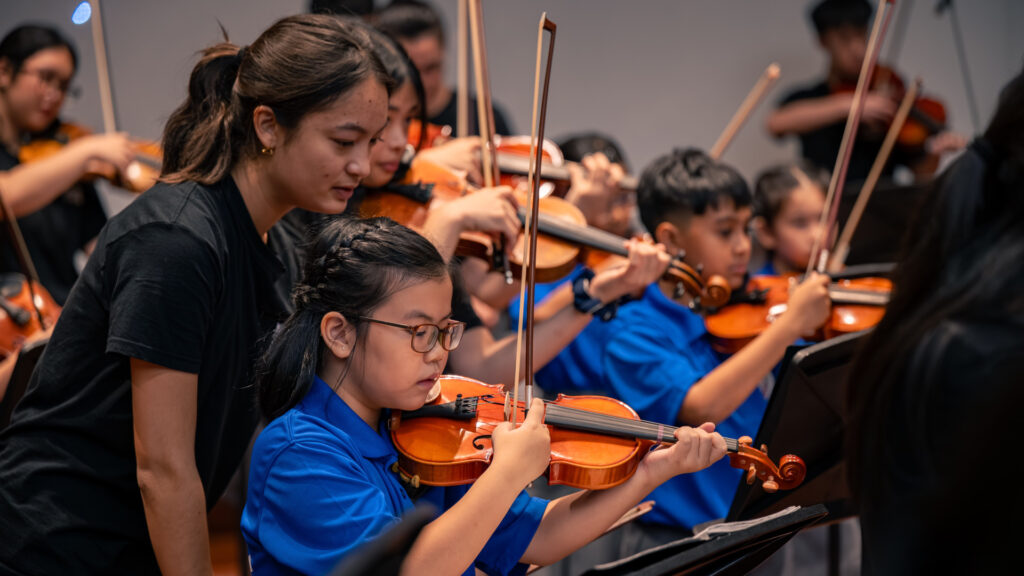
The positive experience has been mutual amongst collaborators. NUS students get the opportunity to share their passion and inspire younger musicians, while the young musicians get exposure to new and different ways of learning together.
Renowned conductor Mr Moses Gay, who is a principal tutor at NUSCO, said, “During rehearsals, I ask the NUSCO students to question things and give their own recommendations. This is part of making music together, but it was new to the JC students, and it sparked their curiosity.”
Ultimately, Mr Gay said that the vision is to build a community that encompasses both NUS and the broader arts community, from primary school students just beginning their musical journeys to JC students thinking about their tertiary education options.
“Aside from sharing our art form within NUS, our university arts groups need to bring people in to see that NUS is vibrant, so they will want to be a part of this,” said Mr Gay.
A catalyst for revitalising traditional music forms
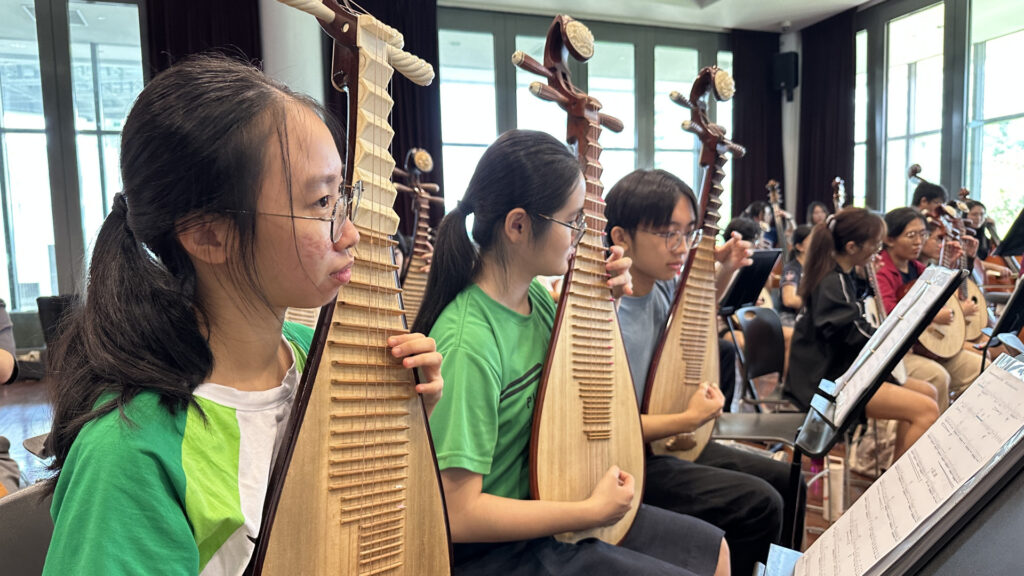
The outreach efforts by NUS students through AFA have been an opportunity to breathe life into traditional music practices.
Mr Gay, who also conducts the Singapore Chinese Orchestra, has observed that declining participation has resulted in many schools disbanding or downsizing their Chinese orchestras to chamber groups of 15 to 20 members, instead of the 60 to 100 in a typical orchestra. He therefore sought to rally as many JCs as possible to give young Chinese orchestra musicians the experience of playing in a large orchestra.
Assoc Prof Chan gave his full support, noting that by nurturing younger musicians, NUSCO will not only raise its profile among JC students who will apply to universities within the next couple of years, but also send a message to the broader arts community about the value of Chinese orchestra: “NUS is paying attention.”
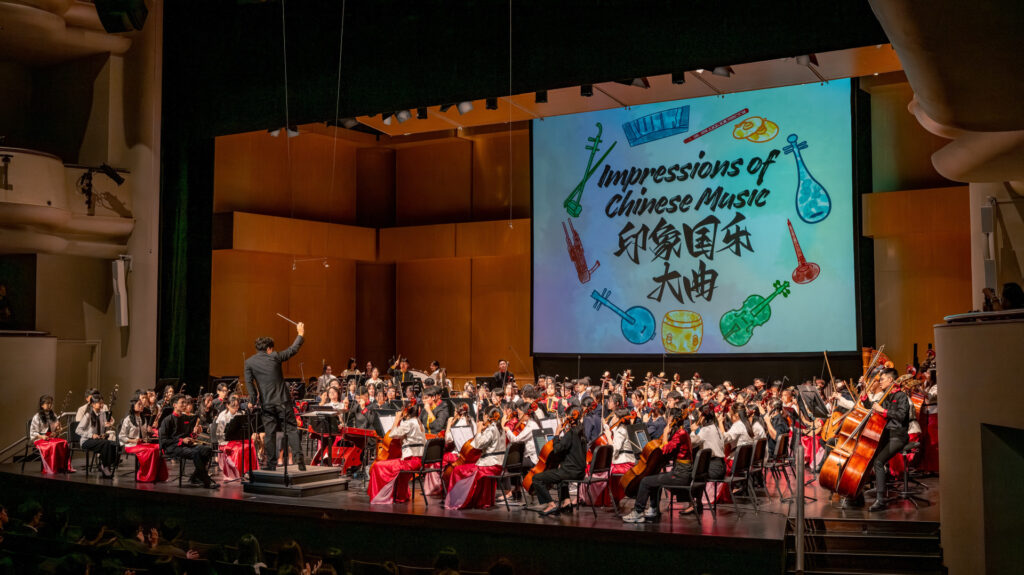
JC and NUS students alike were thrilled at the opportunity to play in the combined orchestra of about 130 musicians. River Valley High School student Pang Wei Qing said that getting to connect with musicians from other COs made her feel more “like part of a Chinese orchestra,” while Tanya Toh, a student from Raffles Institution, described performing with such a large orchestra as “an amazing experience.”
Said Sim Xin Yu, a Year 2 Pharmacy student who is NUSCO’s concertmaster: “It was one of the best concerts we’ve had since I joined NUSCO – the quality was better. I’m not sure if it’s because there were more people, but if it’s because of that, that’s all the more reason to do these collaborations.”
The interactions between JC and NUS students during the rehearsals sparked conversations about what the younger musicians could do with the art form beyond JC, said first-year Geography student Tara-Jade Sim. She shared: “A lot of my juniors said they felt very unsure about CO. They’re here because they have a passion for it, but they’re struggling to see a future in continuing to pursue it.”
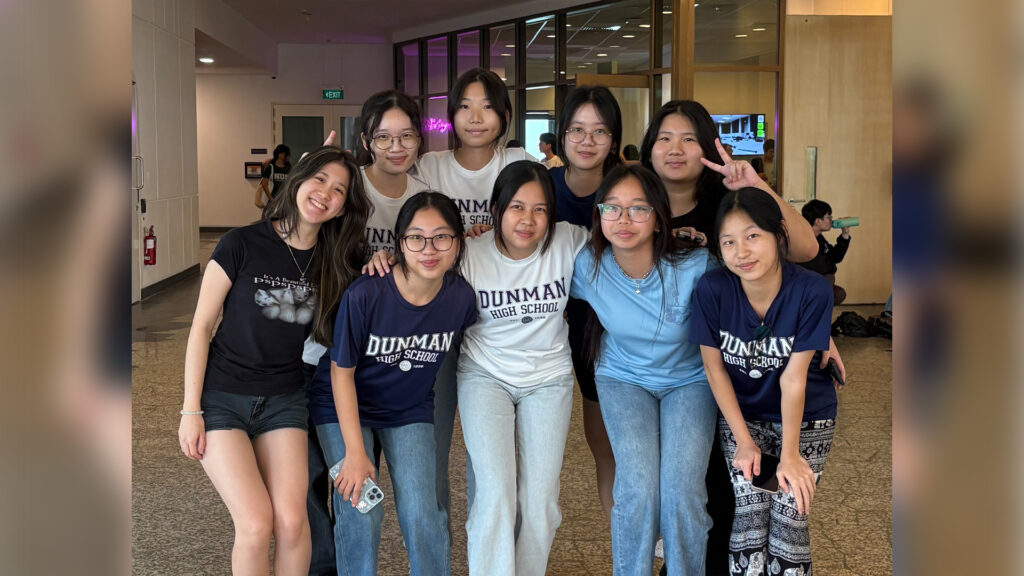
Showing the younger generation that there are avenues to continue playing and finding community in Chinese orchestra is key to keeping the art form alive, said Mr Gay, who shared that he hopes to add polytechnics to NUSCO’s next collaboration.
“No matter how well we play, a pipeline is still needed. We are addressing the core of the problem by reaching out to younger students, and during the concerts, we can share these ideas with three generations in the audience. If we do this with every school, there might be a chance to make CO more vibrant among the younger generation.”
This story first appeared in NUSnews on 22 January 2026.