

Study abroad at NUS: How a semester in FASS shaped a future leader
April 8, 2026
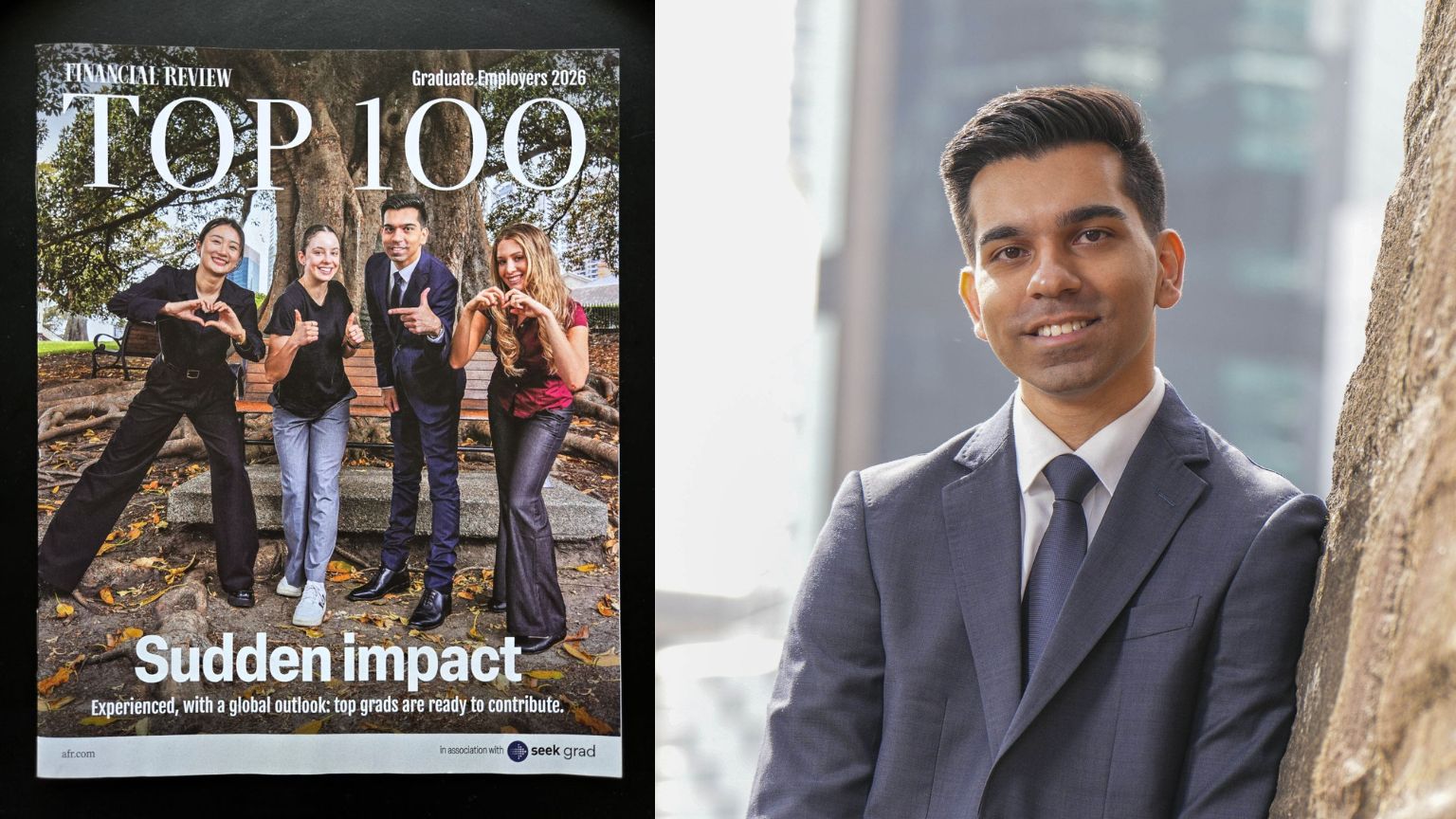
Recently selected as a 2026 AFR Top100 Future Leader and featured on the cover of the Australian Financial Review Graduate Guide, Ziyan spent a semester in the Faculty of Arts and Social Sciences in 2023. Hailing from Macquarie University in Australia where he studies Law and Political Science, Ziyan’s keenness to broaden his global perspective and immerse himself in diverse academic and cultural environments compelled him to undertake a study-abroad semester in FASS as part of the NUS Non-Graduating programme, despite NUS not being a partner institution of his home university.
Whilst congratulating him on this remarkable achievement, we conducted a quick interview, where he attributes his now well-developed interests in international engagement and policy to his experience studying in Singapore and at NUS.
I chose to study at NUS because it offered a rare combination of academic rigour, regional relevance and the chance to experience politics and international relations from within the heart of Southeast Asia.
As a recipient of the New Colombo Plan Scholarship from the Australian Government, I had the opportunity to undertake study, internships and language training anywhere in Singapore. NUS stood out to me for the strength of its Faculty of Arts and Social Sciences, particularly in political science and international relations, and for its reputation as one of Asia’s leading universities.
At my home university, Macquarie University, I am completing a Bachelor of Social Science majoring in Politics alongside a Bachelor of Laws. I was drawn to FASS because of its interdisciplinary approach, which allowed me to explore questions of governance and power beyond a purely political or legal lens. Studying these ideas in Singapore added another layer, given its distinct position in the region and its unique approach to policy and international engagement. More broadly, I saw the exchange as an opportunity to step outside an Australian context and engage more directly with the Indo-Pacific.
Which courses did you take during the exchange semester? Pick a favourite and let us know why!
During my exchange at NUS, I studied Global Governance (GL2103), Introduction to International Relations (PS2237), and Sociology of Power: Who Gets to Rule (SC3205). Together, these subjects complemented my studies in law, social science and politics by offering different perspectives on how power and authority operate at both domestic and international levels. I was pleased to achieve strong results across these courses, receiving an A, A- and B+, which reflected how engaging I found them.
If I had to choose a favourite, Sociology of Power stood out. What I found particularly valuable was the way it challenged me to think about power beyond formal institutions, and to consider how it operates through social structures, norms and everyday interactions. This was quite different from more typical state-focused perspectives, and it encouraged me to take a broader and more critical view of political systems.
Overall, these courses reinforced the importance of approaching political and legal questions from multiple angles. Studying them at NUS, within a diverse and internationally engaged classroom, added depth to the experience.
Why did you decide to do an internship with the Middle East Institute? Tell us more about your role and responsibilities.
I decided to undertake an internship with the Middle East Institute NUS because I was interested in gaining practical exposure to the study of geopolitics and regional dynamics beyond the classroom. The Institute’s work on contemporary issues in the Middle East and its intersections with broader Asia, aligned closely with my academic interests in international relations and regional policy.
During my time there, I had the opportunity to contribute to a range of activities, including preparing briefs on events, assisting with the Institute’s newsletter, aiding research projects, and supporting the delivery of seminars and discussions involving international speakers. This provided valuable insight into how policy-relevant research is communicated and how ideas are exchanged between academics, diplomats and practitioners.
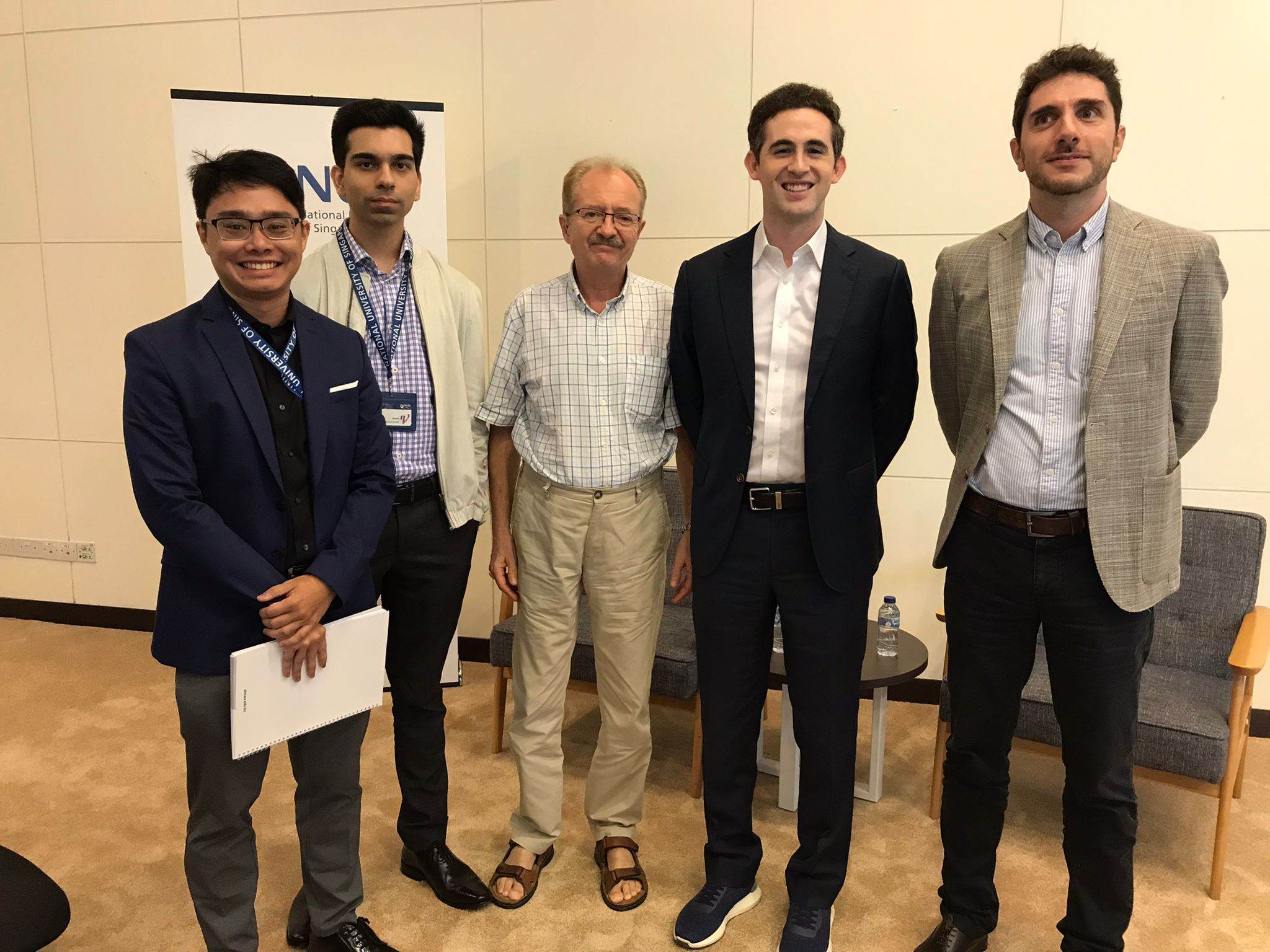 Ziyan at an MEI event while he was interning during his semester in FASS.
One of the most rewarding aspects of the experience was being able to observe and engage with senior researchers and diplomats such as Mr Bilahari Kausikan, then Chairman of the MEI. Exposure to these discussions highlighted the gap between theory and practice, by giving me a clearer understanding of how international relations operate in real-world settings. It also strengthened my interest in pursuing future work in regional engagement.
Outside of school and work, how was your time in Singapore? Any iconic moments or memories to share?
A key highlight of my time in Singapore was living on campus at Tembusu College. Being part of a residential college community made it easy to meet people from a wide range of backgrounds, and some of my most memorable moments came from simple things like playing sport, spending time at U-Town, and getting to know other students.
I also made an effort to take advantage of the broader intellectual environment at NUS. I joined a number of student clubs and attended events such as the NUS Global Asia Forum and the Singapore Foreign Policy Dialogue, where I had the opportunity to hear from leading thinkers including Professor Kishore Mahbubani and Mr Bilahari Kausikan. Being able to listen to and engage with experienced practitioners was a particularly rewarding part of the experience.
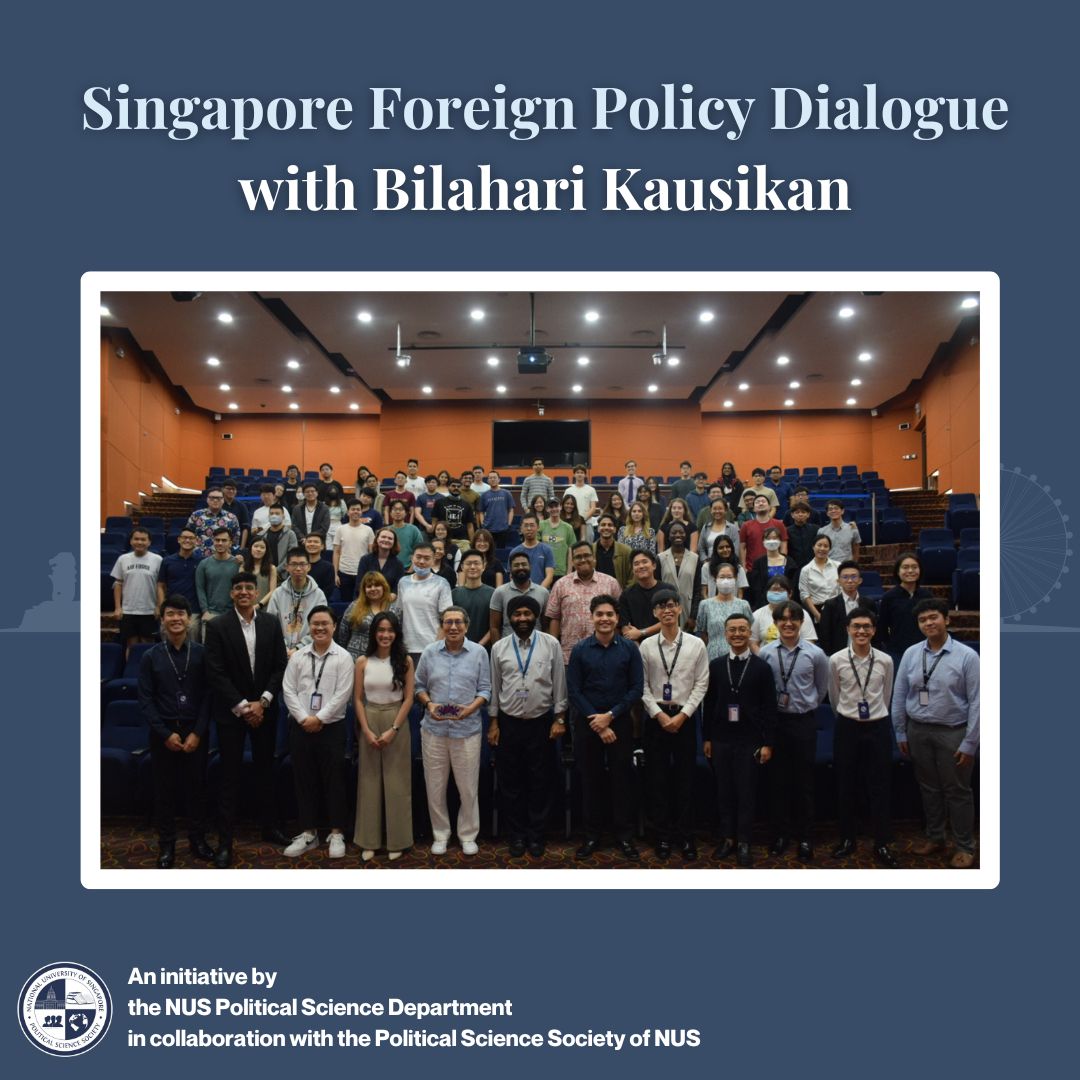 Attending a Foreign Policy Dialogue hosted by NUS Political Science Department.
After my exchange at NUS, I undertook full-time Mandarin language training at Inlingua School, Singapore, which was both challenging and rewarding, and added another dimension to my experience of studying and working in the region.
More generally, I really enjoyed exploring as much as I could of Singapore itself. Despite being a relatively young country, Singapore is a highly dynamic and globally connected city. Living there gave me a greater appreciation of its unique identity and role in the region.
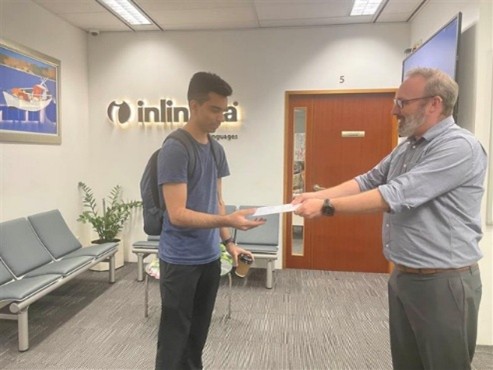 Mandarin study at Inlingua School of Languages, Singapore.
What's next! What are your plans for post-graduation and what do you plan to pursue from here on?
I am currently in my final semester at Macquarie University, completing a Bachelor of Social Science majoring in Politics and a Bachelor of Laws. As I approach graduation, I am considering opportunities that would allow me to work at the intersection of public policy, government and regional engagement.
My experience at NUS played an important role in shaping these interests. Studying international relations in Singapore, alongside my internship at the Middle East Institute, gave me a clearer understanding of how policy is developed and applied in a regional and global context, and reinforced my interest in contributing to work that engages with the Indo-Pacific.
Alongside my studies, I have continued to build on these interests through research and engagement, including assisting with research at the Adam Smith Centre in Singapore. I have since been appointed as a New Colombo Plan Alumni Ambassador and currently work at Macquarie University, where I support the New Colombo Plan program by promoting the government scholarships and mentoring students as they prepare to undertake similar opportunities across Asia and the Pacific.
Looking ahead, I am keen to pursue opportunities that allow me to contribute in a meaningful way to policy and international engagement. In the longer term, I would welcome the opportunity to return to Singapore, whether through further study at NUS or professional work, and to continue building on the connections and experiences I developed during my time there.