

When Open Science Meets Closed Borders
November 11, 2020
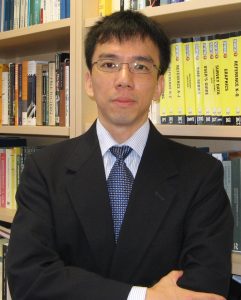
Associate Professor Albert G. Z. Hu (NUS Economics) writes in The Straits Times about how the nature of basic science makes it harder for sanctions to work.
Discussing whether the United States' sanctions will stunt the ascent of Chinese science, he first states that China ranks second globally in the world league table of science, with the US ranked first, and has been swiftly catching up. A/P Hu reports that his research reveals that China's top scientists have benefited from their academic training in US universities. For instance 60% of scientists from China who published as senior authors in the three top science journals–Cell, Nature, and Science–in the past decade, completed their PhD or post-docs in the US. Moreover, 70% of the 2019 journal articles involved one or more US-based research collaborator. This is natural as science is a cumulative process.
A/P Hu notes that the US government has responded by taking legal action against its prominent scientists who China has attracted to join its Thousand Talents Programme, which its government has set up to strengthen the nation's scientific research capability. He explains what this means for the future of Chinese science, emphasizing the importance of recognizing the open process of science in contrast to technology innovation in businesses.
Discussing how exclusivity operates differently in delivering accolades and capital to scientists and for-profit inventors, and relating it to the idea of secrecy vs dissemination of discoveries in science and commercial enterprise, A/P Hu details how competition among scientific researchers tends to boost knowledge diffusion. One of the examples he brings up is how the current pandemic has spurred scientists worldwide to work together to decode the COVID-19 virus, "creating a global public good". In contrast, the development of a COVID-19 vaccine has been cloaked in secrecy due to its huge business and geopolitical ramifications.
A/P Hu finds that, in part due to the proliferation of open-access web-based publication platforms, the impact of US sanctions targeting scientific research by China are unlikely to have strong success in restricting China's scientists' access to the latest discoveries. Rather, these sanctions galvanized the Chinese government to double its investment in basic scientific research from 2015 to 2020. He adds that the Chinese Academy of Sciences has announced it will turn the US sanction list into a list of institutional goals. A/P Hu sees this approach as laudable insofar as it adds to the global public good, though he stresses that it remains to be seen if this is the superior method to guide scientific progress.
Read his op-ed piece here.